Advanced Technical Ceramics, Precision Alumina, Silicon Carbide, Crucible Parts



Advanced Ceramic

Quartz Saggers Silica Ceramic Saggers

Al₂O₃ Ceramic Saggers Alumina Saggers for 1700℃ High Temperature Battery

MgAl₂O₄ Spinel Saggers Magnesium Aluminum Spinel Saggers

Reaction Sintered Silicon Carbide Saggers

Cordierite Mullite Sagger

Alumina Mullite Sagger Corundum Mullite Ceramic Saggers

Nickel Crucible Box High Purity N6 Nickel Crucible

Silicon Nitride Grinding Ball Si₃N₄ Ceramic Grinding Media

Silicon Nitride Substrate Si₃N₄ Ceramic Substrate

Silicon Nitride Nozzle Si₃N₄ Ceramic Spray Nozzle

Silicon Nitride Ceramic Plate Si3N4 Ceramic Board

Silicon Nitride Ceramic Sealing Ring Si3N4 Seal Washer
Review of Advanced Ceramic
Advanced Ceramic refers to high-performance ceramic products engineered to provide reliable performance under demanding thermal, mechanical, electrical, chemical, and wear conditions. Compared with conventional ceramics, advanced ceramics are designed with specialized compositions, manufacturing processes, and geometries to meet the requirements of modern industrial applications.
Advanced Ceramics provides a wide range of precision ceramic products made from high-performance ceramic systems, including Alumina (Al₂O₃), Aluminum Nitride (AlN), Boron Nitride (BN), Boron Carbide (B₄C), Silicon Carbide (SiC), Silicon Nitride (Si₃N₄), Zirconia (ZrO₂), and Quartz. These products can be supplied in different shapes and configurations, including ceramic tubes, rods, plates, rings, nozzles, crucibles, substrates, rollers, and customized components.
Depending on the ceramic grade and product design, advanced ceramic components can offer high-temperature stability, excellent wear resistance, chemical resistance, electrical insulation, thermal conductivity, low thermal expansion, and dimensional stability. These characteristics make Advanced Ceramic products suitable for demanding environments in electronics, machinery, chemical processing, semiconductor manufacturing, energy, laboratory equipment, and other industrial applications.

Attributes of Advanced Ceramic
1. Outstanding High-Temperature Performance and Long-Term Thermal Stability
Advanced ceramic components are engineered to maintain mechanical strength, dimensional accuracy, and chemical stability under extreme temperature conditions. Compared with conventional metals and polymers, technical ceramics can operate in environments where thermal softening, creep deformation, or oxidation become critical limitations. Materials such as Silicon Carbide, Silicon Nitride, Alumina, and Boron Nitride are widely selected for furnace components, thermal processing systems, semiconductor equipment, and high-temperature structural applications requiring reliable long-term performance.
2. Superior Wear Resistance and Mechanical Durability Under Severe Operating Conditions
Advanced ceramics provide exceptional hardness, compressive strength, and resistance to abrasion, erosion, and frictional damage. Their dense microstructure enables stable performance in applications involving continuous mechanical contact, high-speed particle impact, and abrasive media exposure. Ceramic materials such as Silicon Carbide, Silicon Nitride, and Alumina are commonly used for mechanical seals, wear plates, nozzles, grinding components, and precision industrial parts where extended service life and reduced maintenance frequency are required.
3. Excellent Chemical Stability and Resistance to Aggressive Environments
Advanced ceramic components demonstrate excellent resistance against oxidation, corrosion, acids, alkalis, molten metals, and reactive chemical environments. Unlike many metallic materials that may suffer from corrosion or surface degradation, technical ceramics maintain stable physical properties under harsh processing conditions. This makes them suitable for chemical processing equipment, semiconductor manufacturing systems, metallurgical applications, and high-temperature components exposed to aggressive media.
4. Advanced Thermal Management Capability and Controlled Thermal Expansion
Different advanced ceramics provide unique thermal characteristics, including high thermal conductivity, low thermal expansion coefficients, and excellent thermal shock resistance. Materials such as Aluminum Nitride and Boron Nitride enable efficient heat dissipation while maintaining electrical insulation, while Silicon Carbide provides excellent heat transfer and resistance to rapid temperature changes. These properties allow ceramic components to maintain dimensional stability and reliability during repeated heating and cooling cycles.
5. Reliable Electrical Insulation and Functional Ceramic Performance
Certain advanced ceramics offer outstanding dielectric properties, high electrical resistivity, and stable insulation performance at elevated temperatures. Alumina, Aluminum Nitride, and Boron Nitride ceramics are widely used in electronic, semiconductor, and high-temperature electrical applications where both insulation reliability and thermal performance are required. These materials help improve equipment safety, thermal efficiency, and operational stability in advanced electrical systems.
6. High Mechanical Strength and Structural Reliability
Advanced ceramics combine high hardness, elastic modulus, compressive strength, and excellent dimensional stability, enabling reliable operation under mechanical loading conditions. Silicon Nitride and Silicon Carbide ceramics are especially suitable for precision components requiring high strength-to-weight ratios, low deformation, and long-term reliability. These properties make advanced ceramics ideal for bearings, sealing components, structural parts, and industrial equipment operating under demanding mechanical conditions.
7. Precision Manufacturing and Customized Ceramic Component Solutions
Advanced ceramic components can be manufactured through precision forming, sintering, grinding, and machining processes to achieve complex geometries and strict dimensional requirements. Manufacturers can provide customized ceramic parts with specific tolerances, surface finishes, holes, grooves, and structural designs according to engineering drawings and application conditions. This flexibility allows advanced ceramics to be integrated into specialized equipment for semiconductor, energy, aerospace, chemical, and industrial applications.

Advanced Ceramic Performance Table
| Ceramic Type | Key Properties | Typical Temperature Capability* | Main Advantages | Typical Products |
|---|---|---|---|---|
| Alumina (Al₂O₃) | High hardness, electrical insulation, chemical resistance | Up to ~1800°C | Wear resistance, insulation, dimensional stability | Tubes, plates, rods, crucibles, rings |
| Aluminum Nitride (AlN) | High thermal conductivity, electrical insulation | High-temperature applications | Excellent heat dissipation and insulation | Substrates, sheets, rings, crucibles |
| Boron Nitride (BN) | Thermal conductivity, electrical insulation, chemical stability | Up to ~2000°C depending on grade | Non-wetting, machinability, thermal stability | Nozzles, crucibles, rods, plates |
| Boron Carbide (B₄C) | Ultra-high hardness, low density, wear resistance | High-temperature applications | Excellent abrasion resistance | Wear parts, nozzles, ceramic components |
| Silicon Carbide (SiC) | High hardness, thermal conductivity, thermal shock resistance | Up to ~1600–2500°C depending on grade | Wear, corrosion and heat resistance | Tubes, rollers, rings, nozzles, furnace parts |
| Silicon Nitride (Si₃N₄) | High strength, toughness, thermal shock resistance | Up to ~1200°C depending on grade | Mechanical strength and wear resistance | Tubes, rods, rings, bearings, components |
| Zirconia (ZrO₂) | Toughness, wear resistance, corrosion resistance | Up to ~2000°C depending on grade | High fracture toughness and dimensional stability | Rods, rings, structural components |
| Quartz (SiO₂) | Low thermal expansion, thermal stability, chemical resistance | High-temperature applications | Thermal shock resistance and purity | Crucibles, tubes, trays, laboratory parts |
Applications of Advanced Ceramic
1. Semiconductor Manufacturing and Electronic Equipment
Advanced ceramic components play an important role in semiconductor manufacturing systems where high purity, thermal stability, electrical insulation, and dimensional accuracy are critical requirements. Ceramic materials such as Alumina, Aluminum Nitride, Boron Nitride, Silicon Carbide, and Quartz provide reliable performance under plasma exposure, vacuum conditions, high-temperature processing, and chemically reactive environments. Typical applications include ceramic substrates, wafer supports, insulation rings, processing tubes, crucibles, and precision structural components used in semiconductor fabrication equipment.
2. High-Temperature Furnace and Thermal Processing Systems
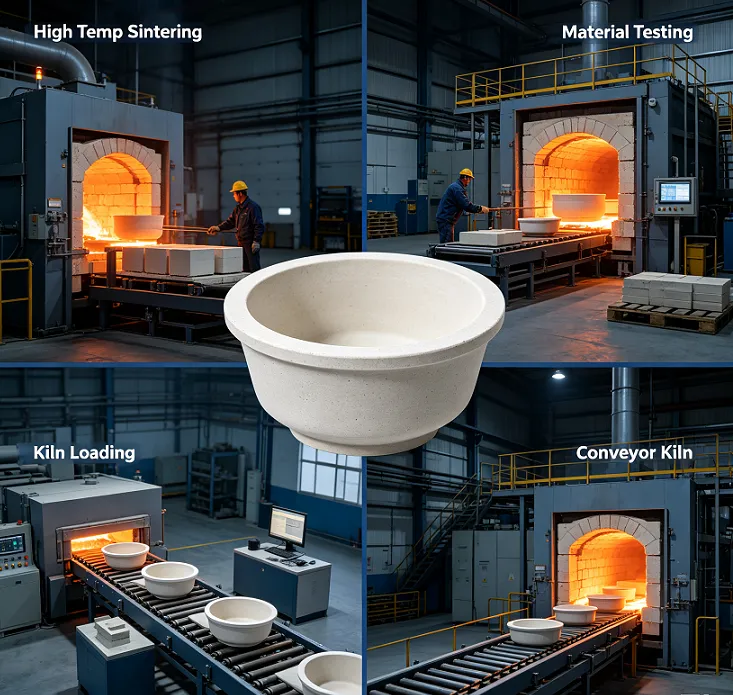
Advanced ceramics are widely used in furnace equipment due to their excellent high-temperature strength, thermal shock resistance, and resistance to oxidation and chemical attack. Materials such as Silicon Carbide, Alumina, Mullite, and Quartz are selected according to operating temperature, atmosphere conditions, mechanical loading, and thermal cycling requirements. Typical ceramic components include furnace tubes, rollers, setters, crucibles, heating element supports, and structural parts used in sintering, heat treatment, crystal growth, and thermal processing systems.
3. Chemical Processing and Corrosive Industrial Equipment
Advanced ceramic components provide excellent chemical stability when exposed to corrosive media, aggressive chemicals, and high-temperature processing conditions. Unlike many metallic materials that may suffer from corrosion, erosion, or contamination, technical ceramics maintain stable physical properties and long service life in demanding environments. Ceramic tubes, nozzles, reaction components, seals, and customized parts are commonly used in chemical processing systems, laboratory equipment, and industrial fluid handling applications.
4. Mechanical Engineering and Wear-Resistant Applications
Advanced ceramics are widely applied in mechanical engineering where components require high hardness, wear resistance, low friction, and dimensional stability under continuous operation. Silicon Nitride, Silicon Carbide, Alumina, Zirconia, and Boron Carbide provide different combinations of mechanical strength, fracture resistance, and abrasion resistance for specific operating conditions. Typical applications include mechanical seals, bearings, wear plates, cutting components, nozzles, and precision parts exposed to friction, impact, and abrasive environments.
5. Metallurgy, Material Processing, and Laboratory Applications
Advanced ceramic components are essential in metallurgy and laboratory processes involving extreme temperatures, molten materials, and controlled material preparation. Ceramic materials such as Alumina, Zirconia, Silicon Carbide, Boron Nitride, Aluminum Nitride, and Quartz provide excellent thermal stability, chemical inertness, and resistance to contamination during high-temperature operations. Common applications include crucibles, sample holders, sintering trays, furnace components, protection tubes, and laboratory ceramic vessels used for melting, heat treatment, analysis, and material research.
6. Energy Storage and Battery Manufacturing
Advanced ceramics are increasingly used in battery and energy-related manufacturing processes due to their thermal stability, electrical insulation properties, and chemical resistance. Ceramic components help maintain process reliability during electrode preparation, thermal treatment, sintering, and high-temperature material processing. Typical applications include ceramic insulation parts, furnace components, process carriers, protective components, and precision ceramic parts used in battery production equipment.
7. Customized Precision Ceramic Components for Industrial Applications
Advanced ceramic components can be engineered and manufactured according to specific application requirements, including material selection, dimensions, tolerances, surface finish, and operating conditions. Through precision forming, sintering, grinding, and machining processes, ceramic manufacturers can produce complex components such as tubes, rings, rods, plates, nozzles, substrates, and crucibles. Customized ceramic solutions help engineers optimize equipment performance, improve reliability, and extend component service life in specialized industrial systems.
Company Profile
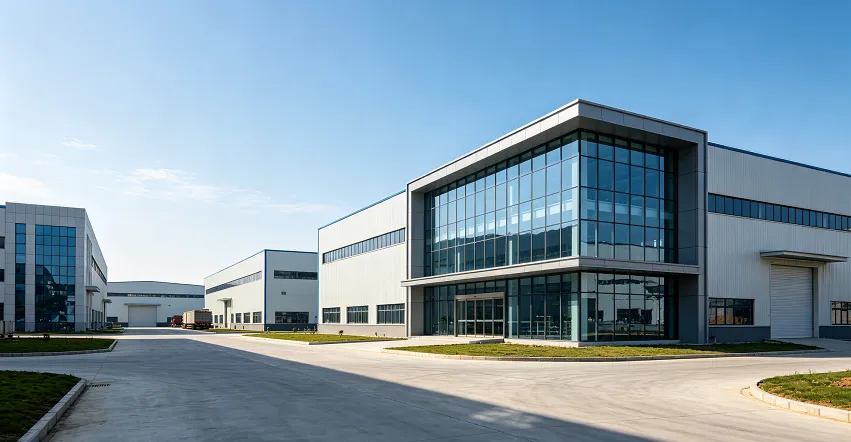
JianXun, founded on October 17, 2014, is a high-tech enterprise specializing in the research and development, production, processing, sales, and technical services of advanced ceramic products. The company's product portfolio covers Silicon Carbide, Boron Carbide, Boron Nitride, Silicon Nitride, Zirconium Dioxide, Quartz, Aluminum Nitride, Aluminum Oxide, ceramic crucibles, and other advanced ceramic components. Advanced Ceramics provides both standard and customized ceramic products for applications in electronics, machinery, chemical processing, high-temperature industries, energy, and other industrial fields.
With a focus on product quality, technical development, and customized solutions, Advanced Ceramics supports customers in selecting suitable ceramic materials, product configurations, and specifications for different operating conditions.
Payment Terms: T/T, Western Union, PayPal, Credit Card, etc.
Shipment Terms: By air, by sea, by express, or according to customer request.
Package of Advanced Ceramic
Advanced Ceramic products are carefully packaged according to their shape, size, weight, material characteristics, and transportation requirements.
Standard packaging may include foam protection, plastic bags, cartons, wooden cases, or customized protective packaging to reduce the risk of impact, vibration, moisture, and surface damage during transportation.
For large, fragile, precision-machined, or customized ceramic components, reinforced packaging can be arranged according to the product specifications and customer's shipping requirements.
FAQs of Advanced Ceramic
Q1: How should engineers select the appropriate advanced ceramic material for an application?
A: The selection of an advanced ceramic material depends on multiple operating factors, including service temperature, mechanical load, wear conditions, chemical exposure, electrical requirements, thermal conductivity, and dimensional stability. Alumina is commonly selected for electrical insulation and general structural applications, Aluminum Nitride for high thermal conductivity and insulation, Silicon Carbide for high-temperature and wear-resistant environments, Boron Nitride for thermal management and electrical insulation, and Silicon Nitride for applications requiring high strength and fracture resistance. JianXuan provides material selection support based on actual operating conditions and component requirements.
Q2: What types of advanced ceramic components can JianXuan manufacture?
A: JianXuan specializes in manufacturing precision advanced ceramic components, including ceramic tubes, rods, plates, rings, nozzles, crucibles, substrates, rollers, insulators, and customized structural parts. Different ceramic materials such as Alumina, Aluminum Nitride, Boron Nitride, Silicon Carbide, Silicon Nitride, Zirconia, Boron Carbide, and Quartz can be processed according to application requirements. Components can be produced with customized dimensions, geometries, tolerances, and surface finishing requirements for industrial equipment and specialized systems.
Q3: What performance advantages do advanced ceramic components provide compared with traditional materials?
A: Advanced ceramic components provide unique combinations of high-temperature stability, corrosion resistance, wear resistance, electrical insulation, thermal management capability, and dimensional accuracy. Compared with metals and conventional materials, technical ceramics can maintain stable performance in extreme environments where oxidation, corrosion, thermal deformation, or mechanical wear become critical issues. These advantages make advanced ceramics suitable for semiconductor equipment, furnace systems, chemical processing, energy applications, and precision industrial components.
Q4: Can advanced ceramic components be customized according to engineering drawings and application requirements?
A: Yes. JianXuan provides customized advanced ceramic components based on customer drawings, technical specifications, and operating conditions. The customization process considers material selection, component structure, dimensional tolerance, machining requirements, surface finish, and final application environment. Our engineering team works with customers to develop ceramic solutions optimized for performance, reliability, and service life.
Q5: What factors affect the service life and reliability of advanced ceramic components?
A: The service life of advanced ceramic components depends on material selection, operating temperature, thermal cycling frequency, mechanical loading, chemical exposure, and installation conditions. Proper ceramic grade selection and component design are essential to prevent issues such as thermal shock failure, excessive wear, or mechanical damage. JianXuan supports customers in selecting suitable ceramic materials and manufacturing solutions to achieve stable long-term performance.
Q6: What industries commonly use advanced ceramic components?
A: Advanced ceramic components are widely used in semiconductor manufacturing, electronics, photovoltaic production, high-temperature furnace systems, metallurgy, chemical processing, energy equipment, and mechanical engineering applications. Typical products include ceramic substrates, furnace tubes, crucibles, insulation components, mechanical seals, wear-resistant parts, and precision structural components designed for demanding industrial environments.