Advanced Technical Ceramics, Precision Alumina, Silicon Carbide, Crucible Parts



Aluminum Nitride Ceramic

Aluminum Nitride AlN Ceramic Substrate

99% Aluminum Nitride Ceramic Sheet

Al₂O₃ Alumina Ceramic Rod and Tube

AIN Ceramic Ring Aluminum Nitride Ceramic Ring

High Thermal Conductivity ALN Aluminum Nitride Ceramic Disc for Advanced Electronics
Overview
Aluminum Nitride Ceramic is an advanced technical ceramic material widely recognized for its unique combination of extremely high thermal conductivity, excellent electrical insulation, low thermal expansion, and superior chemical stability. Unlike traditional oxide ceramics, aluminum nitride (AlN) provides a rare combination of metal-like thermal management capability and ceramic-like electrical insulation performance, making it an essential material in semiconductor manufacturing, power electronics, LED packaging, and advanced thermal control systems.
In modern electronic and high-temperature engineering applications, efficient heat dissipation has become one of the most critical challenges affecting system reliability. Excessive heat accumulation can accelerate material degradation, increase thermal stress, reduce electrical performance, and shorten component lifetime. Aluminum Nitride Ceramic addresses this challenge through its unique hexagonal wurtzite crystal structure, which enables efficient phonon transport and provides thermal conductivity significantly higher than most conventional ceramic materials.
The engineering performance of aluminum nitride depends strongly on material purity, oxygen content, grain size, porosity control, sintering additives, and manufacturing processes. Although pure AlN theoretically possesses extremely high thermal conductivity, practical industrial performance is influenced by lattice defects, oxygen substitution, and microstructural factors. Therefore, advanced processing technologies are required to achieve optimized thermal and mechanical properties.
From an engineering perspective, aluminum nitride ceramic is selected not simply because of its thermal conductivity value, but because it provides a balanced solution where heat dissipation, electrical isolation, dimensional stability, and reliability must be achieved simultaneously. Compared with alumina ceramics, AlN offers significantly higher thermal conductivity. Compared with metals, it provides electrical insulation and better chemical stability in many demanding environments.
Typical aluminum nitride ceramic components include substrates, heat sinks, insulating plates, electronic packaging parts, semiconductor processing fixtures, ceramic rings, and customized thermal management components. The correct material selection requires evaluation of operating temperature, thermal cycling conditions, mechanical loading, electrical requirements, and long-term reliability expectations.
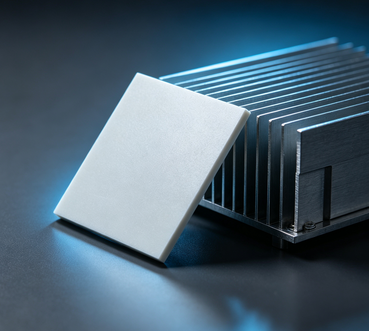
Classification and Key Characteristics of Aluminum Nitride Ceramic
Aluminum nitride ceramics can be classified according to purity level, thermal conductivity grade, manufacturing process, and application requirements. Different grades are engineered to provide specific combinations of thermal performance, mechanical strength, dielectric properties, and dimensional accuracy. The main difference between commercial AlN grades is usually related to oxygen content, grain boundary characteristics, and sintering technology. High-purity AlN with optimized microstructure provides excellent thermal conductivity, while specially engineered grades may prioritize mechanical strength, metallization compatibility, or complex machining performance.
1. Crystal Structure and Thermal Conductivity Mechanism
The outstanding thermal conductivity of aluminum nitride originates from its hexagonal wurtzite crystal structure. In this structure, heat is primarily transferred through phonon movement rather than free electrons, allowing AlN to achieve high thermal conductivity while maintaining excellent electrical insulation. Unlike metals, which conduct heat through electrons and may suffer from electrical conduction problems, aluminum nitride allows engineers to separate thermal management and electrical isolation requirements in the same component. However, thermal conductivity is highly sensitive to impurities. Oxygen atoms can substitute nitrogen atoms within the crystal lattice and create defects that scatter phonons, reducing heat transfer efficiency. Therefore, controlling oxygen concentration and grain boundary purity is essential for producing high-performance AlN ceramic components.
2. High Thermal Conductivity and Thermal Management Performance
The primary engineering advantage of aluminum nitride ceramic is its ability to rapidly transfer heat away from heat-generating components. In power electronic devices, semiconductor modules, and LED systems, heat accumulation can cause thermal fatigue, reduced efficiency, and premature failure. AlN substrates and heat spreaders provide efficient thermal pathways while maintaining electrical insulation between conductive circuits. Compared with alumina ceramic, which typically has thermal conductivity around 20-35 W/m·K, high-performance aluminum nitride can achieve thermal conductivity above 170 W/m·K. This significant improvement allows designers to develop more compact, higher-power electronic systems with improved thermal reliability.
3. Electrical Insulation Performance
Although aluminum nitride provides excellent thermal conductivity, it remains an electrical insulator. This combination is one of the primary reasons AlN has become important in advanced electronic applications. Its high electrical resistivity and dielectric strength allow it to serve as an insulating layer while efficiently transferring heat away from electrical components. For high-power semiconductor systems, this dual function reduces the need for additional thermal interface materials and simplifies component design. Engineers can achieve better thermal performance without sacrificing electrical safety.
4. Thermal Expansion Compatibility
The coefficient of thermal expansion of aluminum nitride is relatively close to that of silicon, making it highly suitable for semiconductor-related applications. Thermal expansion mismatch between different materials can generate mechanical stress during temperature cycling. Over time, repeated expansion and contraction may lead to cracking, delamination, or fatigue failure. Because AlN has a thermal expansion coefficient closer to semiconductor materials than many traditional ceramics, it helps reduce thermal stress in advanced electronic assemblies.
5. Mechanical Strength and Chemical Stability
Although aluminum nitride is primarily selected for thermal performance, it also provides good mechanical strength and chemical stability. Dense AlN ceramics maintain structural integrity under elevated temperatures and resist many corrosive environments. This makes them suitable for semiconductor equipment components where both thermal exposure and mechanical reliability are required. However, AlN should be carefully evaluated in humid or oxygen-rich environments at high temperatures because surface oxidation may occur. Proper material selection and protective design are important for long-term performance.
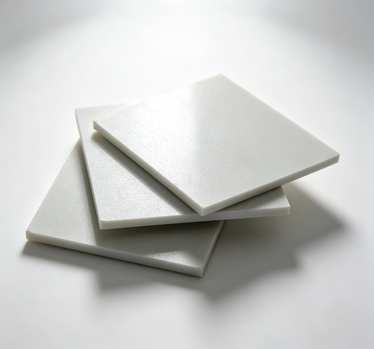
Typical Specifications of Aluminum Nitride Ceramic
The performance of aluminum nitride ceramic components depends on purity, oxygen content, grain structure, density, sintering technology, and surface treatment. The following table summarizes typical engineering specifications for industrial-grade AlN ceramics.
| Property | Typical Value |
|---|---|
| Chemical Composition | AlN (Aluminum Nitride) |
| Purity | ≥95%-99.9% depending on grade |
| Density | 3.20-3.35 g/cm³ |
| Thermal Conductivity | 170-230 W/m·K |
| Maximum Service Temperature | 1800°C+ in inert atmosphere |
| Thermal Expansion Coefficient | 4.3-5.0 ×10⁻⁶/K |
| Flexural Strength | 300-450 MPa |
| Compressive Strength | 2000 MPa+ |
| Electrical Resistivity | >10¹⁴ Ω·cm |
| Dielectric Strength | High, depending on thickness and grade |
| Main Engineering Advantages | High thermal conductivity, electrical insulation, thermal expansion compatibility |
The density of Aluminum Nitride Ceramic typically ranges from 3.20 to 3.35 g/cm³, and this value directly affects mechanical strength, thermal conductivity, and structural reliability. A dense microstructure with low porosity generally improves heat transfer efficiency because fewer pores exist to interrupt phonon transport. When selecting AlN materials, engineers should not evaluate thermal conductivity alone. A ceramic with extremely high thermal conductivity may not be suitable if its mechanical strength, dielectric properties, surface quality, or thermal cycling performance cannot meet application requirements. For example, semiconductor packaging applications may prioritize thermal conductivity and dielectric reliability, while furnace components may require greater emphasis on mechanical strength and high-temperature stability.
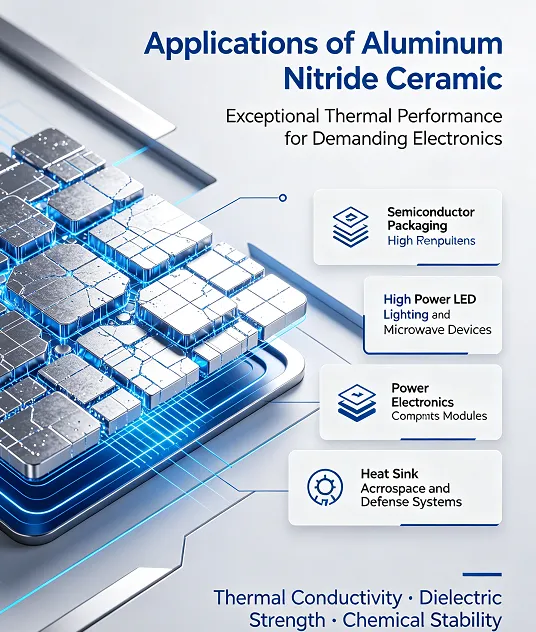
Applications of Aluminum Nitride Ceramic
1. Semiconductor Manufacturing Equipment
Semiconductor manufacturing requires materials that can maintain stable performance under high temperature, vacuum, plasma, and chemical exposure conditions. Aluminum nitride ceramic components are used in wafer processing equipment, semiconductor heaters, electrostatic chuck components, thermal plates, and support structures. Its high thermal conductivity allows precise temperature control, which is essential for maintaining process uniformity during semiconductor fabrication. The low thermal expansion coefficient of AlN also helps reduce stress between ceramic components and semiconductor materials, improving equipment reliability during repeated thermal cycles.
2. Power Electronics and Thermal Management Systems
Power electronic devices generate significant heat during operation, making thermal management one of the most important design considerations. AlN ceramic substrates are widely used in insulated metal substrates, power modules, and high-current electronic systems because they provide efficient heat dissipation while maintaining electrical insulation. Compared with traditional ceramic substrates, aluminum nitride enables higher power density and improved reliability by reducing operating temperatures and thermal stress.
3. LED Packaging Applications
LED performance and lifetime are strongly influenced by operating temperature. Excessive heat can reduce light efficiency and accelerate degradation of semiconductor junction materials. Aluminum nitride ceramic substrates provide an effective thermal pathway from the LED chip to the heat dissipation structure. Their combination of thermal conductivity, electrical insulation, and dimensional stability makes them suitable for high-power LED applications. In advanced lighting systems, AlN helps maintain stable thermal conditions and improves long-term reliability.
4. High-Temperature Industrial Components
Aluminum nitride ceramics are also used in specialized high-temperature environments where thermal transfer and electrical insulation are required simultaneously. Applications include heating components, furnace fixtures, sensor protection parts, and thermal management structures. Compared with conventional insulating ceramics, AlN provides superior heat transfer capability, allowing more efficient temperature control in demanding industrial systems.
5. Electronic Packaging and Heat Dissipation Components
Modern electronic systems increasingly require compact designs with higher power density. Aluminum nitride ceramic components provide an effective solution by combining mechanical support, electrical insulation, and thermal spreading capability. Typical components include ceramic plates, heat spreaders, insulating layers, and customized precision parts. Engineers select AlN when reducing thermal resistance is critical to improving system performance and reliability.
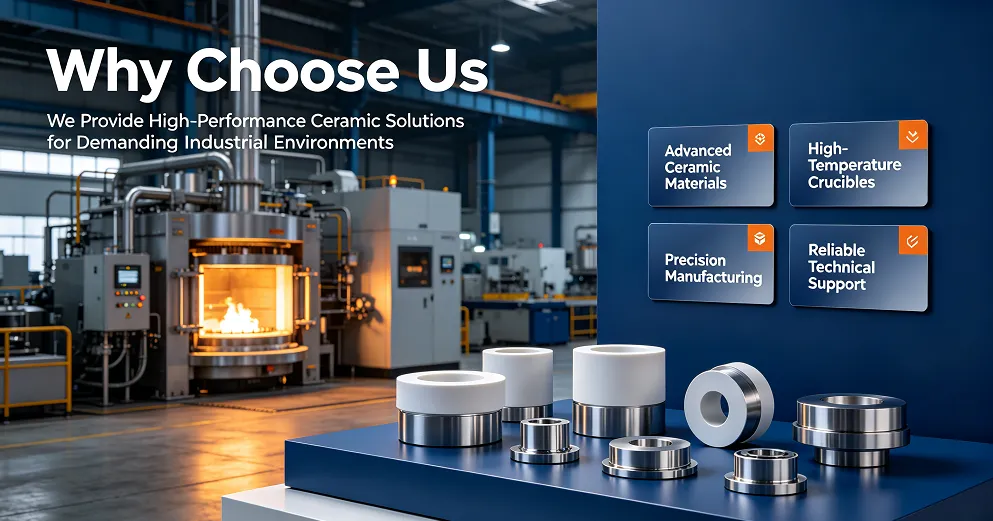
Company Profile
JianXun Advanced Ceramic Technology is a professional manufacturer specializing in high-performance ceramic components, including Aluminum Nitride Ceramic, alumina ceramics, boron nitride ceramics, silicon carbide ceramics, mullite ceramics, quartz ceramics, and customized precision ceramic parts. The company provides advanced ceramic solutions for semiconductor equipment, electronic thermal management, high-temperature processing systems, and industrial applications requiring excellent thermal and electrical performance.
JianXun focuses on material selection, precision forming, sintering technology, machining accuracy, surface treatment, and customized ceramic design according to customer requirements. Through strict control of ceramic composition, microstructure, dimensional accuracy, and quality inspection, JianXun delivers reliable ceramic components designed for demanding thermal, mechanical, and electrical environments.
Payment Terms: T/T, PayPal, Credit Card, Western Union, etc.
Shipment Terms: By air, by sea, by express, or according to customer request.
Storage Conditions: Aluminum nitride ceramic components should be stored in a clean and dry environment, protected from moisture, contamination, mechanical impact, and sudden temperature changes before installation and use.
FAQs About Aluminum Nitride Ceramic
1. Why is Aluminum Nitride Ceramic widely used for thermal management applications?
Aluminum Nitride Ceramic is widely used for thermal management because it provides a unique combination of high thermal conductivity and electrical insulation. In many electronic systems, heat must be removed efficiently while preventing electrical short circuits. Traditional insulating ceramics such as alumina provide electrical isolation but have relatively limited thermal conductivity. Aluminum nitride overcomes this limitation through its efficient phonon transport mechanism, allowing heat to move quickly through the ceramic structure. This makes AlN especially valuable in power electronics, semiconductor equipment, and LED systems where thermal performance directly affects reliability and operating lifetime.
2. What is the difference between Aluminum Nitride Ceramic and Alumina Ceramic?
The main difference between aluminum nitride and alumina ceramics is thermal conductivity. Alumina offers excellent mechanical strength, chemical stability, and electrical insulation, but its thermal conductivity is significantly lower. Aluminum nitride provides much higher thermal conductivity while maintaining electrical insulation, making it more suitable for advanced thermal management applications. However, alumina may still be preferred where cost efficiency, mechanical wear resistance, or general-purpose ceramic performance is more important. The final selection depends on the balance between thermal requirements, mechanical conditions, electrical properties, and operating environment.
3. What factors influence the thermal conductivity of Aluminum Nitride Ceramic?
The thermal conductivity of aluminum nitride is influenced by several factors, including purity level, oxygen concentration, grain size, porosity, and sintering process. Oxygen impurities can create lattice defects that interfere with phonon transport, reducing thermal conductivity. High-density microstructures with controlled grain boundaries generally provide better heat transfer performance. Therefore, manufacturing processes such as powder preparation, sintering atmosphere control, and impurity management play critical roles in determining the final thermal performance of AlN ceramic components.
4. Can Aluminum Nitride Ceramic components be customized for specific applications?
Yes. Aluminum nitride ceramic components can be customized according to application requirements, including dimensions, thickness, surface finish, metallization design, holes, grooves, and complex geometries. Customization is common in semiconductor equipment and electronic packaging because component design directly affects heat transfer efficiency and system reliability. Engineers should provide operating temperature, thermal load, electrical requirements, mechanical constraints, drawings, and expected service conditions so manufacturers can recommend suitable AlN grades and processing methods.
5. What information should engineers provide when selecting Aluminum Nitride Ceramic products?
Engineers should provide detailed application information, including required thermal conductivity, operating temperature, electrical insulation requirements, mechanical loading conditions, dimensional tolerances, surface requirements, and expected service lifetime. For semiconductor and electronic applications, additional information such as thermal resistance targets, operating voltage, metallization requirements, and assembly conditions may be necessary. Proper material selection requires understanding the complete system because aluminum nitride performance depends not only on ceramic properties but also on component design, heat transfer pathways, and environmental conditions.