Advanced Technical Ceramics, Precision Alumina, Silicon Carbide, Crucible Parts



Plunger

Overview
Alumina Plunger is a precision-engineered ceramic component manufactured primarily from high-purity aluminum oxide (Al₂O₃). Compared with conventional metal plungers, alumina plungers offer a combination of high hardness, excellent compressive strength, electrical insulation, corrosion resistance, and high-temperature stability. These characteristics make them suitable for equipment where the plunger must maintain dimensional accuracy and mechanical reliability under repeated loading, abrasive contact, or elevated temperatures. The performance of an Alumina Plunger is strongly influenced by alumina purity, grain size, porosity, sintering conditions, surface finish, and dimensional tolerances. For precision applications, simply selecting a high-alumina material is not sufficient. Engineers also need to consider the contact pressure, reciprocating or sliding motion, operating temperature, mating material, chemical environment, and required service life. A properly engineered Alumina Plunger can reduce wear contamination and dimensional degradation in demanding mechanical systems. Its hardness and dense microstructure provide strong resistance to abrasion, while its low electrical conductivity makes it useful where the component must simultaneously perform a mechanical function and maintain electrical isolation.
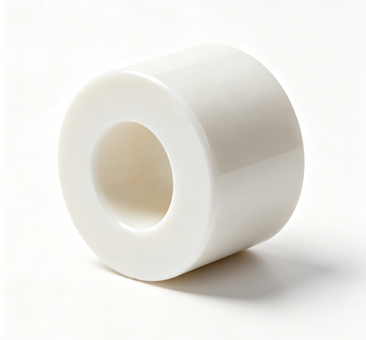
Classification and Key Characteristics of Alumina Plunger
1. High-Purity Alumina Composition and Dense Microstructure
The primary material used for an Alumina Plunger is Al₂O₃ ceramic, with the alumina content selected according to mechanical, thermal, electrical, and chemical requirements. Higher-purity alumina generally provides improved electrical insulation, chemical stability, hardness, and high-temperature performance, while the final properties also depend heavily on the manufacturing process and microstructure. A dense ceramic body is particularly important for plunger applications because internal porosity can act as a stress concentration point during repeated compression. Controlled sintering produces a fine and uniform microstructure that helps the plunger withstand mechanical loading while maintaining dimensional stability over long operating periods.
2. High Hardness and Wear Resistance
One of the major advantages of an Alumina Plunger is its high hardness. Typical alumina ceramic grades can reach approximately HRA 80 or higher, allowing the plunger to resist abrasive wear when exposed to repeated sliding, contact, or particulate contamination. However, wear performance should not be evaluated only by hardness. Surface roughness, mating material, contact pressure, lubrication conditions, particle size, and operating temperature all influence the actual wear rate. For precision assemblies, a properly polished alumina surface can significantly improve contact behavior and reduce friction-related damage.
3. Excellent Compressive Strength
Alumina ceramics are particularly strong under compressive loading, making them well suited for plunger geometries in which the component repeatedly transfers force along its axial direction. The typical Alumina Plunger specification can reach a compressive strength of 2000 MPa or more, depending on material grade and manufacturing conditions. This high compressive strength allows alumina plungers to maintain structural integrity under substantial mechanical loads. At the same time, engineers should recognize that alumina is a brittle ceramic, so sudden impact, tensile loading, sharp corners, and uncontrolled assembly stresses should be minimized through appropriate component design.
4. Dimensional Stability at Elevated Temperatures
Temperature can cause dimensional changes in any precision mechanical component. Alumina has a relatively low coefficient of thermal expansion compared with many metals and maintains its structural properties at temperatures where conventional polymer components would rapidly degrade. For high-temperature equipment, the low creep tendency and thermal stability of alumina are particularly valuable. Nevertheless, thermal shock must be considered separately from maximum temperature. Rapid heating or cooling can generate thermal gradients and internal stresses, so wall thickness, geometry, heating rate, and thermal cycling conditions should be evaluated during component selection.
5. Electrical Insulation and Chemical Resistance
Dense alumina is an excellent electrical insulator and can maintain high electrical resistivity even in demanding industrial environments. This makes an Alumina Plunger useful when mechanical motion or force transmission must be combined with electrical isolation. Alumina also exhibits strong resistance to many chemicals, oxidation, and corrosive environments. The actual compatibility depends on the chemical species, concentration, temperature, exposure time, and purity of the ceramic, so chemical resistance should always be evaluated against the specific operating medium rather than treated as universal.

Typical Specifications of Alumina Plunger
The following values represent typical engineering specifications for high-performance alumina plungers. Actual values can be customized according to alumina purity, geometry, surface finish, dimensional tolerance, and application requirements.
| Property | Typical Specification |
|---|---|
| Product | Alumina Plunger |
| Material | Aluminum Oxide (Al₂O₃) |
| Alumina Purity | 95–99.9% |
| Density | ≥3.60 g/cm³ |
| Hardness | HRA ≥80 |
| Flexural Strength | ≥300 MPa |
| Compressive Strength | ≥2000 MPa |
| Water Absorption | Very low / near zero for dense grades |
| Electrical Resistivity | Typically >10¹² Ω·cm |
| Maximum Working Temperature | Up to approximately 1600°C, depending on grade and atmosphere |
| Thermal Expansion | Approximately 7–8 × 10⁻⁶/K |
| Surface Finish | Customized according to application |
| Dimensional Tolerance | Customized |
| Shape | Cylindrical, stepped, grooved, or custom geometry |
For a precision Alumina Plunger, dimensional tolerance and surface finish can be just as important as the bulk ceramic properties. The plunger diameter, straightness, concentricity, end-face flatness, and surface roughness should be matched to the clearance and contact conditions of the mating component. Excessive clearance can reduce sealing or positioning accuracy, while insufficient clearance can cause binding during thermal expansion. The material grade should also be selected according to the dominant failure mechanism. If the main concern is abrasive wear, hardness and surface finish become critical. If the component is exposed to high compressive loads, density and flexural strength should be considered together. For electrical applications, purity, dielectric behavior, and surface condition may be more important than maximum mechanical strength.
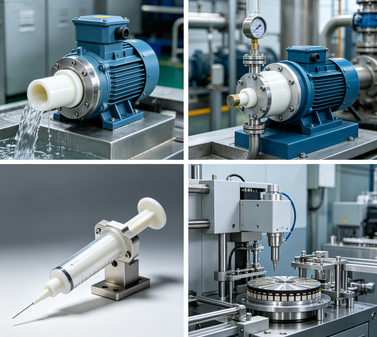
Applications of Alumina Plunger
1. Precision Fluid and Pumping Systems
An Alumina Plunger can be used in precision pumping and fluid-handling mechanisms where the component repeatedly moves against a cylinder, seal, or guide. Its high hardness and corrosion resistance can help maintain dimensional stability when conventional metallic plungers experience wear or chemical degradation. For abrasive or chemically demanding fluids, ceramic plungers can also reduce particle generation caused by surface wear. Proper dimensional matching between the alumina plunger and its mating component remains essential because ceramic components require controlled clearance to accommodate manufacturing tolerances and thermal expansion.
2. High-Temperature Industrial Equipment
Alumina plungers are suitable for mechanisms operating near elevated temperatures where polymers and many conventional engineering materials cannot maintain their mechanical properties. The ceramic's high-temperature stability allows it to function as a force-transfer or positioning component without significant softening. In furnace-related and thermal-processing equipment, engineers should evaluate not only the nominal operating temperature but also thermal cycling and atmosphere. The actual service temperature of an Alumina Plunger depends on the ceramic grade, mechanical load, surrounding atmosphere, and duration of exposure.
3. Wear-Resistant Mechanical Assemblies
The high hardness of alumina makes ceramic plungers useful in mechanical assemblies exposed to repeated sliding or contact wear. Applications can include positioning mechanisms, actuating components, guides, and other precision assemblies where long-term dimensional stability is important. When used as a wear component, the mating material and surface finish should be considered together with the ceramic itself. A highly polished alumina surface can provide different tribological behavior from a rough ceramic surface, while abrasive particles trapped between two surfaces can accelerate wear regardless of the nominal hardness of the plunger.
4. Electrical and Electronic Equipment
Because alumina combines mechanical strength with excellent electrical insulation, Alumina Plunger components can be integrated into equipment where a moving or load-bearing part must remain electrically isolated. This is particularly useful in precision assemblies that combine mechanical actuation with electrical or thermal functions. The high resistivity of dense alumina helps prevent unwanted current paths, while its dimensional stability supports accurate positioning. Depending on the application, engineers may specify high-purity alumina, controlled surface finish, or customized dimensions to meet insulation and mechanical requirements simultaneously.
5. Chemical Processing and Corrosive Environments
Alumina plungers can also be used in selected chemical-processing applications where resistance to corrosion and wear is required. Dense alumina is stable against many industrial chemicals and can provide longer service than conventional materials under appropriate conditions. Material compatibility should nevertheless be verified against the actual chemical environment. Strong acids, alkalis, molten materials, and elevated temperatures can produce different degradation mechanisms, so ceramic grade, purity, temperature, and exposure duration should be evaluated before final selection.
Company Profile
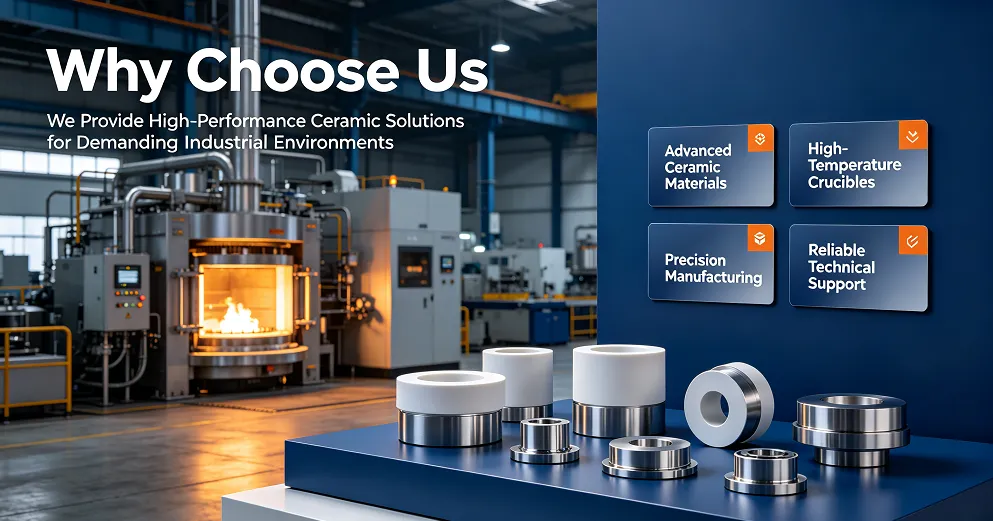
JianXun Advanced Ceramic Technology is a professional manufacturer specializing in high-performance ceramic components, including Alumina Plunger, alumina tubes, alumina discs, alumina rings, boron nitride ceramics, silicon carbide ceramics, silicon nitride ceramics, aluminum nitride ceramics, mullite ceramics, quartz ceramics, and customized precision ceramic parts. The company focuses on supplying finished ceramic products with controlled material properties, dimensional accuracy, surface quality, and application-specific configurations for demanding industrial applications.
Payment Terms: T/T, PayPal, Credit Card, Western Union, etc.
Shipment Terms: By air, by sea, by express, or according to customer request.
Storage Conditions: Store Alumina Plunger components in a clean, dry, dust-free environment. Avoid direct impact, uncontrolled stacking, and contact with hard foreign particles that could damage precision surfaces. For precision-machined parts, protective packaging should be maintained until installation.
FAQs About Alumina Plunger
1. Why is alumina ceramic suitable for plunger applications?
Alumina is suitable for plunger applications because it combines high hardness, high compressive strength, electrical insulation, chemical resistance, and excellent dimensional stability. Unlike many polymer or metallic materials, dense alumina does not soften at relatively high temperatures and can maintain its mechanical characteristics under demanding service conditions. Its hardness also provides strong resistance to abrasive wear, which is valuable when the plunger undergoes repeated movement or contact. However, alumina is a brittle ceramic, so the component should be designed to minimize impact and tensile stress. Proper radius design, controlled assembly force, suitable clearance, and appropriate surface finishing are important for obtaining reliable service life.
2. What alumina purity should be selected for an Alumina Plunger?
The appropriate alumina purity depends on the mechanical, electrical, thermal, and chemical requirements of the application. Grades in the 95–99.9% Al₂O₃ range can be selected for different performance requirements, while higher-purity alumina is generally preferred when excellent electrical insulation, chemical stability, and high-temperature performance are required. For applications dominated by mechanical loading and wear, engineers should not evaluate purity alone; density, grain structure, hardness, flexural strength, and surface finish can have an equally important influence on performance. The optimum material is therefore determined by the actual operating environment rather than by alumina content alone.
3. How should the dimensional tolerance of an Alumina Plunger be determined?
Dimensional tolerance should be determined from the mating component, operating temperature, required motion accuracy, expected thermal expansion, and assembly method. For a sliding plunger, the diameter tolerance and clearance must be controlled carefully because excessive clearance can reduce positioning or sealing performance, while insufficient clearance can increase the risk of interference or binding. Engineers should also consider straightness, cylindricity, concentricity, end-face flatness, and surface roughness when specifying a precision Alumina Plunger. If the component operates at elevated temperature, the thermal expansion of both the ceramic plunger and mating component should be included in the clearance calculation rather than relying only on room-temperature dimensions.
4. What causes Alumina Plungers to fail during operation?
Failure can result from several mechanisms, including impact loading, excessive tensile stress, thermal shock, abrasive wear, chemical attack, improper clearance, or concentrated contact stress. Although alumina has very high compressive strength, its fracture toughness is lower than that of many metals, so sudden impact or unfavorable geometry can initiate cracks even when the nominal compressive load is within specification. Thermal gradients can create additional internal stress during rapid heating or cooling. In precision assemblies, edge chipping and surface damage can also originate during handling or installation. For this reason, component geometry, loading direction, surface quality, thermal cycling, and assembly procedures should be considered together when designing an alumina plunger system.
5. How can the service life of an Alumina Plunger be improved?
The service life of an Alumina Plunger can be improved by selecting an appropriate alumina grade, optimizing surface finish, controlling dimensional tolerances, reducing impact loading, and ensuring that the mating components are compatible with the ceramic surface. Clean operating conditions are also important because hard particles trapped between sliding surfaces can produce localized abrasion and accelerate wear. For high-temperature applications, gradual heating and cooling can reduce thermal-shock damage. Where the plunger is used in a precision mechanism, engineers should additionally control alignment and contact pressure to prevent uneven loading. A customized ceramic composition, geometry, polished surface, or tighter dimensional tolerance may be appropriate when standard components cannot meet the required operating life.