Advanced Technical Ceramics, Precision Alumina, Silicon Carbide, Crucible Parts
 Technology Co., Ltd.(Luoyang) Technology Co., Ltd.科技品牌标志.webp)


Kiln Furniture Slabs
Overview
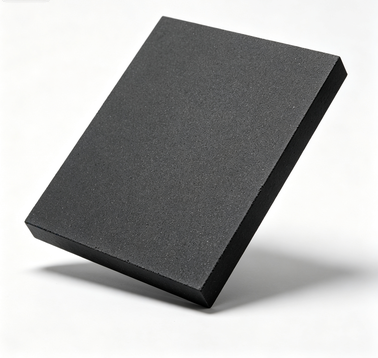
Silicon Carbide Kiln Furniture Slabs are high-performance refractory ceramic support components designed to carry, separate, and position ceramic products during high-temperature firing, sintering, calcination, and thermal treatment processes. Manufactured primarily from silicon carbide, these slabs combine high-temperature strength, excellent thermal conductivity, low thermal expansion, strong wear resistance, and good resistance to chemical attack, allowing them to function reliably under repeated thermal cycles where conventional refractory supports may deform, crack, or react with the fired products. Unlike simple refractory plates used only as passive heat-resistant surfaces, Silicon Carbide Kiln Furniture Slabs must be engineered as load-bearing components that maintain sufficient dimensional stability while supporting the weight of ceramic ware and resisting thermal gradients inside the kiln. Their high thermal conductivity helps distribute heat more evenly through the slab, while the relatively low coefficient of thermal expansion of SiC reduces dimensional changes during heating and cooling. This combination can help minimize thermal stress and improve the repeatability of firing operations. The actual performance of a silicon carbide kiln slab depends strongly on its SiC content, bonding system, density, porosity, thickness, geometry, surface condition, loading configuration, kiln atmosphere, maximum operating temperature, heating and cooling rates, and the characteristics of the supported products. Therefore, Silicon Carbide Kiln Furniture Slabs should be selected as part of the complete kiln system rather than evaluated only by their nominal maximum temperature.
Classification and Key Characteristics of Silicon Carbide Kiln Furniture Slabs
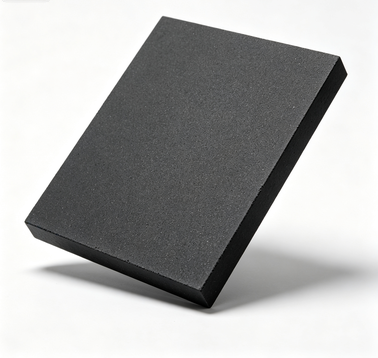
1. High-Temperature Load-Bearing Capability
Silicon Carbide Kiln Furniture Slabs are designed to support ceramic ware and other components under elevated-temperature conditions where both mechanical load and thermal stress must be considered simultaneously. Silicon carbide maintains high stiffness and strength at temperatures where many conventional materials experience significant softening or deformation, making it suitable for kiln furniture applications requiring repeated support over long firing cycles. The slab must resist its own weight as well as the weight of the products stacked above it, so thickness, span, support spacing, and loading arrangement directly influence its practical service life. A properly designed SiC slab can maintain relatively good dimensional stability and reduce sagging during repeated firing. Engineers should nevertheless distinguish between room-temperature mechanical strength and high-temperature load-bearing performance, because the latter depends on the SiC bonding system, atmosphere, temperature, creep behavior, and actual loading configuration.
2. Excellent Thermal Shock Resistance
Rapid temperature changes can generate significant thermal gradients across a kiln furniture slab, particularly during kiln start-up, cooling, or uneven heating. Silicon Carbide Kiln Furniture Slabs benefit from the combination of relatively low thermal expansion and high thermal conductivity of SiC, allowing heat to distribute more efficiently through the material and reducing excessive temperature differences between different regions of the slab. This can lower thermally induced stress and improve resistance to cracking during repeated heating and cooling cycles. Thermal shock performance is also affected by slab thickness, geometry, edge design, internal defects, support conditions, heating rate, cooling rate, and the temperature difference across the component. For this reason, a thin slab with an appropriate design may perform very differently from a thick slab under the same nominal kiln temperature. Proper handling before installation is also important because edge chips and impact damage can become crack initiation points during subsequent thermal cycling.
3. High Thermal Conductivity
The relatively high thermal conductivity of silicon carbide is an important characteristic of Silicon Carbide Kiln Furniture Slabs, particularly in firing systems where uniform temperature distribution is important. Compared with many conventional refractory ceramics, SiC can transfer heat efficiently across the slab, helping reduce localized thermal gradients between different sections of the kiln furniture. This can contribute to more uniform heating of supported ceramic products and may reduce temperature differences caused by the physical presence of thick refractory furniture. At the same time, high thermal conductivity means that SiC kiln furniture can participate actively in heat transfer within the kiln, so slab thickness, arrangement, loading density, and kiln heating characteristics should be considered during process design. Excessively thick or unnecessarily large slabs can increase thermal mass and influence the heating curve, while appropriately designed slabs can provide a useful balance between mechanical support and thermal efficiency. The actual thermal conductivity varies with SiC content, density, porosity, bonding phase, temperature, and manufacturing route.
4. Low Thermal Expansion and Dimensional Stability
Silicon carbide has a relatively low coefficient of thermal expansion compared with many conventional refractory materials, which helps Silicon Carbide Kiln Furniture Slabs maintain dimensional stability during repeated temperature changes. Reduced thermal expansion is particularly valuable for large slabs because dimensional changes can create contact stress between the slab, kiln supports, and fired products. Excessive expansion and contraction may also contribute to warping, cracking, or dimensional interference when several kiln furniture components are stacked together. By limiting thermal expansion, SiC helps maintain more predictable clearances and support geometry throughout the firing cycle. However, dimensional stability depends on more than the intrinsic thermal expansion coefficient; slab geometry, thickness distribution, support spacing, temperature uniformity, material defects, and mechanical loading all influence deformation. Engineers should therefore consider the complete high-temperature stress state when specifying Silicon Carbide Kiln Furniture Slabs, particularly for large-format or thin-wall designs.
5. Excellent Wear and Chemical Resistance
Kiln furniture is repeatedly exposed to ceramic powders, glazes, firing residues, loading operations, and thermal cycling, making surface durability an important consideration. Silicon Carbide Kiln Furniture Slabs provide strong resistance to mechanical wear and can maintain a relatively stable working surface under repeated loading and unloading operations. SiC also demonstrates good resistance to many chemical environments, which can help reduce degradation caused by contact with selected ceramic compositions or process residues. This is particularly important when kiln furniture is used repeatedly because progressive surface deterioration can change flatness, introduce contamination, or create local stress concentrations. However, chemical compatibility must be evaluated according to the actual glaze, ceramic formulation, atmosphere, temperature, and reaction products present in the kiln. A material that performs well with one ceramic formulation may behave differently with another, so Silicon Carbide Kiln Furniture Slabs should be selected according to the complete firing chemistry rather than SiC composition alone.
6. Reusable Design for Repeated Firing Cycles
A major engineering advantage of Silicon Carbide Kiln Furniture Slabs is their ability to serve as reusable kiln supports through repeated firing cycles when properly designed, manufactured, installed, and maintained. Their high-temperature stability, thermal shock resistance, wear resistance, and dimensional stability can allow a slab to withstand numerous heating and cooling cycles without rapid degradation. Reusability is particularly valuable in industrial ceramic production because kiln furniture represents a recurring operating cost and directly affects firing consistency. A slab that maintains flatness and structural integrity for a longer period can reduce replacement frequency and help maintain consistent stacking conditions from batch to batch. Actual service life depends heavily on loading stress, maximum temperature, atmosphere, thermal cycling rate, support configuration, chemical interaction with the fired products, and mechanical handling. Regular inspection for warping, cracks, edge damage, surface reaction, and permanent deformation is therefore essential for maximizing the working life of Silicon Carbide Kiln Furniture Slabs.
Typical Specifications of Silicon Carbide Kiln Furniture Slabs
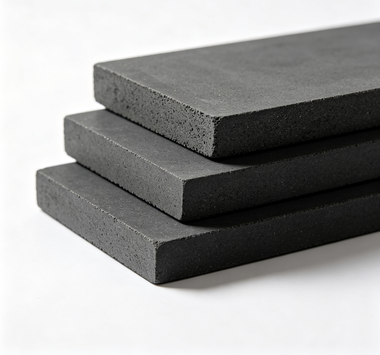
The following values represent typical engineering specifications for silicon carbide kiln furniture and should be treated as reference ranges rather than universal limits. Final specifications can be adjusted according to kiln temperature, firing atmosphere, product weight, slab dimensions, support spacing, firing cycle, and required service life.
| Property | Typical Specification |
|---|---|
| Product | Silicon Carbide Kiln Furniture Slabs |
| Material | Silicon Carbide (SiC) |
| SiC Content | Typically ≥85% depending on grade and bonding system |
| Density | Approx. 2.6–3.1 g/cm³ |
| Flexural Strength | Typically ≥150 MPa, depending on grade and temperature |
| Compressive Strength | Typically ≥1000 MPa |
| Thermal Conductivity | Approx. 20–120 W/m·K, depending on grade and temperature |
| Coefficient of Thermal Expansion | Approx. 4.0–5.0 × 10⁻⁶/K |
| Maximum Service Temperature | Approx. 1300–1650°C depending on grade and atmosphere |
| Porosity | Typically controlled according to grade |
| Thermal Shock Resistance | Excellent under suitable firing conditions |
| Wear Resistance | Excellent |
| Chemical Resistance | Excellent against many ceramic-processing environments |
| Shape | Flat slab / plate / custom geometry |
| Thickness | Customizable according to load and span |
| Length & Width | Customizable |
| Surface Finish | Ground, machined, or customized |
| Edge Design | Straight, chamfered, rounded, or customized |
The technical specification of Silicon Carbide Kiln Furniture Slabs should be matched to the actual mechanical and thermal conditions inside the kiln. For example, a large-format slab spanning a long distance between supports requires substantially different structural considerations from a small plate supported at multiple points. Thickness influences stiffness, thermal mass, heat transfer, and thermal gradients, while density and porosity affect mechanical strength, thermal conductivity, and resistance to chemical penetration. The maximum service temperature should also be interpreted together with the firing atmosphere because oxidation and chemical reactions can influence SiC performance at elevated temperatures. Engineers should additionally consider the weight and distribution of the ceramic products placed on the slab, the number of support points, the possibility of uneven loading, the firing cycle, and the expected number of thermal cycles. For demanding applications, Silicon Carbide Kiln Furniture Slabs can be manufactured with customized dimensions, thicknesses, surface finishes, holes, slots, and support geometries to match the kiln configuration and product-loading requirements.
Advantages of Silicon Carbide Kiln Furniture Slabs
1. High Structural Stability at Elevated Temperature
Silicon Carbide Kiln Furniture Slabs provide strong structural stability under elevated-temperature conditions, allowing them to support ceramic products without excessive deformation when the appropriate grade and geometry are selected. Their high-temperature mechanical performance is particularly useful for kiln systems where the furniture must carry substantial loads over long firing cycles. Compared with refractory materials that soften or deform significantly at elevated temperatures, SiC maintains a rigid ceramic structure under suitable operating conditions. This helps preserve the alignment and spacing of stacked products and can reduce problems associated with slab sagging. The final structural performance depends on slab thickness, span, support arrangement, product weight, temperature, atmosphere, and firing duration, so engineering design is essential for large or heavily loaded furniture.
2. Improved Thermal Uniformity
The high thermal conductivity of Silicon Carbide Kiln Furniture Slabs allows heat to move efficiently through the support structure, which can help reduce temperature differences across the slab. More uniform thermal distribution is beneficial when the supported ceramic products require tightly controlled firing conditions or when localized temperature differences could influence shrinkage, densification, phase transformation, or surface quality. The slab itself becomes part of the kiln's thermal system, meaning its dimensions and arrangement can influence heating and cooling behavior. Properly selected SiC furniture can therefore provide mechanical support without creating unnecessarily strong thermal barriers. Engineers should still evaluate the complete kiln thermal profile because burner or heating-element arrangement, airflow, product stacking density, slab thickness, and kiln atmosphere all influence actual temperature uniformity.
3. Excellent Resistance to Thermal Cycling
Industrial kiln furniture may experience hundreds or thousands of heating and cooling cycles, making resistance to repeated thermal stress a major factor in total operating cost. Silicon Carbide Kiln Furniture Slabs benefit from SiC's relatively low thermal expansion and good thermal conductivity, which help reduce the thermal gradients responsible for many forms of thermal stress. When properly designed, the slabs can tolerate repeated temperature changes with lower risk of sudden thermal cracking than many less suitable refractory materials. Nevertheless, thermal cycling performance is strongly influenced by manufacturing defects, edge damage, support conditions, heating and cooling rates, and temperature uniformity. Careful handling during loading and unloading is therefore just as important as material selection because mechanical damage introduced at room temperature can become critical when the slab is subsequently heated.
4. Reduced Slab Deformation and Long-Term Wear
Maintaining flatness is essential when kiln furniture is used to support precision ceramic products. Silicon Carbide Kiln Furniture Slabs combine high-temperature stability with good wear resistance, helping maintain their geometry during repeated loading, firing, and unloading operations. Reduced deformation can improve the consistency of product positioning and minimize uneven mechanical contact between the fired ware and supporting furniture. Their resistance to surface wear also helps preserve the usable working surface over repeated cycles. However, deformation can still occur if the slab is undersized for the load, insufficiently supported, exposed to excessive temperature, or operated beyond the recommended conditions. For this reason, slab thickness, support spacing, loading pattern, and high-temperature mechanical behavior should be evaluated together during the design stage.
5. Good Chemical Compatibility with Ceramic Firing Processes
During firing, kiln furniture may come into contact with ceramic powders, glazes, volatile components, and reaction products. Silicon Carbide Kiln Furniture Slabs offer good resistance to many chemical environments and can therefore provide reliable performance in selected ceramic firing processes. Their relatively stable ceramic structure can reduce degradation caused by repeated exposure to process residues compared with less chemically resistant support materials. This helps maintain the surface quality and dimensional stability of the furniture over multiple firing cycles. However, the compatibility of SiC depends on the actual firing atmosphere, temperature, ceramic formulation, glaze composition, and reaction products. For applications involving aggressive materials or unusual atmospheres, engineers should conduct compatibility testing before selecting Silicon Carbide Kiln Furniture Slabs for long-term production.
6. Customizable for Complex Kiln Loading Requirements
Industrial kilns rarely use a single universal furniture configuration, so Silicon Carbide Kiln Furniture Slabs can be customized in dimensions, thickness, surface finish, edge geometry, holes, slots, and other structural features to match specific loading requirements. Custom geometry allows engineers to optimize support spacing, product placement, airflow, thermal exposure, and available kiln volume without unnecessarily increasing the weight of the furniture. Large slabs can also be designed around specific support patterns to improve load distribution and reduce bending stress. The customization process should consider both room-temperature handling and high-temperature operation because machining features, sharp internal corners, and holes can influence stress concentration. Properly engineered customized Silicon Carbide Kiln Furniture Slabs can therefore provide a more efficient interface between the kiln structure and the products being fired.
Applications of Silicon Carbide Kiln Furniture Slabs
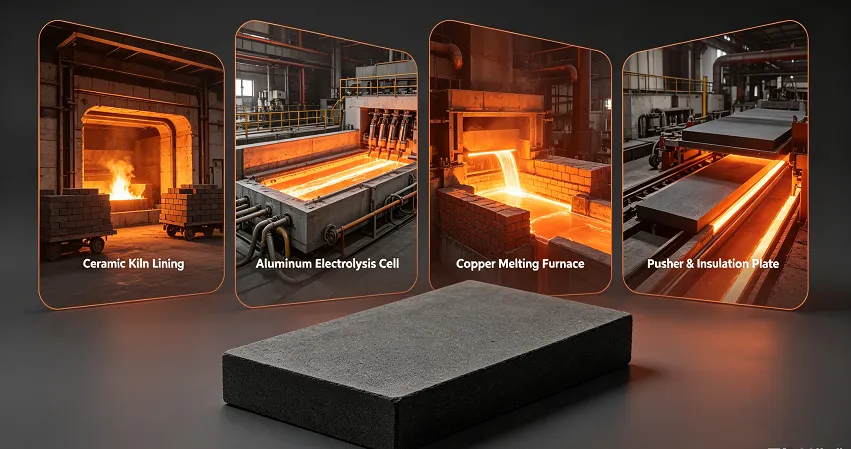
1. Ceramic Sintering and Firing
Silicon Carbide Kiln Furniture Slabs are widely suited to ceramic firing environments where products must be supported accurately throughout high-temperature sintering. The slabs provide a stable horizontal surface that supports ceramic components while they undergo heating, densification, shrinkage, and cooling. Their high-temperature strength and low thermal expansion help maintain dimensional stability during these processes, reducing the risk of deformation caused by unstable support conditions. SiC's thermal conductivity can also help distribute heat through the furniture and reduce localized thermal gradients. For advanced ceramic production, the slab surface must be compatible with the ceramic formulation and firing atmosphere because direct contact can influence contamination, sticking, or surface reactions. Slab flatness, thickness, support spacing, and product loading should therefore be designed around the actual firing cycle rather than selected solely according to kiln temperature.
2. Advanced Ceramic Component Manufacturing
In the production of technical ceramics, dimensional control and repeatability are often more demanding than in conventional refractory processing. Silicon Carbide Kiln Furniture Slabs can provide stable support for alumina, zirconia, silicon nitride, silicon carbide, and other advanced ceramic components during high-temperature treatment, depending on chemical compatibility and firing conditions. The flat and rigid support surface helps control product positioning and reduces the possibility of deformation caused by uneven contact. Because SiC furniture can withstand repeated thermal cycles, it can also support consistent production across multiple batches. Engineers should pay particular attention to the coefficient of thermal expansion of both the kiln slab and the ceramic product because large differences in expansion behavior can generate contact stress during heating and cooling. Surface finish and cleanliness are also important when the fired component has strict dimensional or cosmetic requirements.
3. Refractory Product Firing
Refractory products often require high-temperature treatment while being supported under substantial mechanical loads. Silicon Carbide Kiln Furniture Slabs provide high-temperature load-bearing capability and strong resistance to wear, making them suitable for selected refractory firing operations. Their structural stability helps support heavy products while reducing the risk of severe sagging or permanent deformation during long firing cycles. SiC also offers good thermal conductivity, which can influence the distribution of heat through the support structure and the products placed on it. Because refractory materials may contain reactive oxides, additives, and mineral phases, chemical compatibility between the slab and the products should be assessed before production use. The slab thickness and support configuration should also be designed according to the total load rather than the weight of an individual product alone.
4. Ceramic Tiles and Flat Product Firing
Flat ceramic products require a stable and sufficiently flat support surface because even relatively small deformation of the kiln furniture can transfer into the product during firing. Silicon Carbide Kiln Furniture Slabs can provide rigid, thermally stable support for selected ceramic tiles, plates, and other flat products during high-temperature processing. Their relatively low thermal expansion helps maintain predictable dimensions during heating and cooling, while their high thermal conductivity can contribute to more uniform heat transfer across the supporting surface. The slab must remain sufficiently flat under load because uneven support can produce bending stress in the ceramic product and contribute to warping or cracking. Engineers should therefore consider slab thickness, span between supports, loading density, product shrinkage, surface flatness, and firing atmosphere when designing kiln furniture for flat ceramic products.
5. Ceramic Powder Calcination and Thermal Treatment
Certain ceramic powders and inorganic materials require high-temperature calcination or thermal treatment before subsequent forming, grinding, or sintering processes. Silicon Carbide Kiln Furniture Slabs can be used as stable support surfaces for trays, containers, setters, or other kiln assemblies used during these treatments. Their thermal stability allows them to withstand repeated exposure to elevated temperatures, while their chemical resistance can be advantageous when the processed powder releases volatile species or reacts with surrounding materials. The slab geometry can also be customized to improve material loading and airflow around the processing containers. For powder-processing applications, however, engineers should consider the possibility of powder accumulation, chemical deposition, surface reaction, and contamination over repeated cycles. Regular cleaning and inspection can help maintain the required surface condition and extend the service life of the Silicon Carbide Kiln Furniture Slabs.
6. High-Temperature Ceramic Setter Systems
Silicon Carbide Kiln Furniture Slabs can function as structural setter components in multi-level kiln furniture systems where products must be separated vertically while maintaining sufficient airflow and thermal exposure. Their high-temperature strength allows them to carry the combined weight of upper layers, while their dimensional stability helps maintain predictable spacing between stacked components. Properly designed setter systems can increase usable kiln volume and improve production efficiency by allowing controlled vertical loading. However, support points must be distributed carefully because localized loads can generate bending stress or initiate cracking in thin slabs. The design should account for the total stack weight, support geometry, slab thickness, kiln temperature profile, and thermal expansion. For automated or high-throughput production, consistent slab dimensions are particularly important because even small variations can affect stacking stability and product positioning.
Engineering Considerations for Silicon Carbide Kiln Furniture Slabs
When designing or selecting Silicon Carbide Kiln Furniture Slabs, engineers should evaluate the slab as a high-temperature structural component rather than simply as a refractory plate. The first consideration is mechanical loading: total product weight, load distribution, support spacing, slab thickness, span length, and possible eccentric loading all influence bending stress and high-temperature deformation. Thermal conditions must then be evaluated, including maximum temperature, heating rate, cooling rate, thermal gradients, atmosphere, and number of firing cycles. Although SiC has relatively low thermal expansion and good thermal conductivity, large or thick slabs can still experience significant thermal stress when temperature distribution is uneven. Surface condition is another important factor because scratches, chips, sharp corners, machining defects, or impact damage can act as crack initiation sites during thermal cycling. Engineers should also consider chemical interaction with ceramic powders, glazes, volatilized species, and kiln atmosphere because long-term reactions can gradually change the slab surface. Support points should be positioned to distribute loads effectively without creating excessive localized stress, and the slab should not be forced into a rigid configuration that prevents natural thermal expansion. For Silicon Carbide Kiln Furniture Slabs used in repeated production, periodic inspection for warping, cracks, edge damage, surface reaction, and permanent deformation is recommended so that damaged furniture can be removed before failure occurs during a high-temperature firing cycle.

Company Profile
Jenson(Luoyang) Technology Co., Ltd. is a professional manufacturer specializing in high-performance ceramic products, including Silicon Carbide Kiln Furniture Slabs, alumina ceramics, boron nitride ceramics, silicon carbide ceramics, silicon nitride ceramics, aluminum nitride ceramics, mullite ceramics, quartz ceramics, and customized precision ceramic components. The company focuses on finished ceramic products with controlled material composition, density, mechanical properties, thermal performance, dimensional accuracy, surface quality, and customized geometries for demanding industrial applications.
Payment Terms: T/T, PayPal, Credit Card, Western Union, etc.
Shipment Terms: By air, by sea, by express, or according to customer request.
Storage Conditions: Store Silicon Carbide Kiln Furniture Slabs in a clean, dry, and protected environment. Avoid direct impact, dropping, edge contact, and stacking conditions that may create concentrated mechanical stress. Before kiln installation, inspect the slabs for cracks, chips, warping, or other visible damage and keep the working surface free from contamination.
FAQs About Silicon Carbide Kiln Furniture Slabs
Q1: Why are Silicon Carbide Kiln Furniture Slabs suitable for high-temperature ceramic firing?
A: Silicon Carbide Kiln Furniture Slabs are suitable for high-temperature ceramic firing because silicon carbide combines high-temperature structural stability, relatively low thermal expansion, high thermal conductivity, and strong resistance to wear and thermal cycling. During firing, kiln furniture must simultaneously withstand the weight of ceramic products, repeated temperature changes, thermal gradients, and potential chemical interaction with powders or glazes. SiC can maintain useful mechanical stability under demanding thermal conditions while transferring heat efficiently through the support structure. Its relatively low coefficient of thermal expansion also helps reduce dimensional changes during heating and cooling. However, the practical performance of a SiC kiln slab depends on its specific grade, bonding system, thickness, support configuration, atmosphere, and operating temperature, so the nominal temperature rating should not be considered independently from the actual firing conditions.
Q2: Why is thermal conductivity important for Silicon Carbide Kiln Furniture Slabs?
A: Thermal conductivity is important because kiln furniture participates directly in the heat-transfer environment surrounding the ceramic products. Silicon Carbide Kiln Furniture Slabs with relatively high thermal conductivity can transfer heat through the support structure more efficiently, potentially reducing excessive temperature differences across the slab and contributing to more uniform thermal exposure of the supported products. This can be particularly useful in firing processes where differences in heating rate or temperature distribution may influence shrinkage, densification, phase transformation, or final dimensional accuracy. At the same time, thermal conductivity must be considered together with slab thickness, product loading, kiln airflow, heating-element arrangement, and overall thermal mass. A high-conductivity material does not automatically guarantee uniform firing if the kiln itself has substantial temperature gradients or the products are stacked improperly.
Q3: How should the thickness of a Silicon Carbide Kiln Furniture Slab be selected?
A: The thickness of Silicon Carbide Kiln Furniture Slabs should be determined primarily by the expected mechanical load, slab dimensions, span between supports, operating temperature, and required stiffness rather than by temperature alone. A thicker slab generally provides greater bending stiffness and load-bearing capacity, which can be important for large-format furniture or heavy ceramic products. However, increasing thickness also increases thermal mass and can influence heating and cooling behavior, so excessive thickness may reduce thermal efficiency or increase thermal gradients during rapid temperature changes. Engineers should therefore calculate or evaluate the expected bending stress and deformation under both room-temperature and high-temperature conditions while considering the actual support configuration. For demanding applications, customized thickness and support geometry can provide a better balance between structural strength, thermal response, weight, and service life.
Q4: Can Silicon Carbide Kiln Furniture Slabs be used repeatedly through many firing cycles?
A: Yes, Silicon Carbide Kiln Furniture Slabs are specifically attractive for applications requiring repeated heating and cooling cycles because SiC offers good thermal shock resistance, high-temperature stability, wear resistance, and relatively low thermal expansion. Properly selected and operated slabs can remain structurally useful through many firing cycles, reducing the need for frequent furniture replacement. However, service life varies considerably with maximum temperature, firing atmosphere, heating and cooling rate, product loading, support spacing, chemical interaction, and mechanical handling. Repeated thermal cycling can gradually expose pre-existing defects, edge damage, warping, or surface reactions that eventually lead to failure. Regular inspection is therefore important, particularly for slabs used at high temperatures or under heavy loads. A slab that shows significant cracking, permanent deformation, or severe surface degradation should not simply be returned to service because failure during firing can damage both the kiln and the products.
Q5: What causes Silicon Carbide Kiln Furniture Slabs to crack or deform during service?
A: Cracking or deformation of Silicon Carbide Kiln Furniture Slabs can result from a combination of thermal, mechanical, chemical, and handling-related factors. Uneven heating or cooling can create thermal gradients that generate internal stress, while excessive product weight, insufficient support points, long unsupported spans, or uneven loading can produce bending stress and high-temperature deformation. Edge impacts, scratches, and chips introduced during handling can also act as stress-concentration sites that become more critical during subsequent thermal cycles. Chemical reactions with ceramic powders, glazes, or kiln atmospheres may gradually weaken or alter the surface under certain conditions. Incorrect slab thickness or an unsuitable SiC grade can further reduce service life. For this reason, engineers should evaluate Silicon Carbide Kiln Furniture Slabs according to the complete load, temperature, atmosphere, geometry, support arrangement, and firing-cycle requirements rather than attributing failure to temperature alone.