Advanced Technical Ceramics, Precision Alumina, Silicon Carbide, Crucible Parts



Boron Nitride

Boron Nitride Ceramic Rod

BN Wrapping Paper Boron Nitride Coated Paper

Boron Nitride Release Paper

BN White Ring Paper Boron Nitride White Ring Paper

Boron Nitride Insulation Paper BN Ceramic Insulation Paper

Boron Nitride Ceramic Gasket

Boron Nitride Ceramic Separation Ring

Boron Nitride Insulation Sleeve and Ceramic Tube

High Purity Boron Nitride Ceramic Setter Plate

High Purity Boron Nitride Target BN Target

Boron Nitride Ceramic Nozzles
Review of Boron Nitride
Boron Nitride (BN) ceramic is an advanced technical ceramic material featuring a unique combination of high thermal conductivity, excellent electrical insulation, low thermal expansion, and superior chemical stability. Unlike conventional insulating ceramics, BN ceramic can efficiently transfer heat while maintaining high dielectric performance, making it suitable for applications requiring both thermal management and electrical isolation under severe operating conditions.
JianXuan manufactures precision Boron Nitride ceramic components using advanced forming, sintering, and machining technologies. Our BN ceramic products are engineered to provide reliable performance in high-temperature environments with excellent thermal shock resistance, dimensional stability, and resistance to chemical attack. The material can be customized into complex geometries according to engineering drawings, application requirements, and operating conditions.
Due to its unique physical and chemical properties, Boron Nitride ceramic is widely applied in semiconductor processing equipment, vacuum furnace systems, high-temperature insulation components, metallurgical processing, and precision industrial applications. BN ceramic components help improve equipment reliability, reduce thermal stress, and maintain stable performance in demanding production environments.

Advantages of Boron Nitride Ceramic
1. Exceptional High-Temperature Stability and Thermal Shock Resistance
Boron Nitride (BN) ceramic exhibits excellent stability under high-temperature operating conditions due to its high temperature resistance, low thermal expansion coefficient, and reliable structural performance. It can withstand repeated heating and cooling cycles with minimal dimensional change, reducing the risk of cracking or deformation caused by thermal stress. This makes BN ceramic components suitable for furnace systems, thermal insulation parts, and high-temperature equipment operating under vacuum or inert atmospheres.
2. Excellent Thermal Conductivity with Superior Electrical Insulation Performance
One of the most significant advantages of Boron Nitride ceramic is its ability to provide efficient heat transfer while maintaining excellent electrical insulation. Its unique hexagonal crystal structure enables effective thermal management without electrical conduction, making it suitable for applications requiring both heat dissipation and insulation. BN ceramic is widely used in semiconductor processing equipment, electronic thermal management systems, and high-temperature electrical components.
3. Outstanding Dielectric Properties and Electrical Reliability at Elevated Temperatures
Boron Nitride ceramic features high electrical resistivity, low dielectric loss, and stable dielectric performance across a wide temperature range. Compared with conventional insulating ceramics, BN maintains reliable electrical insulation characteristics even under severe thermal conditions. These properties make BN ceramic an ideal material for semiconductor equipment, high-frequency electronic systems, and precision electrical insulation components.
4. Excellent Chemical Stability and Compatibility with Molten Materials
Boron Nitride ceramic provides excellent resistance to chemical corrosion, oxidation, and reactions with many molten materials. It has low wettability with molten metals, which helps prevent material adhesion, contamination, and surface damage during high-temperature processing. This makes BN ceramic components suitable for crucibles, nozzles, protective parts, and metallurgical processing equipment requiring clean and stable operation.
5. Superior Machinability for Complex Precision Ceramic Components
Compared with many traditional advanced ceramics, Boron Nitride ceramic offers excellent machinability due to its unique layered structure and relatively low hardness. It can be precision-machined into complex shapes, thin-wall structures, and customized components according to engineering drawings and application requirements. This advantage allows BN ceramic to be widely used in semiconductor equipment, laboratory systems, and specialized industrial components requiring high dimensional accuracy.
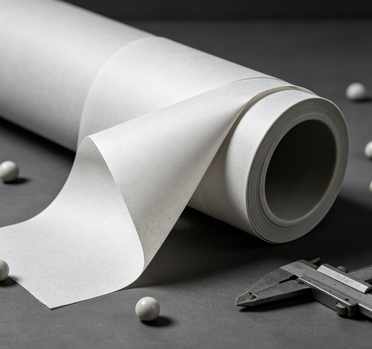
Technical Specifications of Boron Nitride Ceramic
| Property | Value |
|---|---|
| Material | Boron Nitride (BN) Ceramic |
| Purity | ≥99% |
| Density | 1.8–2.2 g/cm³ |
| Thermal Conductivity | 30–200 W/(m·K) |
| Electrical Resistivity | >10¹³ Ω·cm |
| Maximum Operating Temperature | Up to 2000°C |
| Thermal Expansion Coefficient | 1–5 ×10⁻⁶/°C |
| Dielectric Strength | Excellent |
| Chemical Stability | Outstanding |
| Machinability | Excellent |
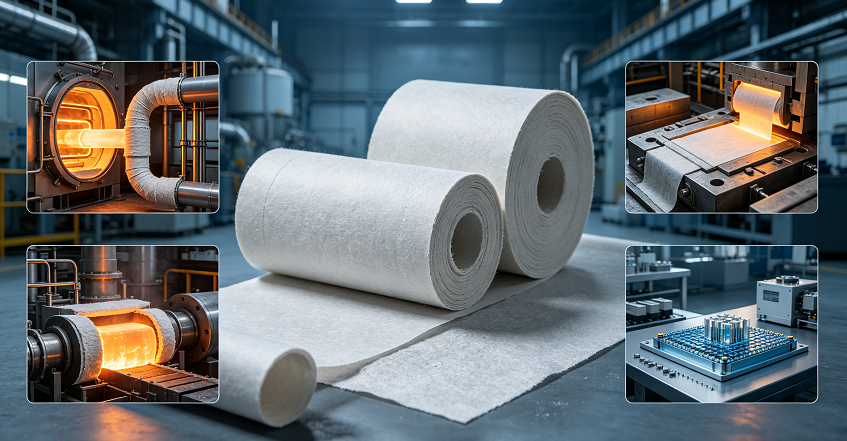
Applications of Boron Nitride Ceramic
1. Semiconductor Manufacturing Equipment
Boron Nitride ceramic is widely used in semiconductor processing equipment due to its high purity, excellent electrical insulation, and stable performance under high-temperature conditions. In wafer processing and thermal treatment systems, BN components provide reliable insulation and thermal management while minimizing particle contamination during precision manufacturing processes. Typical applications include wafer supports, insulation rings, furnace components, and customized ceramic parts used in semiconductor production equipment.
2. Metallurgical Processing and Molten Metal Handling
Boron Nitride ceramic is an ideal material for metallurgical applications where components are exposed to molten metals and extreme thermal conditions. Its low wettability with many molten metals helps prevent metal adhesion, reduce contamination, and improve process stability during casting and high-temperature material processing. BN ceramic components are commonly used in crucibles, nozzles, protective sleeves, and other parts requiring chemical inertness and long service life.
3. Vacuum Furnace and High-Temperature Thermal Processing Systems
BN ceramic components are extensively applied in vacuum furnaces and high-temperature processing equipment because of their excellent thermal shock resistance, low thermal expansion coefficient, and dimensional stability. They can withstand repeated heating and cooling cycles while maintaining structural integrity, reducing failure risks caused by thermal stress. Typical applications include furnace insulation parts, heating element supports, spacers, and structural components operating in vacuum or inert gas environments.
4. Electronic Components and Thermal Management Systems
Due to its combination of high thermal conductivity and electrical insulation, Boron Nitride ceramic plays an important role in advanced thermal management applications. BN components help transfer heat efficiently while electrically isolating sensitive electronic elements, improving operating reliability and preventing thermal damage. They are widely used in semiconductor cooling systems, high-power electronic devices, heat spreaders, and electrical insulation components requiring stable performance at elevated temperatures.
5. Chemical Processing and Corrosion-Resistant Equipment
Boron Nitride ceramic provides excellent chemical stability and resistance to many corrosive environments, making it suitable for demanding chemical processing applications. Its resistance to chemical reactions and high-temperature degradation allows components to maintain reliable performance when exposed to aggressive media. BN ceramic parts are used in chemical processing equipment, protective components, reaction systems, and specialized industrial equipment requiring high corrosion resistance.
6. Aerospace and Advanced Industrial Applications
Boron Nitride ceramic is utilized in aerospace and advanced industrial systems where lightweight, thermal stability, and electrical insulation are critical requirements. Its low thermal expansion and excellent resistance to thermal shock allow components to operate reliably under rapid temperature variations and extreme conditions. BN ceramic is applied in thermal protection components, insulation systems, and precision ceramic parts for specialized high-performance equipment.
Company Profile
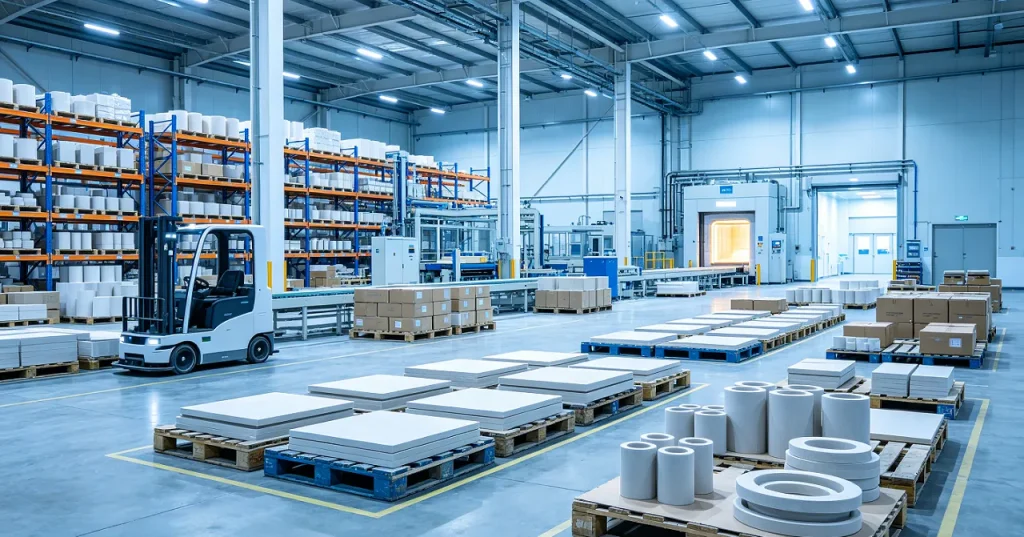
JianXuan is a professional manufacturer and supplier specializing in advanced ceramic products, including Boron Nitride (BN), Silicon Carbide (SiC), and Alumina (Al₂O₃) ceramic components. With advanced manufacturing technology, strict quality control systems, and professional production capabilities, JianXuan provides reliable ceramic solutions for global customers requiring high temperature resistance, excellent thermal performance, and long-term durability.
Payment Terms: T/T, PayPal, Credit Card, Western Union, etc.
Shipment Terms: By air, by sea, by express, or according to customer request.
Storage Conditions: Boron Nitride ceramic products should be stored in a dry, clean, and well-ventilated environment. Avoid moisture, dust contamination, strong impact, and direct exposure to harsh conditions to maintain product quality and performance.
Package:Boron Nitride ceramic products are carefully packaged to ensure safe transportation and prevent damage during handling.
1. Protective Packaging-Each product is packed with suitable protective materials to avoid scratches, cracks, and mechanical damage during transportation.
2. Export Standard Packing-Products can be packed using export-standard wooden cases, foam protection, and shock-resistant materials according to product size and quantity.
3. Customized Packaging-JianXuan provides customized packaging solutions based on customer requirements, transportation methods, and product specifications.
FAQs of Boron Nitride
1. Why is Boron Nitride ceramic preferred for high-temperature applications compared with other technical ceramics?
Boron Nitride ceramic is selected for high-temperature applications due to its unique combination of excellent thermal conductivity, electrical insulation, low thermal expansion, and outstanding thermal shock resistance. Unlike many oxide ceramics, BN ceramic can withstand rapid temperature changes without cracking and maintains dimensional stability under severe thermal cycling. It is especially suitable for semiconductor equipment, vacuum furnaces, and high-temperature components where both thermal management and electrical insulation are required.
2. What are the key performance parameters engineers should consider when selecting BN ceramic components?
When selecting Boron Nitride ceramic products, engineers usually evaluate parameters including purity, density, thermal conductivity, electrical resistivity, coefficient of thermal expansion, mechanical strength, and maximum service temperature. High-purity BN grades provide better chemical stability and insulation performance, while optimized density improves mechanical reliability. The final material selection depends on operating temperature, atmosphere conditions, thermal cycling frequency, and mechanical load requirements.
3. Can Boron Nitride ceramic be used in vacuum and inert atmosphere environments?
Yes. Boron Nitride ceramic performs exceptionally well in vacuum, nitrogen, argon, and other inert atmosphere environments because of its high chemical stability and low vapor pressure at elevated temperatures. It is commonly used in vacuum furnace components, semiconductor processing equipment, and high-temperature insulation parts. However, BN should be carefully evaluated in oxidizing environments at high temperatures because oxidation resistance depends on temperature and exposure time.
4. How does Boron Nitride ceramic provide both thermal conductivity and electrical insulation?
Boron Nitride ceramic has a layered hexagonal crystal structure similar to graphite, allowing efficient heat transfer through the material while maintaining high electrical resistance. This unique structure enables BN components to dissipate heat effectively without conducting electricity, making them ideal for applications such as semiconductor processing parts, thermal management components, and electrical insulation systems operating at elevated temperatures.
5. Can JianXuan manufacture customized Boron Nitride ceramic components according to engineering drawings?
Yes. JianXuan provides customized BN ceramic components based on customer drawings, including complex geometries, precision dimensions, and specific performance requirements. Our engineering team can assist with material grade selection, structural optimization, machining requirements, and application evaluation to ensure the final component meets the required thermal, electrical, and mechanical performance standards.
6. What are the typical failure factors of Boron Nitride ceramic components during operation?
The service life of BN ceramic components is mainly affected by operating atmosphere, temperature fluctuations, mechanical stress, and contamination conditions. Excessive oxidation exposure, improper thermal shock conditions, or mechanical impact may reduce component durability. Proper material selection, surface treatment, and optimized operating conditions can significantly improve the reliability and service life of BN ceramic products.
7. What industries commonly use Boron Nitride ceramic products?
Boron Nitride ceramic components are widely used in industries requiring high-temperature stability and electrical insulation, including semiconductor manufacturing, vacuum furnace systems, metallurgy, aerospace, electronics, and chemical processing. Typical applications include crucibles, nozzles, insulators, thermal management parts, and precision furnace components where conventional ceramics cannot meet performance requirements.