Advanced Technical Ceramics, Precision Alumina, Silicon Carbide, Crucible Parts



Disc

Overview
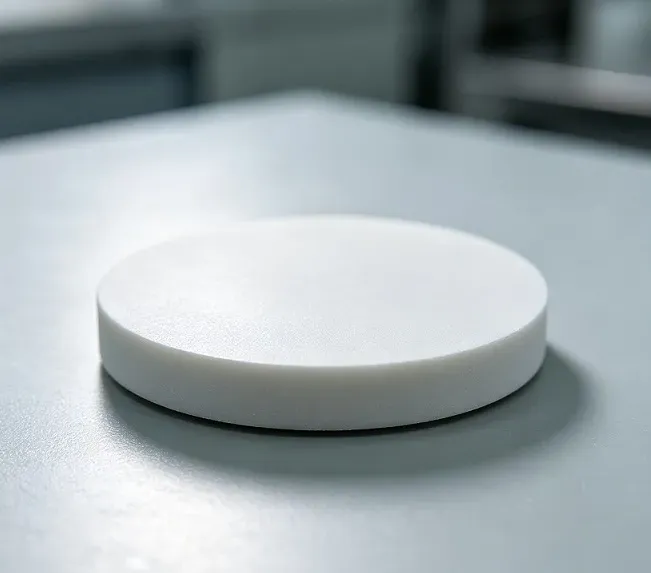
Alumina Disc is a precision-engineered advanced ceramic component manufactured primarily from aluminum oxide (Al₂O₃). It is designed for applications requiring a combination of high-temperature stability, electrical insulation, mechanical strength, chemical resistance, dimensional accuracy, and long-term reliability. Unlike conventional metal discs, alumina ceramic discs maintain their insulating and structural properties under elevated temperatures and in many chemically aggressive environments, making them an important component in advanced industrial and electronic systems. In engineering applications, an alumina disc should not be considered simply as a flat circular ceramic part. Its thickness, diameter, density, alumina purity, surface finish, flatness, thermal expansion, and dielectric characteristics can directly influence the performance of the complete assembly. A small variation in thickness or flatness, for example, may affect electrical insulation distance, thermal contact, sealing performance, or mechanical stress distribution.
The density of Alumina Disc typically ranges from approximately 3.6 to 3.9 g/cm³ depending on alumina content, porosity, and manufacturing process. High-purity alumina generally provides a dense microstructure with excellent mechanical strength and chemical stability. For electrical applications, low porosity is particularly important because internal pores can reduce dielectric reliability and create localized stress concentrations. From a materials engineering perspective, alumina is mainly based on the stable α-Al₂O₃ crystal phase. Its strong ionic and covalent bonding gives the material high hardness, compressive strength, and resistance to deformation. At the same time, alumina remains electrically insulating, allowing a ceramic disc to function simultaneously as a structural support and an electrical isolation component. Alumina discs can be manufactured in different purity grades, including 95%, 96%, 99%, and 99.5% or higher alumina compositions. The appropriate grade depends on the application. General industrial components may not require ultra-high purity, while semiconductor equipment, electrical insulation, analytical instruments, and high-temperature systems may require higher purity and tighter dimensional control. For engineers, material selection should therefore be based on the actual service environment rather than maximum temperature alone. Operating voltage, mechanical loading, thermal cycling, chemical exposure, surface condition, and dimensional tolerance should all be evaluated before selecting an alumina ceramic disc.
Classification and Key Characteristics of Alumina Disc
Alumina discs can be classified according to alumina purity, manufacturing process, thickness, diameter, surface finish, and intended application. Although the basic material is Al₂O₃, variations in composition and microstructure can produce significant differences in mechanical, thermal, and electrical performance. High-performance alumina discs are normally produced through controlled powder preparation, forming, debinding, and high-temperature sintering. For applications requiring tight tolerances, additional diamond grinding, lapping, polishing, or precision machining may be applied after sintering.
1. Alumina Purity and Material Structure
Alumina purity is one of the primary parameters controlling ceramic disc performance. As Al₂O₃ content increases, the proportion of secondary phases and glassy grain-boundary materials generally decreases. High-purity alumina therefore provides improved chemical stability, higher temperature capability, and more predictable electrical performance. A 95% alumina disc may provide an economical solution for general industrial insulation and structural applications. In contrast, 99% or 99.5% alumina is more appropriate when contamination control, high-temperature stability, and electrical reliability become critical. The selection should be based on actual process requirements. Using ultra-high-purity alumina where the application does not require it may increase cost without producing a meaningful performance improvement.
2. Mechanical Strength and Dimensional Stability
Although alumina is a brittle ceramic, its high compressive strength and hardness make it highly resistant to deformation under compressive loading. For a disc-shaped component, mechanical performance depends strongly on thickness-to-diameter ratio and the way the component is supported. A thin alumina disc can experience significant tensile stress during bending even when the overall applied force is relatively low. This is particularly important during assembly. Excessive clamping force, uneven support, or point loading can create localized tensile stress and initiate cracks. Engineers should therefore consider edge geometry, support conditions, chamfering, and dimensional tolerances when designing alumina discs for mechanical assemblies.
3. Electrical Insulation and Dielectric Performance
Alumina is one of the most widely used technical ceramics for electrical insulation because of its high electrical resistivity and dielectric strength. An alumina disc can electrically isolate conductive components while maintaining mechanical stability at elevated temperatures. This makes it useful in insulating spacers, electrical supports, sensor assemblies, feedthrough structures, and high-temperature electrical systems. The actual dielectric performance depends on material purity, thickness, porosity, surface condition, frequency, temperature, and surrounding atmosphere. Therefore, engineers should evaluate dielectric requirements under actual operating conditions rather than relying solely on room-temperature material data.
4. Thermal Stability and Thermal Shock Considerations
Alumina maintains its structural integrity at high temperatures and provides excellent resistance to oxidation. High-purity alumina is particularly suitable for prolonged thermal exposure. However, alumina is not immune to thermal shock. Rapid temperature changes can create internal thermal gradients, producing tensile stress within the ceramic. Because ceramics have limited ability to relieve stress through plastic deformation, excessive thermal gradients can result in cracking. For this reason, heating and cooling rates, disc thickness, thermal conductivity, mounting configuration, and temperature distribution should be considered together when alumina discs are used in cyclic thermal environments.
5. Surface Finish, Flatness, and Precision
For precision applications, surface quality can be as important as bulk material properties. Surface roughness influences electrical contact behavior, sealing performance, friction, and thermal interface resistance. Flatness is particularly important when an alumina disc is installed between two rigid components because uneven contact can generate localized mechanical stress. Precision alumina discs can be ground or lapped to achieve controlled thickness and surface flatness. Edge finishing is also important because sharp edges can act as stress concentration points and increase the risk of chipping during handling and assembly.

Typical Specifications of Alumina Disc
The actual specifications of an alumina disc depend on ceramic grade, manufacturing process, geometry, and application requirements. The following values represent typical engineering ranges for industrial alumina ceramic products.
| Property | Typical Value |
|---|---|
| Material | Al₂O₃ |
| Alumina Content | 95%-99.99% |
| Density | 3.6-3.9 g/cm³ |
| Hardness | HRA 80-90 |
| Flexural Strength | 300-450 MPa |
| Compressive Strength | 2000 MPa+ |
| Thermal Conductivity | 20-35 W/m·K |
| Thermal Expansion Coefficient | 7.0-8.0 ×10⁻⁶/K |
| Electrical Resistivity | >10¹² Ω·cm |
| Maximum Working Temperature | 1600-1800°C depending on grade |
| Water Absorption | Very low for dense grades |
| Main Engineering Advantages | Electrical insulation, high-temperature stability, chemical resistance, dimensional stability |
The density of Alumina Disc is closely related to its microstructural quality. A high-density disc contains fewer pores and generally provides better mechanical strength, dielectric reliability, and resistance to chemical penetration. However, density should not be evaluated independently. For precision electrical components, surface finish and dimensional tolerance may have a greater effect on actual performance than a small difference in bulk density. When a ceramic disc is used under mechanical loading, engineers should also evaluate the relationship between thickness and diameter. Increasing diameter while maintaining a very small thickness can increase bending sensitivity, particularly when the disc is supported unevenly.
Applications of Alumina Disc
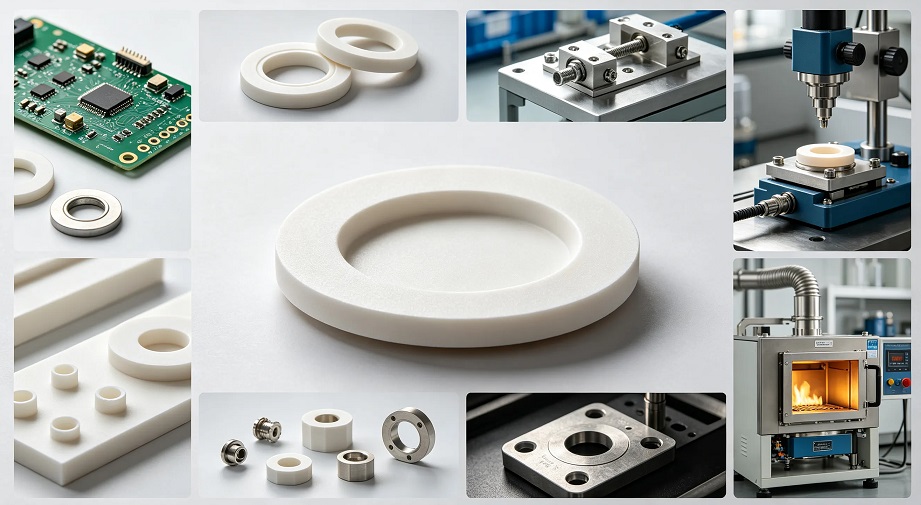
1. Electrical Insulation Components
Alumina discs are widely used as insulating components in electrical and high-temperature systems. Their high electrical resistivity allows them to isolate conductive components while maintaining dimensional stability under thermal exposure. Typical applications include insulating spacers, support plates, electrical barriers, and high-temperature isolation components. For high-voltage or high-temperature systems, engineers must consider dielectric strength, creepage distance, surface contamination, and thermal cycling rather than evaluating insulation based solely on resistivity.
2. Semiconductor and Electronic Equipment
High-purity alumina discs are used in semiconductor and electronic manufacturing equipment where electrical insulation, dimensional stability, and chemical resistance are required. They may function as support components, insulating plates, sensor parts, or precision structural elements. In semiconductor environments, contamination control is especially important. High-purity alumina with a dense and clean surface can help reduce unwanted material interaction during high-temperature processing.
3. High-Temperature Furnace Components
Alumina discs can serve as support plates, spacers, separators, and fixtures inside high-temperature furnaces. The material maintains good dimensional stability at elevated temperatures and resists oxidation in air. The design must nevertheless account for thermal expansion and thermal gradients. Thin discs with large diameters require particular attention to support conditions because uneven heating can generate bending stress.
4. Laboratory and Analytical Equipment
High-purity alumina ceramic discs are frequently used in laboratory equipment for thermal analysis, material testing, sample support, and high-temperature experiments. Their chemical stability minimizes unwanted interaction with many test materials, while their high-temperature capability allows repeated thermal exposure. For analytical applications, surface cleanliness and material purity are particularly important because contamination from the ceramic component can influence experimental results.
5. Precision Mechanical and Industrial Components
Alumina discs are also used as wear-resistant spacers, separators, insulating washers, support components, and precision ceramic parts. The combination of high hardness, chemical stability, and dimensional stability allows alumina to function reliably where conventional polymers cannot tolerate temperature and metals may suffer from corrosion or electrical conduction. For these applications, dimensional tolerance, surface roughness, edge quality, and mounting conditions should be specified together with the ceramic grade.
Company Profile
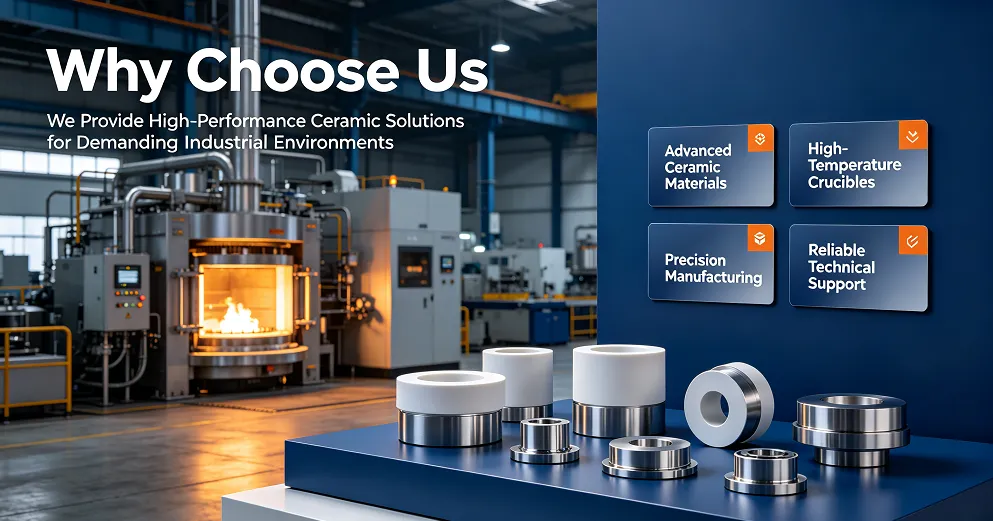
JianXun Advanced Ceramic Technology is a professional manufacturer specializing in high-performance ceramic components, including Alumina Disc, alumina tubes, rods, rings, plates, balls, boron nitride ceramics, silicon carbide ceramics, silicon nitride ceramics, aluminum nitride ceramics, and other customized advanced ceramic products. The company provides ceramic solutions for semiconductor equipment, electrical insulation, high-temperature processing, laboratory equipment, and demanding industrial applications.
JianXun focuses on material selection, powder processing, precision forming, high-temperature sintering, grinding, polishing, dimensional control, and customized ceramic manufacturing. By controlling alumina purity, density, microstructure, surface finish, and dimensional tolerances, JianXun supports applications requiring stable mechanical, thermal, electrical, and chemical performance.
Payment Terms: T/T, PayPal, Credit Card, Western Union, etc.
Shipment Terms: By air, by sea, by express, or according to customer request.
Storage Conditions: Alumina discs should be stored in a clean, dry environment and protected from mechanical impact, contamination, moisture, and sudden temperature changes. Precision-machined surfaces should be protected from direct contact with hard objects during storage and handling.
FAQs About Alumina Disc
1. Why is Alumina Disc widely used for high-temperature electrical insulation?
Alumina Disc provides an unusual combination of high-temperature stability, electrical resistivity, mechanical strength, and chemical resistance. Unlike polymer insulation, alumina does not soften or decompose at temperatures encountered in many industrial thermal processes. Its stable Al₂O₃ crystal structure also provides predictable dielectric behavior and excellent resistance to oxidation. For engineers, the key advantage is that one component can simultaneously provide mechanical support and electrical isolation. However, actual dielectric performance depends on thickness, purity, porosity, surface condition, temperature, and electrical frequency. Therefore, an alumina disc intended for high-voltage or high-temperature insulation should be specified according to its complete operating environment rather than simply its nominal material grade.
2. How does alumina purity affect the performance of an Alumina Disc?
Alumina purity affects the ceramic's microstructure, temperature capability, chemical stability, electrical performance, and contamination characteristics. Lower-purity alumina normally contains greater amounts of secondary phases or glassy grain-boundary materials, which can influence high-temperature behavior. As Al₂O₃ purity increases, the ceramic generally becomes more chemically stable and better suited to demanding thermal and contamination-sensitive environments. High-purity alumina is therefore commonly selected for semiconductor equipment, laboratory components, and precision electrical insulation. However, engineers should not automatically select the highest available purity. The appropriate grade depends on operating temperature, chemical exposure, electrical requirements, dimensional tolerances, and contamination limits, allowing performance requirements and manufacturing cost to remain balanced.
3. What causes an Alumina Disc to crack during installation or thermal cycling?
Cracking is usually associated with tensile stress because alumina, like most technical ceramics, has limited capacity for plastic deformation. During installation, excessive clamping force, uneven support, sharp edges, or localized point loading can generate stress concentrations that exceed the material's tensile strength. During thermal cycling, rapid heating or cooling can create temperature gradients between the surface and center of the disc, producing thermal stress. A large-diameter thin disc is particularly sensitive to uneven temperature distribution and mechanical support conditions. Engineers can reduce failure risk by controlling heating and cooling rates, optimizing support geometry, introducing suitable edge chamfers, maintaining uniform contact pressure, and selecting an appropriate disc thickness.
4. How should engineers determine the thickness and diameter of an Alumina Disc?
The thickness and diameter should be determined from the mechanical loading condition, support configuration, thermal environment, electrical insulation requirement, and allowable deformation. A large-diameter disc with insufficient thickness can be sensitive to bending stress, particularly when the component is supported only around its perimeter or loaded at discrete points. Increasing thickness improves mechanical rigidity but may also increase thermal mass and temperature gradients during rapid heating or cooling. Engineers should therefore evaluate the disc as part of the complete assembly rather than treating dimensions as independent specifications. Finite element analysis can be useful for demanding applications involving combined mechanical and thermal loads, especially when tight flatness and dimensional stability are required.
5. What surface and dimensional specifications should engineers consider when ordering an Alumina Disc?
For precision applications, engineers should specify diameter, thickness, thickness tolerance, flatness, parallelism, surface roughness, edge treatment, holes or other geometric features, and material purity. Surface finish becomes particularly important when the disc is used as an electrical insulator, sealing interface, precision support, or thermal contact component. Poor flatness can create uneven contact pressure and localized stress, while sharp edges can increase chipping during assembly. For high-purity applications, engineers should also define contamination requirements and cleaning conditions. Providing a technical drawing together with operating temperature, mechanical loading, electrical requirements, and chemical environment enables the manufacturer to select the appropriate alumina grade and machining process.