Advanced Technical Ceramics, Precision Alumina, Silicon Carbide, Crucible Parts
 Technology Co., Ltd.(Luoyang) Technology Co., Ltd.科技品牌标志.webp)


Tube
Overview
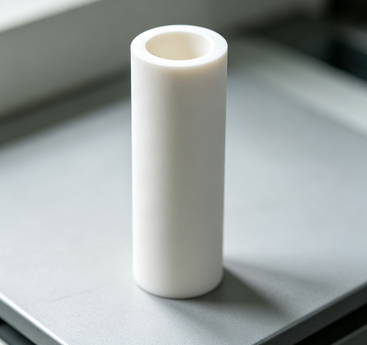
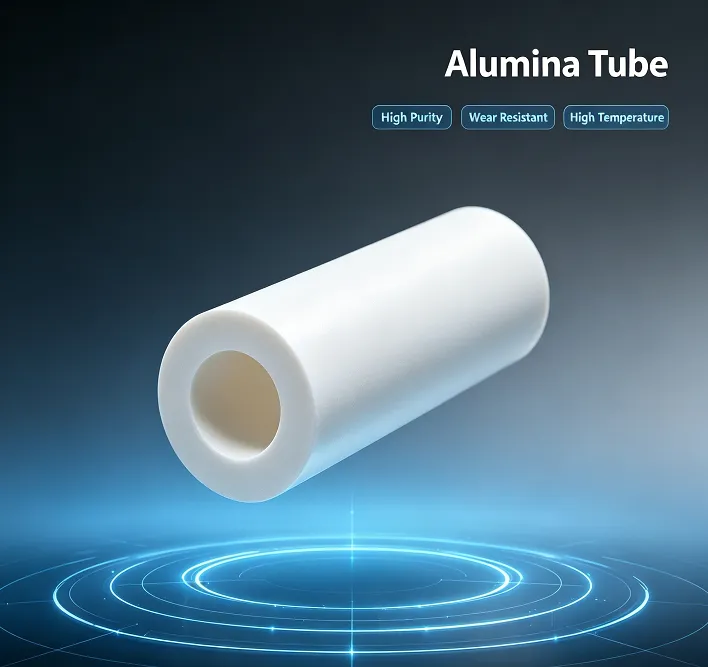
Alumina Tube is a precision-engineered ceramic tube manufactured primarily from aluminum oxide (Al₂O₃) and designed for applications requiring high-temperature stability, electrical insulation, chemical resistance, mechanical strength, and dimensional accuracy. Unlike metallic tubes, alumina ceramic tubes maintain excellent electrical insulation and oxidation resistance at elevated temperatures, while their dense ceramic structure provides strong resistance to wear and corrosion. From an engineering perspective, the performance of an Alumina Tube is determined by more than its nominal alumina purity. Density, grain size, porosity, wall thickness, thermal expansion, surface finish, dimensional tolerance, and manufacturing method all influence service reliability. A tube designed for electrical insulation has different priorities from one used as a high-temperature protective tube, wear-resistant sleeve, or process component. High-performance alumina tubes are especially valuable when the component must isolate electrical conductors while simultaneously operating in a hot or chemically aggressive environment. A typical high-quality alumina tube can withstand temperatures around 1600°C, achieve flexural strength above 450 MPa, compressive strength above 2000 MPa, and maintain electrical resistivity above 10¹² Ω·cm, depending on grade and operating conditions.
Classification and Key Characteristics of Alumina Tube
1. High-Purity Alumina and Dense Ceramic Structure
The material composition is the starting point for Alumina Tube performance. Alumina ceramic grades are commonly selected according to Al₂O₃ purity, with higher-purity compositions generally providing better electrical insulation, chemical stability, high-temperature performance, and resistance to contamination. A dense microstructure is equally important. During sintering, controlled grain growth and porosity reduction produce a mechanically stronger ceramic body. Excessive residual porosity can reduce strength and increase permeability, while uncontrolled grain growth can influence mechanical reliability and surface quality. For demanding applications, engineers should therefore evaluate alumina purity together with density, open porosity, grain structure, and manufacturing consistency rather than using Al₂O₃ percentage as the only selection criterion.
2. Excellent High-Temperature Performance
One of the primary reasons to use an Alumina Tube is its ability to maintain structural integrity at elevated temperatures. Alumina has a melting point above 2000°C and remains stable across a broad range of industrial thermal-processing conditions when the ceramic grade and atmosphere are appropriately selected. The practical operating temperature, however, should not be confused with the melting point of pure alumina. Mechanical loading, thermal cycling, impurities, surrounding atmosphere, chemical exposure, and tube geometry all influence the actual service temperature. For example, a thin-walled tube may experience substantial temperature gradients during rapid heating, while a thick-walled tube may require longer heating and cooling times. The thermal profile of the entire component should therefore be considered during design.
3. High Mechanical Strength Despite Ceramic Brittleness
Dense alumina provides excellent compressive strength and high flexural strength. A high-performance Alumina Tube can achieve flexural strength above 450 MPa and compressive strength above 2000 MPa under suitable material and processing conditions. The tubular geometry makes stress distribution particularly important. Internal pressure, external loading, clamping, bending, vibration, and thermal gradients can produce different stress states around the tube wall. Although alumina performs exceptionally well under compression, localized tensile stress can initiate cracks because ceramics do not plastically deform like metals. Wall thickness, tube diameter, unsupported length, mounting method, and edge geometry should therefore be considered together when specifying a ceramic tube.
4. Outstanding Electrical Insulation
Alumina is one of the most widely used engineering ceramics for electrical insulation. Dense high-purity Alumina Tube can provide electrical resistivity above 10¹² Ω·cm, making it suitable for applications where conductors, sensors, heating elements, or other electrical components need to be isolated from surrounding structures. Electrical performance depends not only on bulk resistivity but also on surface cleanliness, moisture, temperature, wall thickness, creepage distance, and the surrounding atmosphere. At elevated temperatures, electrical properties can change, so the insulation requirement should be evaluated at the actual operating temperature rather than only at room temperature.
5. Chemical Resistance and Low Contamination
Dense alumina offers strong resistance to oxidation and many corrosive chemical environments. This makes an Alumina Tube useful for protecting sensitive components from aggressive atmospheres or for transporting and containing selected process media at elevated temperatures. Its low porosity can also reduce penetration of liquids and gases compared with porous refractory materials. In applications involving high-purity processing, this characteristic can help reduce contamination from the ceramic itself. Nevertheless, chemical compatibility should always be verified against the exact medium, concentration, temperature, and exposure duration.
6. Dimensional Stability and Precision Machining
For precision applications, the dimensional stability of an Alumina Tube can be as important as its thermal and mechanical properties. Inner diameter, outer diameter, wall thickness, concentricity, straightness, roundness, and surface roughness can all affect system performance. Ceramic tubes are normally formed and sintered before final precision machining where required. Because fully sintered alumina is extremely hard, diamond grinding and related processes are commonly used to achieve tight dimensional tolerances or smooth functional surfaces.
Typical Specifications of Alumina Tube
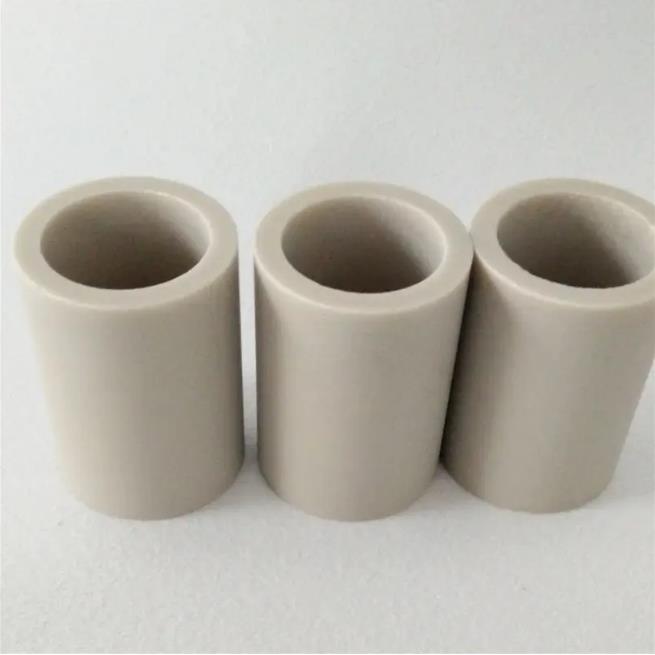
The following values represent typical specifications for high-performance alumina ceramic tubes. Actual properties depend on alumina purity, processing technology, dimensions, and application requirements.
| Property | Typical Specification |
|---|---|
| Product | Alumina Tube |
| Material | Aluminum Oxide (Al₂O₃) |
| Alumina Purity | 95–99.99% |
| Density | 3.6–3.95 g/cm³ |
| Flexural Strength | >450 MPa |
| Compressive Strength | >2000 MPa |
| Hardness | Approximately HRA 80–90 |
| Electrical Resistivity | >10¹² Ω·cm |
| Thermal Conductivity | Approximately 20–35 W/m·K |
| Coefficient of Thermal Expansion | Approximately 7–8 × 10⁻⁶/K |
| Water Absorption | Near zero for dense grades |
| Maximum Working Temperature | Approximately 1600–1800°C depending on grade and atmosphere |
| Surface Finish | As-fired, ground, or polished |
| Inner Diameter | Customized |
| Outer Diameter | Customized |
| Wall Thickness | Customized |
| Length | Customized |
| Dimensional Tolerance | Customized |
The above specifications should be used as an engineering reference rather than a universal datasheet. In particular, maximum working temperature depends strongly on atmosphere and mechanical loading. A ceramic tube operating in a stable inert atmosphere may have a different service envelope from the same tube exposed to rapid thermal cycling or aggressive chemical vapors. For precision applications, engineers should also distinguish between as-fired dimensions and finished dimensions. Sintering produces predictable but unavoidable shrinkage, while final grinding can improve dimensional accuracy but adds processing cost. The most appropriate manufacturing route depends on whether the priority is cost efficiency, dimensional precision, surface quality, or complex geometry.
Applications of Alumina Tube
1. Electrical Insulation and Protection
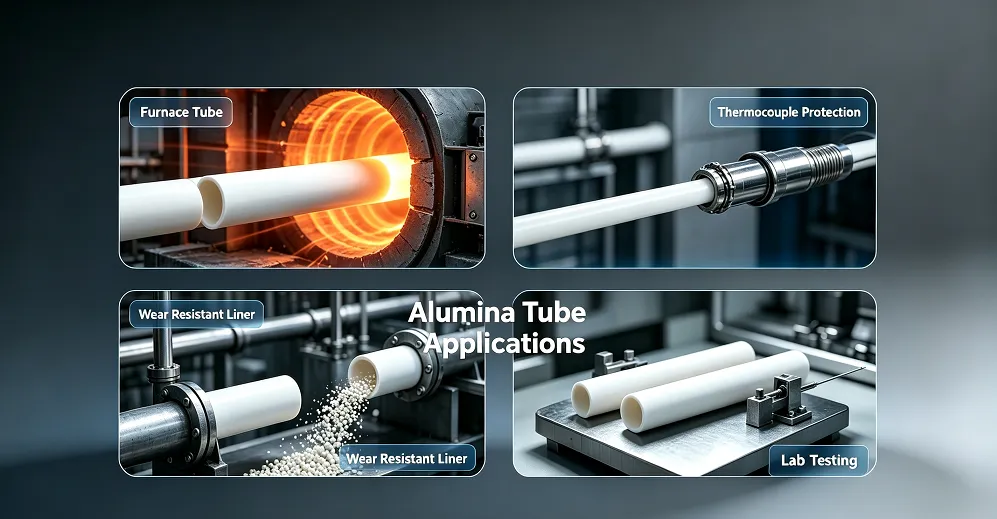
An Alumina Tube is widely used as an electrical insulating sleeve or protective tube around conductors, electrodes, heating elements, and other electrical components. Its combination of high resistivity and high-temperature stability makes it particularly useful where polymer insulation would soften, decompose, or lose dimensional stability. The ceramic also provides mechanical protection against abrasion and environmental exposure. When designing electrical insulation, engineers should calculate dielectric requirements at the actual operating temperature and consider wall thickness, surface contamination, voltage level, and creepage distance.
2. Thermocouple and Temperature Sensor Protection
Alumina ceramic tubes are frequently used as protective structures around thermocouples and other temperature-sensing elements operating in high-temperature environments. The tube separates the sensor from direct mechanical or chemical exposure while allowing temperature to transfer through the ceramic wall. Material purity and tube density are important because contamination or chemical interaction can affect long-term sensor stability. Wall thickness must also be balanced against mechanical protection and thermal response time: a thicker tube generally provides greater mechanical protection but can increase thermal lag.
3. Furnace and Heat-Treatment Equipment
High-temperature furnaces and thermal-processing systems can use Alumina Tube components as insulation structures, protective sleeves, supports, sensor protection, or process tubes. The main engineering advantages are high-temperature stability, electrical insulation, and resistance to oxidation. In furnace applications, thermal expansion and installation clearance must be carefully controlled because the ceramic and surrounding metal structures may expand at different rates. For long tubes, straightness and support spacing become increasingly important. Improper support can introduce bending stress, particularly when the tube is exposed to large temperature gradients.
4. Semiconductor and Electronic Processing Equipment
High-purity alumina tubes are used in selected semiconductor and electronic processing equipment where thermal stability, electrical insulation, dimensional control, and material cleanliness are important. For these applications, the engineer may specify high-purity alumina, low surface roughness, controlled particle generation, and tight dimensional tolerances. The ceramic composition should also be selected according to the process atmosphere and contamination requirements. The advantage of alumina is that one component can simultaneously provide mechanical support, electrical isolation, and resistance to elevated temperature, simplifying the design of high-temperature assemblies.
5. Chemical Processing and Corrosive Environments
An Alumina Tube can provide protection or containment in selected chemical-processing environments where resistance to oxidation, wear, and chemical attack is required. Its dense structure helps limit fluid penetration and provides a stable barrier between the process environment and protected components. However, chemical resistance varies with the specific material and process conditions. Strong alkalis, concentrated acids, molten compounds, and high-temperature reactive gases should be evaluated individually before material selection.
6. Precision Mechanical Sleeves and Insulating Components
Alumina tubes can function as wear-resistant sleeves, spacers, guides, shafts, and electrically insulating structural components. Their high hardness allows them to maintain dimensional integrity under selected sliding or contact conditions. The main design challenge is controlling stress concentration. Ceramic sleeves should be aligned carefully, and excessive interference fits should generally be avoided unless the thermal and mechanical behavior has been calculated. Surface finish and mating-material selection can also have a major influence on wear performance.
Engineering Considerations for Alumina Tube Design
The first parameter to determine is the tube's mechanical loading. A tube exposed primarily to axial compression has a very different design requirement from one subjected to bending, internal pressure, vibration, or external clamping. Because alumina has high compressive strength but limited plastic deformation, avoiding localized tensile stress is critical. Wall thickness should be selected according to diameter, length, temperature, pressure, and mechanical support. Increasing wall thickness improves mechanical robustness in many situations but also increases thermal mass and can increase thermal gradients during rapid temperature changes. Thermal expansion should be calculated for the complete assembly. Alumina typically has a coefficient of thermal expansion around 7–8 × 10⁻⁶/K, which differs significantly from many metals. A metal holder that fits correctly at room temperature can generate excessive radial stress after heating if the clearance is not properly designed. Surface finish should be specified according to function. An as-fired surface may be sufficient for general protective applications, while grinding or polishing may be necessary for sealing, sliding, sensor positioning, or precision assembly applications. Finally, handling should not be overlooked. Small chips or scratches introduced during transportation or assembly can become fracture initiation sites under subsequent thermal or mechanical loading. Proper packaging and controlled installation are therefore part of the engineering design, not merely logistics considerations.
Company Profile
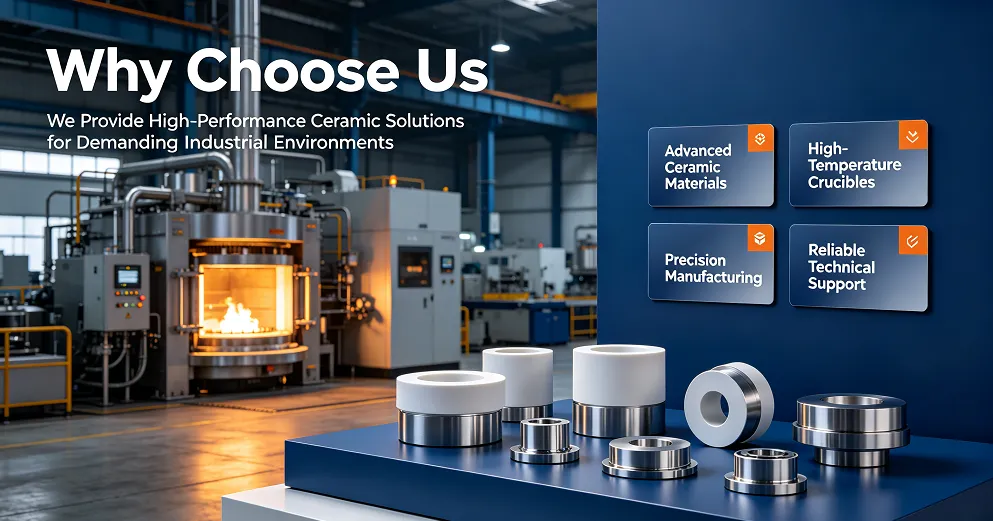
Jenson(Luoyang) Technology Co., Ltd.Advanced Ceramic Technology is a professional manufacturer specializing in high-performance ceramic products, including Alumina Tube, alumina rings, alumina discs, alumina plungers, alumina refractory bricks, boron nitride ceramics, silicon carbide ceramics, silicon nitride ceramics, aluminum nitride ceramics, mullite ceramics, quartz ceramics, and customized precision ceramic components. The company focuses on finished ceramic products with controlled material composition, density, mechanical properties, thermal performance, dimensional accuracy, surface quality, and customized geometries for demanding industrial applications.
Payment Terms: T/T, PayPal, Credit Card, Western Union, etc.
Shipment Terms: By air, by sea, by express, or according to customer request.
Storage Conditions: Store Alumina Tube in a clean, dry, and dust-free environment. Tubes should be individually separated or properly cushioned to prevent impact, edge chipping, and surface scratches. Avoid uncontrolled stacking, and keep precision-machined surfaces protected until final installation.
FAQs About Alumina Tube
1. Why is an Alumina Tube preferred over a metal tube in high-temperature electrical applications?
An Alumina Tube can provide several functions simultaneously: high-temperature structural stability, electrical insulation, chemical resistance, and mechanical protection. A metal tube provides excellent toughness and thermal conductivity but is electrically conductive and can oxidize or chemically react under certain conditions. Alumina, by contrast, has very high electrical resistivity and remains rigid at temperatures where many polymers and other insulating materials lose their properties. This makes it particularly useful around heating elements, electrodes, thermocouples, and other components requiring electrical isolation. The trade-off is that alumina is brittle, so the tube must be protected from impact, excessive bending, concentrated clamping forces, and uncontrolled thermal shock.
2. How should the wall thickness of an Alumina Tube be determined?
Wall thickness should be determined from the tube diameter, unsupported length, mechanical loading, internal or external pressure, operating temperature, thermal gradients, and installation method. A thin wall reduces material consumption and thermal mass but is more sensitive to handling damage, bending, pressure, and thermal gradients. A thicker wall generally improves mechanical robustness but can increase thermal inertia and temperature differences between the inner and outer surfaces during rapid heating or cooling. For long tubes, engineers should also evaluate buckling and bending stresses rather than relying solely on material compressive strength. The final wall thickness should therefore be established from the actual load case and temperature profile rather than selected simply from a standard size.
3. What causes an Alumina Tube to crack during thermal cycling?
Thermal cracking is primarily associated with temperature gradients and the resulting thermal stresses. When the outer surface of a tube heats or cools faster than the inner region, the two regions attempt to expand or contract differently. Because alumina has limited plastic deformation, these stresses cannot easily be relieved through permanent deformation. Large wall thickness, rapid heating or cooling, uneven temperature distribution, rigid mounting, and differences in thermal expansion between the ceramic and surrounding components can increase the risk. Selecting an appropriate geometry, controlling heating and cooling rates, providing sufficient installation clearance, and avoiding rigid constraints can substantially improve thermal-cycle reliability.
4. How does alumina purity affect Alumina Tube performance?
Alumina purity influences several important properties, including electrical insulation, chemical stability, high-temperature behavior, density, and contamination characteristics. Higher-purity alumina generally contains fewer glass-forming or fluxing impurities, which can improve performance in demanding high-temperature and electrical applications. However, purity should not be considered independently of microstructure and manufacturing quality. Grain size, porosity, sintering conditions, dimensional accuracy, and surface finish can significantly influence the actual performance of the finished tube. For standard mechanical or insulating applications, a mid-to-high alumina grade may provide a better cost-performance balance, while high-purity alumina is more appropriate when temperature, electrical insulation, chemical compatibility, or cleanliness requirements are especially demanding.
5. Can an Alumina Tube be customized for tight dimensional tolerances and complex requirements?
Yes. Alumina Tube products can be customized in inner diameter, outer diameter, wall thickness, length, surface finish, end geometry, grooves, holes, steps, and other features depending on the manufacturing process and application. Since sintered alumina is extremely hard, precision dimensions are typically achieved through specialized grinding and machining processes. Engineers should provide a detailed technical drawing specifying critical dimensions, geometric tolerances, surface roughness, and functional interfaces. It is also important to identify whether the tube will operate at room temperature or elevated temperature because the required assembly clearance may change significantly due to thermal expansion. For long or thin-walled tubes, straightness and concentricity should also be included in the specification.