Advanced Technical Ceramics, Precision Alumina, Silicon Carbide, Crucible Parts



Mullite Ceramic


Overview
Mullite Ceramic is an advanced aluminosilicate ceramic material widely used in high-temperature industrial environments due to its excellent thermal stability, low thermal expansion, mechanical reliability, and resistance to thermal shock. As a ceramic phase mainly composed of alumina (Al₂O₃) and silica (SiO₂), mullite is typically represented by the crystal structure of 3Al₂O₃·2SiO₂. Its unique combination of properties makes it an important engineering material between conventional refractory ceramics and high-performance oxide ceramics.
Unlike traditional ceramic materials that may experience significant deformation, cracking, or strength degradation under repeated thermal exposure, mullite ceramic maintains structural stability during long-term operation at elevated temperatures. Its performance is strongly influenced by alumina content, crystal morphology, porosity distribution, grain size, and sintering conditions. Through precise control of these parameters, manufacturers can optimize mullite components for different industrial applications requiring thermal insulation, dimensional stability, and resistance to high-temperature degradation.
In advanced manufacturing processes, ceramic components are often exposed to continuous heating, rapid thermal cycling, corrosive atmospheres, and mechanical loading. Under these conditions, material selection directly affects equipment reliability and production efficiency. Mullite Ceramic is widely selected by engineers because it provides a balanced combination of low thermal expansion, excellent thermal shock resistance, good creep resistance, and stable chemical behavior at high temperatures.
Compared with high-purity alumina ceramics, mullite generally offers improved thermal shock resistance due to its lower thermal expansion coefficient and reduced elastic stress during temperature fluctuations. Compared with many refractory materials, mullite provides better mechanical strength retention and higher dimensional stability, making it suitable for precision high-temperature applications such as furnace components, kiln furniture, ceramic supports, and thermal processing equipment.
The engineering value of mullite ceramic is not based on a single property but on the balance between thermal performance, mechanical strength, chemical compatibility, and manufacturing flexibility. Therefore, proper material selection requires consideration of actual operating temperature, atmosphere conditions, heating cycle, load requirements, and expected service lifetime.
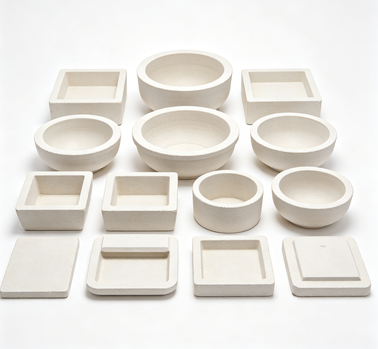
Classification and Key Characteristics of Mullite Ceramic
Mullite ceramics can be classified according to chemical composition, alumina content, manufacturing process, and microstructural characteristics. Different grades are developed to meet specific requirements, including high-temperature structural support, thermal insulation, furnace protection, and precision ceramic applications. The properties of mullite are mainly determined by the Al₂O₃-SiO₂ phase system. Increasing alumina content generally improves high-temperature strength and chemical stability, while controlled silica content contributes to phase stability and sintering behavior. The formation of needle-like mullite crystals within the ceramic matrix helps improve mechanical reinforcement and resistance to thermal stress.
1. Crystal Structure and Material Composition
The unique crystal structure of mullite is the foundation of its high-temperature performance. Mullite crystals consist of interconnected alumina and silica tetrahedral structures that provide excellent stability during thermal exposure. Unlike glassy ceramic phases that may soften at high temperatures, mullite maintains its crystalline structure and mechanical integrity over extended periods. This characteristic allows mullite components to operate reliably in furnace environments where continuous temperature fluctuations occur. The ratio between alumina and silica influences the final properties of mullite ceramic. Higher alumina compositions generally provide improved refractoriness and strength, while optimized compositions provide better thermal shock resistance and manufacturing performance.
2. High-Temperature Stability and Mechanical Performance
One of the most important advantages of mullite ceramic is its ability to maintain mechanical strength at elevated temperatures. Many conventional materials experience rapid strength reduction when exposed to high temperatures, but mullite retains sufficient structural integrity for demanding thermal applications. The low creep rate of mullite is particularly valuable in furnace applications where components must support loads over long operating periods. Furnace tubes, supports, and kiln furniture made from mullite can maintain dimensional accuracy even after repeated heating cycles. From an engineering perspective, mullite is often selected when the application requires a compromise between mechanical strength and thermal insulation. It provides better thermal insulation characteristics than dense alumina while maintaining superior structural reliability compared with many traditional refractory materials.
3. Thermal Shock Resistance
Thermal shock resistance is one of the key reasons engineers select mullite ceramic for repeated heating and cooling processes. When ceramic materials experience rapid temperature changes, thermal gradients generate internal stresses. Materials with high thermal expansion coefficients are more likely to develop cracks because expansion and contraction create greater mechanical stress. Mullite has a relatively low thermal expansion coefficient and moderate elastic modulus, allowing it to absorb thermal stress more effectively. This makes mullite suitable for applications involving frequent thermal cycling, such as furnace loading systems, kiln components, and heat treatment equipment. The thermal shock resistance of mullite can also be improved through microstructure optimization, including controlled porosity, grain refinement, and appropriate sintering conditions.
4. Chemical Resistance and Atmosphere Compatibility
Mullite ceramic demonstrates good resistance against many chemical environments, especially oxidizing atmospheres commonly found in industrial furnaces. Its stable aluminosilicate structure provides resistance against oxidation and many corrosive gases. However, the actual chemical compatibility depends on operating conditions and the materials being processed. For example, molten metals, alkaline compounds, or highly reactive chemicals may require additional evaluation before selecting mullite components. Engineers should consider potential reactions, surface erosion, and long-term material interaction when designing high-temperature systems.
5. Electrical Insulation and Thermal Management Properties
Mullite ceramic is also valued for its electrical insulation performance at high temperatures. This property makes it suitable for applications where ceramic components must provide mechanical support while electrically isolating heating elements or electronic components. Its relatively low thermal conductivity compared with dense alumina allows mullite to function effectively as a thermal barrier material. In furnace systems, this helps reduce heat loss and improve energy efficiency.
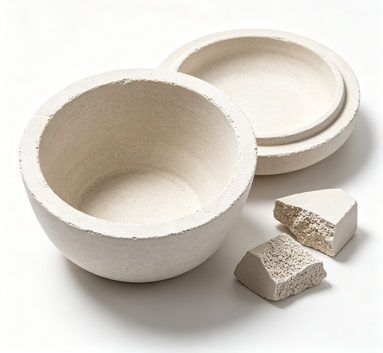
Typical Specifications of Mullite Ceramic
The performance of Mullite Ceramic components depends on chemical composition, manufacturing process, porosity, grain structure, and sintering technology. The following table summarizes typical engineering specifications for industrial mullite ceramic materials.
| Property | Typical Value |
|---|---|
| Chemical Composition | 3Al₂O₃·2SiO₂ (Alumina-Silica System) |
| Al₂O₃ Content | 55-75% |
| Density | 2.6-3.2 g/cm³ |
| Maximum Service Temperature | 1600-1800°C |
| Thermal Conductivity | 3-6 W/m·K |
| Thermal Expansion Coefficient | 4-6 ×10⁻⁶/K |
| Flexural Strength | 100-250 MPa |
| Compressive Strength | 500-1000 MPa |
| Water Absorption | <1% (Dense Grade) |
| Electrical Resistivity | >10¹² Ω·cm |
| Main Advantages | Thermal shock resistance, dimensional stability, high-temperature reliability |
The density of Mullite Ceramic is an important parameter affecting mechanical strength, thermal conductivity, and structural reliability. A properly controlled density provides an optimized balance between strength and thermal insulation. Lower-density mullite grades are often selected for insulation applications, while higher-density grades are preferred for structural components requiring improved mechanical performance.
Material selection should not rely only on maximum temperature capability. For example, a dense alumina ceramic may provide higher hardness, while mullite may provide better thermal cycling performance due to its lower thermal expansion and improved stress tolerance. Therefore, engineers should evaluate the complete operating environment before selecting the appropriate ceramic grade.
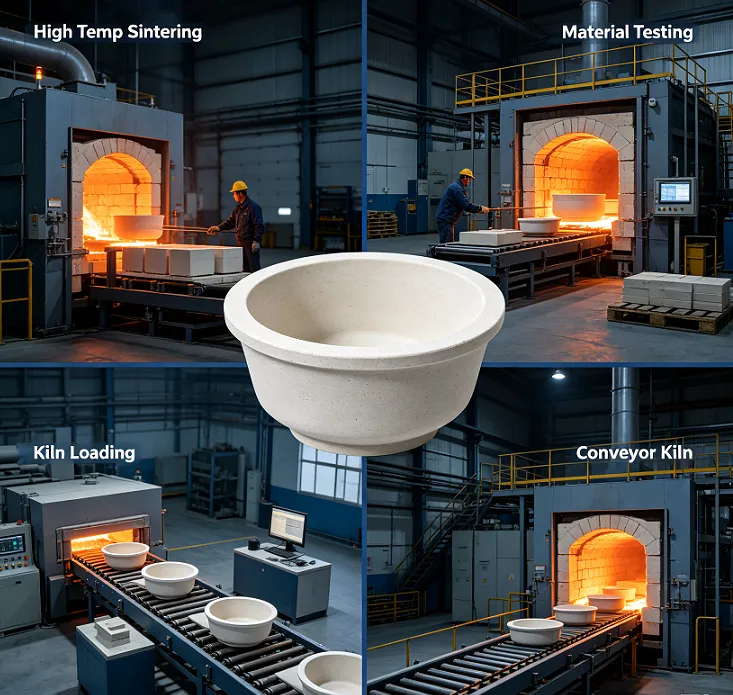
Applications of Mullite Ceramic
1. High Temperature Furnace Components
Mullite ceramic is widely used in industrial furnace systems because of its ability to withstand prolonged thermal exposure while maintaining dimensional stability. Typical components include furnace tubes, protection tubes, supports, spacers, insulation structures, and heating element holders. These components must operate under repeated heating cycles without significant deformation or cracking. The combination of low thermal conductivity and sufficient mechanical strength allows mullite to improve furnace efficiency while protecting sensitive components from excessive thermal stress.
2. Kiln Furniture and Ceramic Processing Equipment
In ceramic manufacturing, kiln furniture components such as setters, plates, supports, and saggers are exposed to repeated high-temperature firing cycles. Mullite is commonly selected because it provides lightweight construction, good thermal shock resistance, and excellent resistance to deformation during firing. Its stable performance helps maintain product quality by reducing contamination and preventing dimensional changes during processing. For ceramic manufacturers, the use of mullite kiln furniture can improve energy efficiency because lower thermal mass reduces heating and cooling requirements.
3. Semiconductor and Electronic Material Processing
Modern semiconductor and electronic manufacturing processes require ceramic materials with stable performance, low contamination risk, and reliable thermal behavior. Mullite ceramic components are used in thermal processing equipment, insulation structures, support components, and high-temperature fixtures. Their electrical insulation properties and thermal stability make them suitable for controlled heating environments. Although ultra-high-purity alumina and aluminum nitride are preferred for some semiconductor applications requiring extreme thermal conductivity or purity, mullite remains valuable where thermal stability and cost-effective performance are required.
4. Laboratory Research and High-Temperature Testing
In laboratories and research facilities, mullite ceramics are used for crucibles, sample holders, furnace accessories, and experimental supports.、Researchers often select mullite because it provides predictable behavior under repeated temperature changes and maintains chemical stability during thermal experiments. Its combination of affordability, reliability, and high-temperature capability makes it a practical choice for material testing, thermal analysis, and experimental furnace systems.
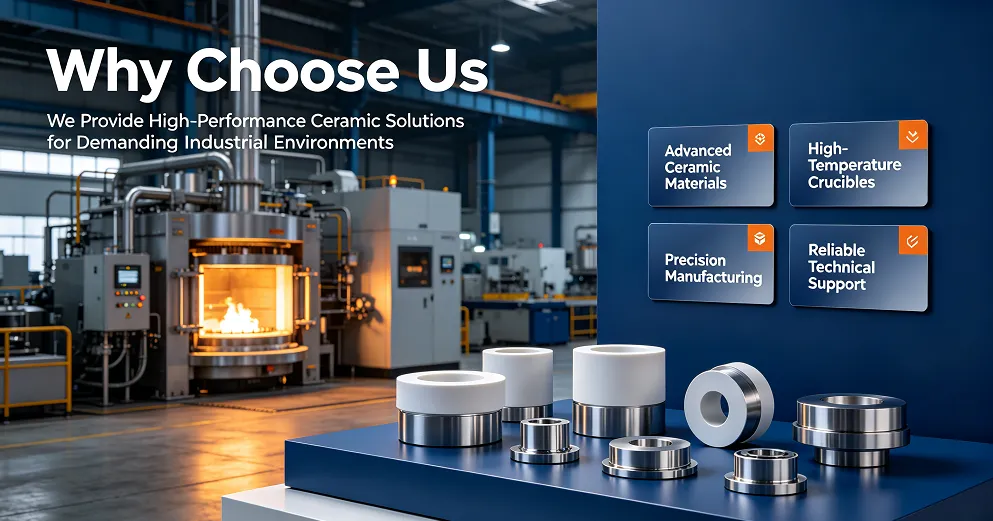
Company Profile
JianXun Advanced Ceramic Technology is a professional manufacturer specializing in high-performance ceramic components, including Mullite Ceramic products, alumina ceramics, boron nitride ceramics, silicon carbide ceramics, aluminum nitride ceramics, and customized precision ceramic parts. With advanced ceramic processing capabilities and engineering expertise, JianXun provides reliable ceramic solutions for high-temperature furnaces, semiconductor processing, thermal equipment, and industrial applications.
The company focuses on material selection, precision forming, sintering technology, machining accuracy, and customized design according to customer requirements. By controlling ceramic composition, microstructure, dimensional tolerance, and surface quality, JianXun delivers advanced ceramic components designed for demanding thermal and mechanical environments.
Payment Terms: T/T, PayPal, Credit Card, Western Union, etc.
Shipment Terms: By air, by sea, by express, or according to customer request.
Storage Conditions: Mullite ceramic components should be stored in a dry and clean environment, protected from mechanical impact, contamination, and sudden temperature changes before installation and operation.
FAQs About Mullite Ceramic
1. What makes Mullite Ceramic suitable for high-temperature applications?
Mullite Ceramic is suitable for high-temperature applications because of its stable aluminosilicate crystal structure, low thermal expansion coefficient, and excellent resistance to thermal degradation. Unlike many traditional ceramics that lose mechanical performance rapidly at elevated temperatures, mullite maintains structural stability and dimensional accuracy during long-term thermal exposure. Its ability to withstand repeated heating and cooling cycles makes it particularly valuable for furnace components, kiln furniture, and thermal processing equipment. The final performance depends on alumina content, density, porosity, and manufacturing process, which should be optimized according to the specific operating environment.
2. How does Mullite Ceramic compare with Alumina Ceramic?
Mullite Ceramic and alumina ceramic both provide excellent high-temperature performance, but their engineering advantages are different. Alumina generally offers higher hardness, higher mechanical strength, and better electrical insulation, making it suitable for applications requiring maximum wear resistance and chemical stability. Mullite provides lower thermal expansion and better thermal shock resistance, which makes it more suitable for applications involving rapid temperature changes or repeated thermal cycling. Therefore, the choice between mullite and alumina depends on whether the primary requirement is mechanical strength, thermal shock resistance, insulation performance, or chemical compatibility.
3. What factors affect Mullite Ceramic density and performance?
The density of Mullite Ceramic is influenced by raw material purity, particle size distribution, forming pressure, sintering temperature, and manufacturing atmosphere. Higher density generally improves mechanical strength, wear resistance, and structural reliability, while controlled porosity can improve thermal insulation performance. Engineers must select the appropriate density level according to application requirements because excessive densification may increase thermal conductivity, while excessive porosity may reduce mechanical strength. A properly engineered microstructure provides the best balance between thermal insulation, strength, and service life.
4. Can Mullite Ceramic components be customized for industrial applications?
Yes. Mullite ceramic components can be customized according to specific industrial requirements, including dimensions, shapes, wall thickness, surface finish, and mechanical tolerances. Custom design is especially important for furnace components because geometry affects thermal stress distribution, heat transfer behavior, and operational reliability. Engineers should provide operating temperature, atmosphere conditions, loading requirements, drawings, and expected service conditions so manufacturers can recommend suitable material grades and production methods.
5. How should engineers select Mullite Ceramic for specific applications?
Engineers should evaluate operating temperature, thermal cycling conditions, mechanical loading, atmosphere compatibility, dimensional requirements, and expected lifetime before selecting mullite ceramic. The material should be chosen based on the complete process environment rather than a single specification. For example, furnace supports may require higher mechanical strength, while insulation components may prioritize lower thermal conductivity. Proper material selection combined with suitable design and manufacturing control can significantly improve component reliability and reduce maintenance frequency.