Advanced Technical Ceramics, Precision Alumina, Silicon Carbide, Crucible Parts



Insulating Paper

Overview
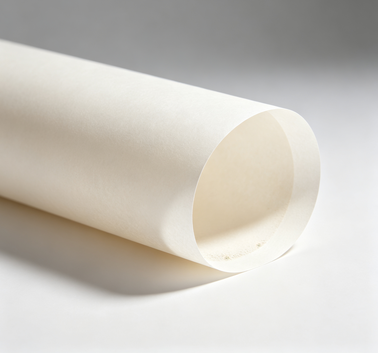
Boron Nitride Insulating Paper is a flexible, lightweight electrical insulation material manufactured primarily from high-purity hexagonal boron nitride (h-BN), combining excellent electrical insulation, low dielectric loss, high thermal stability, low thermal expansion, chemical resistance, and relatively high in-plane thermal conductivity. Unlike conventional ceramic plates or rigid insulation components, Boron Nitride Insulating Paper can be supplied in thin sheets and customized into strips, wraps, separators, gaskets, insulating layers, or complex profiles, making it particularly useful where a rigid ceramic component would be difficult to install. The layered crystal structure of h-BN provides electrical insulation while allowing efficient heat transfer along the plane of the material, creating an unusual combination of dielectric performance and thermal management capability. Depending on purity, thickness, density, binder content, and manufacturing process, BN insulating paper can be engineered for different temperature ranges and electrical requirements. For demanding thermal-processing and electronic applications, the actual operating temperature should always be evaluated together with atmosphere, mechanical loading, contact pressure, thermal gradients, and oxidation conditions rather than relying only on the material's theoretical maximum temperature.
Classification and Key Characteristics of Boron Nitride Insulating Paper
1. High-Purity Hexagonal Boron Nitride Structure
Boron Nitride Insulating Paper is primarily based on hexagonal boron nitride, whose layered crystal structure resembles graphite but differs fundamentally in electrical behavior. Strong bonding within the basal planes provides good thermal transport, while the electronically insulating nature of BN gives the material high electrical resistivity and dielectric stability. This structure makes BN paper particularly attractive when an application requires electrical isolation without introducing a conventional polymeric insulation layer that may degrade at elevated temperatures.
2. Excellent Electrical Insulation
One of the primary functions of Boron Nitride Insulating Paper is electrical isolation between conductive components, electrodes, heaters, fixtures, substrates, or structural parts. High-purity BN can provide electrical resistivity above 10¹³ Ω·cm, although the actual value depends on material purity, temperature, density, porosity, and processing conditions. At elevated temperatures, electrical resistance generally decreases, so insulation performance should be evaluated at the actual operating temperature rather than only under room-temperature conditions.
3. Thermal Stability and Heat Resistance
BN has excellent thermal stability in controlled atmospheres, allowing BN insulating paper to function in demanding high-temperature environments where polymer films, organic papers, or conventional electrical insulation may lose mechanical integrity. The practical temperature limit depends strongly on atmosphere: inert gas and vacuum conditions can support much higher-temperature operation, while prolonged exposure to oxidizing atmospheres can progressively oxidize BN at elevated temperatures. For this reason, furnace atmosphere, exposure time, heating rate, and cooling conditions should be considered together during material selection.
4. Low Thermal Expansion and Thermal Cycling Resistance
The low coefficient of thermal expansion of BN helps reduce dimensional changes during repeated heating and cooling cycles. This characteristic is particularly useful when the insulating layer is positioned between components with different thermal expansion coefficients, because excessive expansion mismatch can generate interface stress, wrinkling, cracking, or loss of contact. Thin BN paper also has relatively low thermal mass, allowing it to respond quickly to changes in temperature without introducing a large thermal load into the assembly.
5. Thermal Conductivity with Electrical Insulation
A major advantage of Boron Nitride Insulating Paper is that it can electrically isolate components while still providing useful thermal conduction, especially along the material plane. This combination is valuable for thermal management designs in which heat must be transferred away from a localized heat source while electrical current must remain isolated. The effective thermal performance depends on BN orientation, density, thickness, interfaces, contact pressure, and surface condition, so the bulk thermal conductivity of the paper should not automatically be treated as the thermal resistance of an installed assembly.
6. Chemical Stability and Low Wettability
BN demonstrates good chemical stability against many molten materials and corrosive environments and has relatively low wettability toward numerous melts. This allows BN insulating paper to function not only as an electrical insulation layer but also as a separation or release layer in selected high-temperature processing environments. However, chemical compatibility should always be checked against the specific molten material, atmosphere, temperature, and exposure duration because contamination, additives, and impurities can significantly change interfacial reactions.

Typical Specifications of Boron Nitride Insulating Paper
The following values represent typical engineering ranges for high-purity BN insulating paper; actual specifications can be customized according to thickness, density, purity, electrical requirements, thermal environment, and application geometry.
| Property | Typical Value |
|---|---|
| Material | Hexagonal Boron Nitride (h-BN) |
| BN Purity | ≥99% |
| Density | 1.8–2.2 g/cm³ |
| Electrical Resistivity | >10¹³ Ω·cm |
| Thermal Conductivity | 30–70 W/m·K* |
| Coefficient of Thermal Expansion | 1–2 × 10⁻⁶/K |
| Dielectric Constant | Approx. 3.5–4.5 |
| Dielectric Loss | Low |
| Flexural Strength | Application dependent |
| Maximum Temperature | Up to 2000°C+ in controlled atmosphere* |
| Oxidizing Atmosphere | Lower practical temperature limit |
| Thickness | Customized |
| Width / Length | Customized |
| Surface | Smooth / customized |
| Color | White to light gray |
Actual performance depends strongly on density, BN grade, crystal orientation, porosity, atmosphere, thickness, and manufacturing process. Boron Nitride Insulating Paper should therefore be specified according to the complete operating environment rather than a single material-property value. In thermal applications, the thin geometry can be advantageous because it minimizes thermal resistance associated with thickness, but interface resistance between the BN paper and mating components may become a significant part of the total thermal path. For electrical insulation, dielectric breakdown strength should also be considered together with thickness, temperature, applied voltage, edge geometry, and surface contamination.
Applications of Boron Nitride Insulating Paper
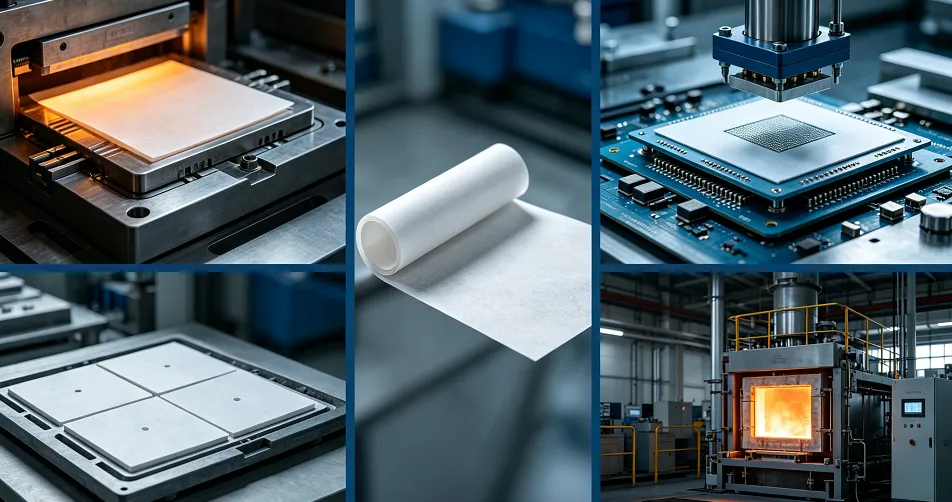
1. High-Temperature Electrical Insulation
Boron Nitride Insulating Paper is used where electrical isolation must be maintained while the surrounding assembly is exposed to elevated temperatures, thermal cycling, or chemically demanding atmospheres. From an engineering perspective, its value is not simply that BN is electrically insulating, but that the insulation function can be maintained without introducing an organic polymer layer that softens, decomposes, outgasses, or loses dielectric performance at high temperature. The thin BN layer can be positioned between conductive electrodes, heater elements, metallic supports, ceramic fixtures, or other electrically active components to interrupt unintended current paths. When designing the insulation, engineers should determine the required dielectric strength from the maximum operating voltage and layer thickness, while also accounting for edge effects, surface contamination, local pressure, and temperature-dependent resistivity. In particular, a BN paper layer should not be evaluated only by its room-temperature resistance because electrical behavior changes with temperature and the actual interface may contain conductive deposits generated during processing.
2. Furnace and Thermal Processing Equipment
In high-temperature furnaces and thermal-processing systems, Boron Nitride Insulating Paper can function as a thin insulating separator, electrical isolation layer, protective interface, or release layer between components that must remain physically close but electrically or chemically separated. Its low coefficient of thermal expansion helps reduce dimensional movement during repeated heating and cooling, while the relatively low density and thin profile minimize the additional thermal mass introduced into the system. From an engineering standpoint, the critical issue is not simply whether BN can tolerate a specified peak temperature, but whether the paper can maintain its required mechanical and electrical function throughout the complete thermal cycle. Furnace atmosphere is especially important: vacuum and inert environments can permit substantially higher-temperature use, whereas oxygen-containing atmospheres can accelerate BN oxidation at elevated temperature. Engineers should therefore evaluate peak temperature, dwell time, heating and cooling rate, atmosphere, contact pressure, and expected number of thermal cycles together when selecting the BN paper grade.
3. Semiconductor and Electronic Thermal Management
Boron Nitride Insulating Paper can be applied in thermal-management structures where electrical isolation and heat dissipation are required from the same thin interface. This is particularly valuable when a conventional electrically insulating polymer would create excessive thermal resistance or lose dimensional stability during elevated-temperature processing. The engineering advantage comes from the intrinsic combination of BN's electrical insulation and thermal transport characteristics, but the effective thermal performance of an installed BN paper layer is governed by more than its nominal thermal conductivity. Thickness, crystallographic orientation, density, surface roughness, contact pressure, and interfacial thermal resistance between BN and the mating component all influence the actual heat-transfer path. For precision electronic or semiconductor equipment, engineers should therefore specify not only thermal conductivity and dielectric properties but also thickness tolerance, surface condition, purity, particle generation, outgassing behavior, and compatibility with the substrate and surrounding processing environment.
4. Ceramic Component Separation and Release Layers
Thin Boron Nitride Insulating Paper can be positioned between ceramic components, processing fixtures, molds, setters, or other surfaces when direct contact could result in sticking, contamination, or difficult component removal after high-temperature processing. The layered h-BN structure and low wettability toward many molten or high-temperature materials make BN particularly useful as an engineered interface rather than merely as bulk insulation. The key engineering consideration is the interface itself: the paper must remain sufficiently stable under the applied pressure and temperature while providing enough separation to prevent direct bonding between the mating surfaces. Excessive mechanical loading, sharp edges, surface protrusions, or repeated sliding can damage thin BN paper even though the bulk BN material has excellent hardness and thermal stability. Therefore, the contact geometry, surface finish, compression load, thermal expansion mismatch, atmosphere, and expected number of processing cycles should all be considered when designing a BN separation layer.
5. High-Temperature Insulation for Custom Components
The flexibility and thin geometry of Boron Nitride Insulating Paper make it particularly useful when insulation must follow a component profile or occupy a confined installation space where a rigid BN plate or machined ceramic part would be impractical. Engineers can use BN paper as a wrapped insulation layer, spacer, separator, localized electrical barrier, or customized interface around ceramic and metallic components. However, its flexibility should not be confused with polymer-like mechanical flexibility; BN remains a ceramic material and can be damaged by excessive bending, folding, tensile loading, or concentrated contact stress. Component design should therefore minimize sharp bends and unsupported spans and should provide controlled clamping rather than relying on the paper to carry significant structural loads. For production applications, dimensional repeatability, cutting tolerance, edge integrity, thickness variation, and the interaction between the paper and its retaining components can have a greater influence on reliability than the nominal bulk properties of the BN itself.
6. Vacuum and Inert-Atmosphere Processing
Boron Nitride Insulating Paper is well suited to selected vacuum and inert-atmosphere processes where conventional organic insulation cannot survive the required temperature or where low contamination is important. In these environments, the absence or reduction of oxygen significantly improves the thermal stability of BN and allows its intrinsic high-temperature characteristics to be utilized more effectively. From an engineering perspective, vacuum operation introduces additional requirements beyond temperature resistance, including outgassing, volatile contaminants, particle generation, surface cleanliness, and the possibility of material transfer between contacting surfaces. For high-purity thermal processing, the BN grade should therefore be selected according to both chemical purity and process compatibility, rather than assuming that all commercially available BN papers provide equivalent performance. The paper's thickness, density, binder system if present, surface condition, and manufacturing residues should be evaluated when the material is incorporated into a sensitive vacuum or inert-gas system.
Engineering Considerations for Boron Nitride Insulating Paper Design
When designing Boron Nitride Insulating Paper into an industrial assembly, the correct approach is to treat it as a functional ceramic interface rather than simply a sheet of electrical insulation. The first design variable is electrical thickness: increasing thickness generally improves insulation margin but also increases thermal resistance and may affect dimensional clearances, so the required dielectric strength should be balanced against the allowable temperature difference across the layer. The second variable is mechanical loading; BN has excellent compressive stability for a ceramic but limited tolerance for tensile stress, impact, sharp-edge loading, and uncontrolled bending, meaning clamping forces should be distributed over a sufficiently large contact area. The third variable is thermal expansion mismatch between BN and adjacent metals or ceramics, particularly when the assembly experiences hundreds or thousands of thermal cycles; constrained expansion can generate interface stress even when the BN itself has a low CTE. The fourth variable is atmosphere, because oxidation can become the controlling failure mechanism at temperatures where BN would otherwise remain structurally stable. The fifth variable is surface condition and contamination: a BN layer may have excellent intrinsic electrical resistivity, yet deposited conductive particles, molten material, carbon residues, moisture, or process chemicals can create surface leakage paths. Finally, engineers should evaluate installation tolerances, thickness uniformity, edge quality, thermal contact resistance, purity requirements, and expected service cycles together, because long-term reliability is determined by the complete BN paper/component/assembly system rather than by any single material-property value.
FAQs About Boron Nitride Insulating Paper
1. Why is Boron Nitride Insulating Paper preferred for some high-temperature insulation applications?
Boron Nitride Insulating Paper is selected when an application requires electrical insulation together with high-temperature stability, low thermal expansion, chemical resistance, and useful thermal conductivity. The major engineering advantage is that BN can provide electrical isolation without relying on organic binders or polymeric structures that may degrade during prolonged exposure to high temperature. Its thin form also allows engineers to introduce insulation into narrow gaps and complex assemblies without significantly increasing component dimensions. However, the selection should be based on the actual temperature, atmosphere, voltage, mechanical load, and required service life rather than simply choosing BN because it has a high theoretical temperature capability.
2. How does the thickness of Boron Nitride Insulating Paper affect electrical and thermal performance?
The thickness of Boron Nitride Insulating Paper directly influences the electrical insulation distance and the thermal path between two components. A thicker layer can provide a larger physical separation and potentially greater dielectric margin, but it also increases the distance through which heat must travel and may increase thermal resistance when the paper is used as a thermal interface. Conversely, an extremely thin layer may provide excellent thermal coupling but leave less tolerance for pinholes, surface damage, edge leakage, or manufacturing variation. Engineers should therefore select thickness from the required voltage isolation, dielectric strength, operating temperature, heat-flow requirement, dimensional clearance, and manufacturing tolerance rather than using thickness as an independent specification.
3. Can Boron Nitride Insulating Paper operate at 2000°C?
High-purity BN can withstand extremely high temperatures under suitable vacuum or inert-atmosphere conditions, and temperatures around 2000°C can be achievable for appropriate BN grades and exposure conditions. However, 2000°C should not be interpreted as a universal continuous service temperature for every BN insulating paper product. The practical limit depends on atmosphere, oxygen partial pressure, exposure duration, material purity, density, mechanical loading, and the presence of chemically reactive neighboring materials. In air or other oxidizing environments, BN oxidation can become the dominant limitation at substantially lower temperatures. For engineering qualification, the complete thermal cycle and atmosphere should therefore be specified rather than using a single maximum-temperature number.
4. What mechanical limitations should engineers consider when installing Boron Nitride Insulating Paper?
Although BN has excellent hardness and thermal stability, thin BN paper should not be treated as a load-bearing structural ceramic component. Excessive bending, folding, tensile loading, concentrated compression, sharp edges, repeated sliding, and local impact can initiate defects that later become failure sites during thermal cycling. Installation should use broad, controlled contact surfaces and avoid sharp corners that concentrate stress into the paper. If the BN layer is clamped between two components, engineers should also consider the thermal expansion of the surrounding materials because clamping forces can change significantly as the assembly heats and cools. Proper mechanical design is therefore essential even when the material's bulk temperature resistance appears more than sufficient.
5. How should Boron Nitride Insulating Paper be selected for semiconductor or high-purity processing?
For semiconductor and high-purity applications, material selection should extend beyond electrical insulation and temperature rating to include BN purity, particle generation, surface cleanliness, outgassing, chemical compatibility, thickness uniformity, and dimensional stability. The required thermal conductivity and dielectric performance should be evaluated at the actual operating temperature, while the contact surfaces should be examined for possible contamination or reaction with process materials. If the BN paper is used in vacuum or inert-gas equipment, engineers should also verify whether the specific grade contains binders, processing residues, or other components that could affect vacuum quality. The most suitable Boron Nitride Insulating Paper is therefore the grade whose complete material and process characteristics match the equipment environment, not necessarily the grade with the highest nominal purity or maximum temperature.