Advanced Technical Ceramics, Precision Alumina, Silicon Carbide, Crucible Parts
 Technology Co., Ltd.(Luoyang) Technology Co., Ltd.科技品牌标志.webp)


What Should Buyers Know Before Ordering Custom Ceramic Components?
Custom ceramic components are widely used in industries that require high temperature resistance, wear resistance, electrical insulation, and dimensional stability. From semiconductor equipment and electronic devices to industrial machinery and thermal processing systems, these parts help equipment operate under demanding conditions. However, ordering custom ceramic components involves more than choosing a material and providing a drawing. Buyers also need to consider operating conditions, material properties, machining requirements, quality standards, production costs, and supplier capabilities.
Unlike many metal parts, ceramics are hard and brittle. Their manufacturing processes also involve forming, sintering, and precision machining, which can affect final dimensions and production costs. Therefore, clear communication between buyers and suppliers is important before production begins. For procurement teams and engineers, understanding these factors can help reduce technical risks, avoid unnecessary expenses, and improve component service life. This guide explains what buyers should know before ordering custom parts made from advanced ceramics and other engineering ceramics.
1. Why Are Custom Ceramic Components Used in Industrial Applications?
Advanced ceramics are inorganic, non-metallic materials designed to provide specific mechanical, thermal, electrical, or chemical properties. Compared with many traditional metals and plastics, they can offer higher hardness, better wear resistance, excellent electrical insulation, and stable performance at elevated temperatures. These properties make engineering ceramics useful in industrial environments where conventional materials may wear out quickly, corrode, or fail to maintain their original dimensions. For example, alumina ceramics are widely used in electrical insulation parts, mechanical structures, and industrial equipment. Aluminum nitride is suitable for applications that require both high thermal conductivity and electrical insulation. Silicon carbide offers high hardness, good thermal conductivity, and resistance to many demanding chemical environments.
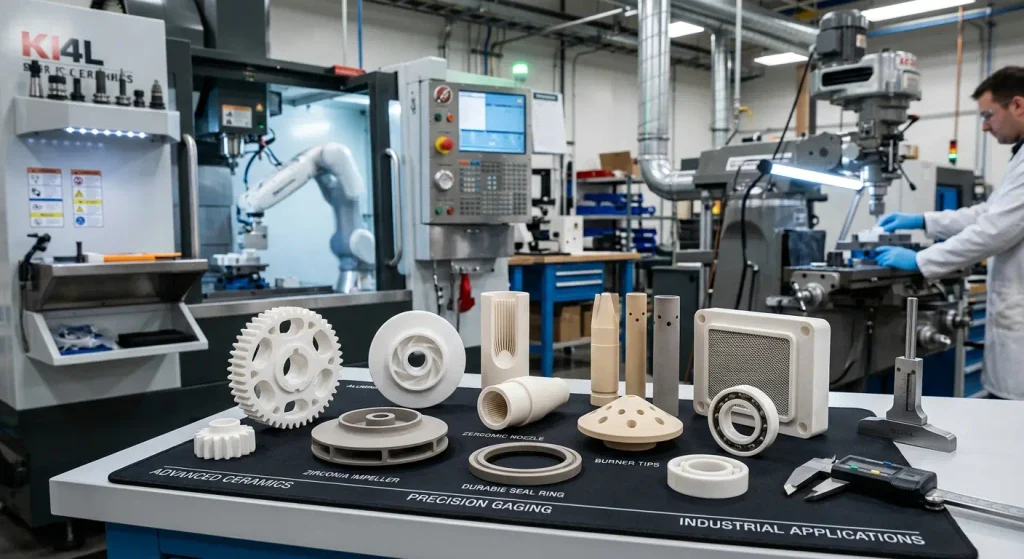
The main reason buyers choose custom ceramic components is that standard products may not meet the exact requirements of their equipment. A machine may need a ceramic tube with a special inner diameter, a bearing with a particular geometry, or an insulating part with multiple precision holes. In these cases, customized dimensions and machining features are necessary for proper assembly and stable operation. Engineering ceramics are also used in components such as ceramic bearings, bushings, nozzles, tubes, plates, rollers, heater supports, and insulation structures. A bearing ceramic component, for instance, may be selected for its hardness, relatively low density, and wear resistance in suitable operating conditions. A ceramic heater element or its supporting ceramic structure may require electrical insulation and resistance to repeated temperature changes.
Consider a simple example. A metal guide component operating in an abrasive environment may gradually lose material through repeated contact. Replacing it with a suitable ceramic component may reduce wear, although the final result depends on contact pressure, lubrication, surface finish, and installation. The ceramic solution must also account for brittleness and impact loads. For industrial buyers, the key is to match the material to the actual working conditions rather than choosing the hardest or most expensive option.
Key points for buyers:
- Identify the component’s main function: insulation, wear resistance, heat transfer, or structural support.
- Check temperature, mechanical loading, chemical exposure, and electrical requirements.
- Decide whether standard dimensions are sufficient or custom parts are necessary.
- Evaluate total service life and maintenance costs, not only the initial purchase price.
2. How to Choose the Right Ceramic Material for Your Application
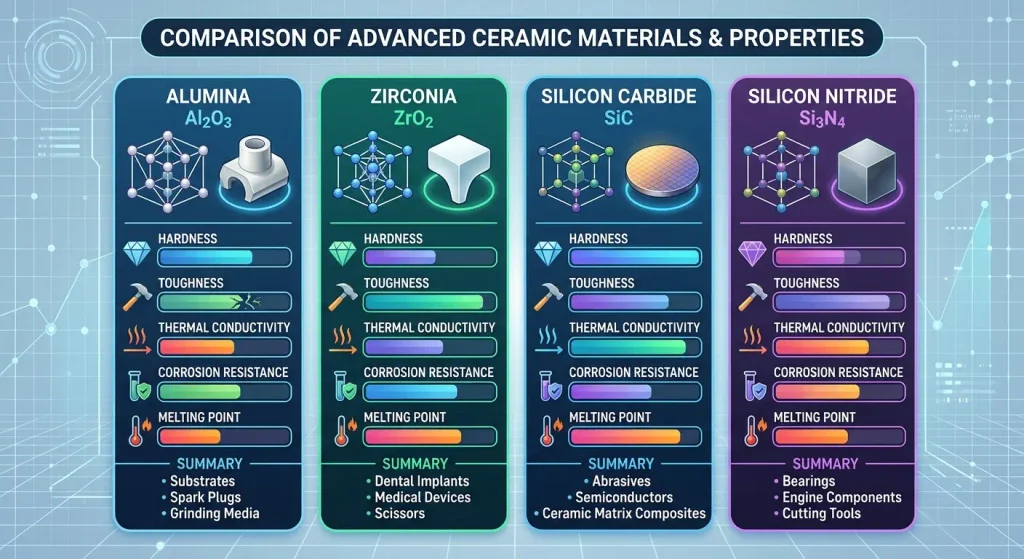
Material selection is one of the most important decisions when ordering custom ceramic components. Different ceramic materials have different strengths and limitations. Buyers should not select a material based on one property alone. Instead, they should consider operating temperature, mechanical loading, chemical exposure, electrical requirements, thermal conductivity, and expected service life.
Alumina ceramics (Al₂O₃) are among the most commonly used engineering ceramics. They offer good hardness, electrical insulation, wear resistance, and chemical stability in many environments. Common commercial grades include 95%, 99%, and 99.5% alumina. Higher-purity grades may provide improved performance for certain applications, although the best grade depends on the required properties and budget. Alumina is often used for insulating parts, ceramic tubes, plates, bushings, and precision structural components.
Aluminum nitride (AlN) is mainly selected when high thermal conductivity and electrical insulation are both important. It is widely considered for electronic substrates, heat spreaders, and thermal management components. Its thermal conductivity is much higher than that of standard alumina, but its machining and material costs may also be higher. Buyers should consider substrate thickness, surface finish, thermal expansion, and interface design when evaluating AlN.
Boron nitride (BN) offers good electrical insulation, thermal stability, and relatively easy machining in machinable grades. It is used in high-temperature insulation, furnace components, and specialized industrial structures. Different BN grades have different densities, strengths, and thermal properties. Some machinable BN grades are relatively soft and should not be compared directly with dense structural ceramics.
Silicon carbide (SiC) provides high hardness, good thermal conductivity, and excellent wear resistance. It is suitable for selected mechanical components, industrial nozzles, semiconductor equipment parts, and high-temperature structures. However, its high hardness makes machining more difficult. The difference between reaction-bonded and sintered SiC should also be considered because their composition and performance can vary.
Silicon nitride (Si₃N₄) is known for its high strength, good fracture toughness, and thermal shock resistance. It is often considered for bearings, rollers, and precision mechanical components exposed to repeated loading or temperature changes. Quartz is another option for applications that require specific thermal, electrical, or optical properties, particularly in selected high-purity process environments.
Typical property comparison of advanced ceramics
The following values are indicative ranges for common commercial grades. They are intended for preliminary comparison, not as guaranteed specifications. Hardness test methods, material composition, porosity, and manufacturing processes can produce significant differences.
| Property | Alumina 95–99.5% | Aluminum Nitride | Boron Nitride* | Silicon Carbide | Silicon Nitride | Fused Quartz |
|---|---|---|---|---|---|---|
| Density (g/cm³) | 3.6–3.9 | 3.26–3.33 | 1.8–2.2 | 3.05–3.21 | 3.1–3.3 | 2.2 |
| Vickers hardness (GPa) | 12–18 | 10–12 | 0.2–0.5 | 22–28 | 13–16 | 5–7 |
| Flexural strength (MPa) | 250–400 | 300–450 | 20–80 | 300–600 | 600–1,000 | 40–100 |
| Fracture toughness (MPa·m½) | 3–5 | 2.5–3.5 | 1–3 | 3–5 | 5–8 | 0.6–0.8 |
| Thermal conductivity (W/m·K) | 20–35 | 140–230 | 20–60 | 80–200 | 15–90 | 1.3–1.5 |
| CTE (×10⁻⁶/K) | 6.5–8.5 | 4.0–5.0 | 1–6 | 3.7–4.5 | 2.5–3.5 | 0.5–0.6 |
| Typical maximum use temperature (°C)** | 1,400–1,600 | 1,000–1,200 | 1,800–2,000 | 1,000–1,600 | 1,000–1,400 | 1,000–1,100 |
| Common application | Insulators, tubes, plates | Substrates, heat spreaders | Insulation, furnace parts | Wear parts, nozzles, structural parts | Bearings, rollers, precision parts | Tubes, process components |
*BN values refer to selected machinable grades. Hot-pressed BN, pyrolytic BN, and other BN products can have very different properties.
Temperature values are broad indicative ranges, not universal continuous-use ratings. Atmosphere, applied load, oxidation, component geometry, and exposure time can significantly change the practical operating limit.
The table shows why there is no single best ceramic material. For example, AlN has much higher thermal conductivity than standard alumina, while Si₃N₄ generally offers higher fracture toughness. SiC combines high hardness with good thermal conductivity, but its electrical behavior depends on the grade and should not automatically be treated as insulating. A simple material selection example illustrates the point. If a component needs to transfer heat while electrically isolating two parts, AlN may be a strong candidate. If it needs to resist abrasive contact, SiC or alumina may be more suitable. If it experiences repeated mechanical loading and thermal shock, Si₃N₄ may deserve evaluation.
3. What Technical Information Should Buyers Prepare Before Ordering?
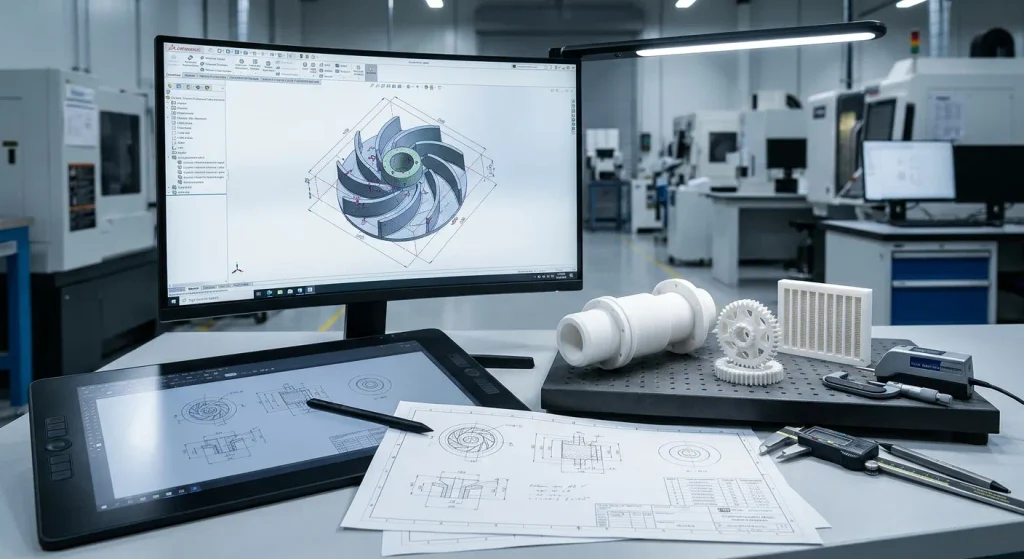
Before requesting a quotation, buyers should prepare clear technical information about the required component. A complete drawing is important, but it is not always enough. The supplier also needs to understand how the part will be used. Without this information, it may be difficult to recommend the right ceramic grade or confirm whether the design can be manufactured. The first requirement is a technical drawing. Buyers can provide a 2D engineering drawing or a 3D CAD file showing overall dimensions, hole positions, wall thickness, grooves, threads, and other important features. Critical dimensions should be clearly marked. If the part must fit another component, the related assembly dimensions should also be provided.
Next, buyers should explain the working environment. Important details include operating temperature, heating and cooling cycles, atmosphere, vacuum conditions, chemical contact, humidity, and mechanical loading. For example, a ceramic part used in a furnace may require high-temperature stability, while a component used in semiconductor equipment may need controlled purity and surface quality. Electrical and thermal requirements should also be stated. If the component is used for insulation, the required electrical resistivity or dielectric strength may be important. If heat transfer is necessary, thermal conductivity and thermal expansion should be considered. Buyers should also clarify whether the component contacts a wafer, a heater, a liquid, or another mechanical part.
Quantity and delivery information are equally important. A prototype order of five pieces may require a different production plan from a recurring order of 1,000 pieces. Buyers should provide expected annual demand, sample requirements, packaging preferences, and delivery schedule.
Example: estimating thermal expansion
Thermal expansion can affect the fit between a ceramic component and its surrounding metal structure. A basic calculation is:
ΔL = α × L₀ × ΔT
Where:
- ΔL = change in length (mm)
- α = coefficient of thermal expansion (K⁻¹)
- L₀ = original length (mm)
- ΔT = temperature change (K or °C)
For example, consider a 100 mm alumina component with an indicative CTE of 8 × 10⁻⁶/K. If its temperature increases by 500°C:
ΔL = 8 × 10⁻⁶ × 100 × 500 = 0.4 mm
This means the component may expand by approximately 0.4 mm under the assumed uniform temperature change. Actual expansion depends on the grade, temperature range, and temperature distribution. The calculation nevertheless shows why buyers should consider thermal expansion when designing assemblies.
4. Why Do Dimensions and Machining Tolerances Matter?
Dimensional accuracy is essential for custom ceramic components, especially when they are installed in precision equipment. If a part is too large, too small, or incorrectly shaped, it may not fit the assembly. Even small dimensional differences can affect alignment, sealing, positioning, or mechanical performance. Ceramic manufacturing also differs from metal manufacturing. During forming and sintering, ceramic materials undergo shrinkage. The amount of shrinkage depends on powder characteristics, forming methods, material composition, and firing conditions. Manufacturers must consider this change when designing tooling and planning final dimensions.
After sintering, ceramic machining is often needed to achieve tighter tolerances. Common processes include diamond grinding, CNC machining, drilling, lapping, and polishing. Because ceramics are very hard and brittle, these processes require suitable tools and careful control. Complex shapes, thin walls, small holes, and sharp corners may increase machining difficulty. For some precision-ground ceramic parts, tolerances of approximately ±0.01–0.05 mm may be achievable after engineering review. This is not a standard guarantee for every part. Larger components, complicated geometries, and special material grades may require different tolerances. Buyers should avoid specifying extremely tight tolerances for every dimension when only a few features are functionally critical.
Example: tolerance stack-up in an assembly
Suppose a ceramic spacer has a specified thickness of 10.00 ± 0.05 mm and a metal support has a thickness of 5.00 ± 0.03 mm. The total nominal stack is:
10.00 + 5.00 = 15.00 mm
Under a worst-case tolerance calculation, the combined variation is:
±(0.05 + 0.03) = ±0.08 mm
The total assembly dimension could therefore range from 14.92 mm to 15.08 mm. This example shows why buyers should consider the complete assembly rather than evaluating each ceramic dimension separately.
Surface roughness is another important factor. A component used as a general support part may only need a standard ground surface, while a precision contact surface may require lapping or polishing. Buyers should clearly specify the required Ra value and any flatness, parallelism, or concentricity requirements.
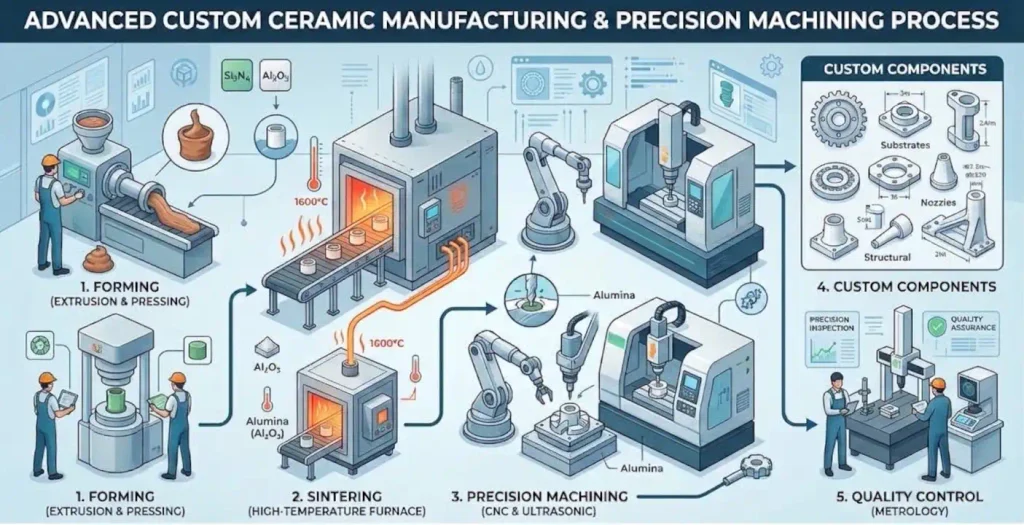
5. What Manufacturing Processes Are Used for Custom Ceramic Parts?
The production of custom ceramic parts usually involves several stages. The exact process depends on the material, component shape, required density, and final application. Understanding these stages helps buyers evaluate production feasibility and communicate more effectively with suppliers. The process generally starts with raw material preparation. Ceramic powders are selected and mixed according to the required composition and material grade. Powder quality and particle size distribution can influence forming behavior, final density, and mechanical properties. For high-performance applications, raw material purity and batch consistency may also be important.
The next stage is forming. Depending on component geometry, manufacturers may use dry pressing, isostatic pressing, extrusion, injection molding, or casting. Simple plates and discs may be produced through pressing, while tubes and more complex shapes may require other forming methods. The forming method affects the initial shape and can influence later shrinkage. After forming, the parts undergo drying and sintering or another suitable densification process. Sintering uses controlled high temperatures to develop the required ceramic structure and density. Different materials need different firing conditions. Alumina, silicon carbide, aluminum nitride, and silicon nitride cannot simply share the same production parameters. Once the ceramic body is formed and densified, further ceramic machining may be required. Diamond grinding, drilling, CNC machining, and polishing can be used to achieve the required dimensions and surface finish. The amount of machining depends on the initial forming accuracy and final drawing specifications.
Why machining allowance matters:
Assume a ceramic plate needs a final thickness of 10.00 mm. If the supplier plans a grinding allowance of 0.30 mm on the total thickness, the pre-machined part should be approximately:
10.00 + 0.30 = 10.30 mm
The actual allowance must be determined by the forming process, material shrinkage, part size, and machining method. Too little allowance may make it difficult to remove surface defects or achieve the final tolerance. Too much allowance increases grinding time, material loss, and cost.
The final stages include cleaning, dimensional inspection, packaging, and preparation for shipment. For sensitive industrial or semiconductor applications, cleaning and protective packaging may be particularly important to prevent surface contamination or damage during transportation.
6. What Quality Standards and Inspection Requirements Should Buyers Consider?
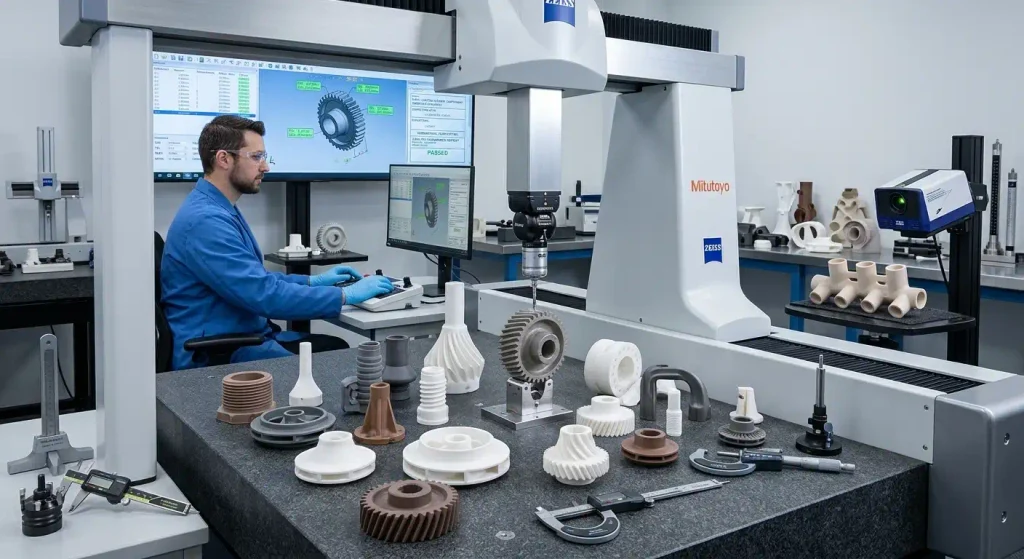
Quality inspection is essential because ceramic components may look similar while having different internal structures and material properties. Buyers should define quality requirements before production rather than waiting until the finished parts are delivered. Material density is one common inspection parameter. It can help indicate whether a component has reached the required level of densification. Porosity may also matter, especially in applications where chemical penetration, surface cleanliness, or mechanical strength is important. The acceptable values depend on the material grade and intended use.
Mechanical properties such as hardness, flexural strength, and fracture toughness may be required for components exposed to wear or loading. Thermal conductivity and coefficient of thermal expansion are important for thermal management applications. Electrical resistivity and dielectric strength may be relevant for insulating parts. These properties should be evaluated using suitable test methods and clearly defined conditions. Dimensional inspection is equally important. Manufacturers may check length, width, thickness, hole diameter, flatness, parallelism, and other drawing requirements. Surface inspection can identify cracks, chips, scratches, and machining defects. For critical components, buyers may also specify surface roughness and cleanliness requirements.
Calculating a simple dimensional acceptance rate:
Suppose a batch contains 200 ceramic components. During dimensional inspection, 194 pieces meet all specified dimensional requirements.
The dimensional acceptance rate is:
Acceptance rate = (Qualified pieces ÷ Total inspected pieces) × 100%
= (194 ÷ 200) × 100% = 97%
This means the dimensional acceptance rate for the inspected batch is 97%. It does not automatically represent the overall material quality or long-term reliability. Buyers should define which inspection items are included in the acceptance calculation.
A reliable supplier should be able to provide relevant technical documents, such as material data sheets, dimensional inspection reports, and batch records where available. However, not every component requires every possible test. Buyers should identify the properties that directly affect product performance and agree on the inspection plan with the supplier.
Key points for buyers:
- Define material and dimensional acceptance criteria before production.
- Check density, porosity, hardness, and other relevant properties.
- Specify surface roughness and visual inspection requirements.
- Request inspection reports and batch traceability where required.
- Match the inspection plan to the component’s actual application.
7. How Do Customization, MOQ, Lead Time, and Cost Affect Your Order?
The cost of custom ceramic components depends on more than the price of raw materials. Component geometry, material grade, manufacturing process, machining time, inspection requirements, and order quantity can all affect the final quotation. Material selection is one of the main cost factors. Some materials require more expensive powders or more complex production conditions. High-purity grades may cost more than standard grades. For example, aluminum nitride is often selected for its high thermal conductivity, while silicon carbide may be chosen for wear resistance and high-temperature performance. Buyers should select materials according to actual requirements rather than automatically choosing the highest grade.
Part geometry also influences cost. Thin walls, deep holes, narrow slots, complex curves, and tight tolerances may require additional machining operations. Precision grinding and polishing can increase production time. Custom molds or special tooling may also add initial development costs. Minimum order quantity (MOQ) and production lead time depend on the manufacturing process and the supplier’s production arrangement. Small sample orders may be possible, but customized tooling and material preparation can make the unit cost higher. For larger orders, production planning and batch consistency become more important.
Buyers should also consider total operating cost rather than only the initial purchase price. A ceramic part with a higher unit price may offer longer service life or lower maintenance requirements in a suitable application. However, this advantage should be evaluated using real operating data, not assumed from material properties alone. When requesting a quotation, buyers should provide the drawing, material preference if known, quantity, required tolerance, surface finish, and delivery expectations. This allows the supplier to prepare a more accurate price and production schedule.
8. How to Evaluate a Custom Ceramic Components Manufacturer?
Choosing the right ceramic manufacturer is important for both product quality and long-term supply stability. Buyers should look beyond the quotation price and evaluate whether the supplier can meet the technical requirements of the project. First, check the supplier’s material range. A manufacturer familiar with alumina, aluminum nitride, boron nitride, silicon carbide, and silicon nitride can help compare different materials for specific applications. However, buyers should confirm which materials are actually produced or processed by the supplier rather than relying only on a general product list.
Second, evaluate manufacturing and machining capabilities. Ask whether the supplier can provide forming, sintering, grinding, CNC machining, drilling, and polishing as required. For precision custom parts, machining capability is especially important because final dimensions and surface quality often depend on post-sintering operations. Quality control is another key point. Buyers should ask about dimensional inspection equipment, material testing, batch management, and inspection documentation. A supplier should be able to explain how critical dimensions are checked and how non-conforming products are handled.
It is also useful to review sample quality and communication efficiency. A good supplier should be willing to discuss design details, explain manufacturing limitations, and suggest practical adjustments when necessary. If the drawing contains a difficult feature, early technical feedback can prevent delays and unexpected costs. When comparing different ceramic factories, buyers should consider material knowledge, process control, machining experience, inspection capability, communication, and delivery reliability together.
A practical supplier evaluation scorecard:
A buyer can use a simple weighted evaluation model before selecting a supplier:
| Evaluation factor | Suggested weight |
|---|---|
| Material knowledge and grade selection | 20% |
| Manufacturing and machining capability | 25% |
| Quality inspection and traceability | 25% |
| Technical communication and engineering support | 15% |
| Delivery and production consistency | 10% |
| Commercial terms | 5% |
| Total | 100% |
For each category, assign a score from 1 to 5. The weighted score can be calculated as:
Weighted Score = Σ (Category Score ÷ 5 × Category Weight)
For example, a supplier scoring 4 out of 5 for machining capability receives 4 ÷ 5 × 25 = 20 points out of the available 25.
This scorecard is a purchasing tool rather than an official certification. Buyers should also verify relevant documents, production capabilities, and sample quality before making a final decision.
9. Common Mistakes to Avoid When Ordering Custom Ceramic Components
One common mistake is selecting a ceramic material based on only one property. For example, high hardness does not automatically mean a material is suitable for every wear application. Chemical compatibility, fracture toughness, operating temperature, and surface condition also affect performance. Buyers should explain the complete working environment before confirming the material. Another mistake is providing incomplete drawings. Missing dimensions, unclear tolerances, or unspecified surface finishes can lead to different interpretations between the buyer and manufacturer. This may result in parts that meet the supplier’s understanding but do not fit the buyer’s equipment. A clear drawing with marked critical dimensions helps avoid this problem.
Some buyers also request very tight tolerances without considering manufacturing feasibility. Ceramics are hard and brittle, and precision machining can be time-consuming. Applying extremely strict tolerances to non-critical features may increase costs without improving actual equipment performance. It is better to identify the dimensions that truly affect assembly and function. Ignoring installation conditions is another risk. Ceramic materials can provide excellent hardness and stiffness, but they are generally more brittle than metals. Sharp corners, uneven loading, impact, and excessive tightening pressure may cause cracking or chipping. Component design should include suitable support structures, clearance, and mounting methods.
Buyers should also avoid comparing material data without checking test conditions. Thermal conductivity, hardness, and flexural strength can vary by grade and testing method. A comparison is only meaningful when the material grades and test conditions are reasonably consistent. Finally, buyers should not skip sample testing and acceptance planning for important projects. A sample can help confirm fit, dimensions, surface quality, and performance under representative conditions. Before mass production, both parties should agree on inspection methods, acceptable limits, packaging, and delivery requirements.
A final pre-order checklist:
- Confirm the material grade and operating conditions.
- Check drawing completeness and critical dimensions.
- Review tolerances and surface finish requirements.
- Confirm manufacturing feasibility and production lead time.
- Agree on inspection standards and sample approval.
- Clarify packaging, quantity, and delivery terms.
10. About Jenson
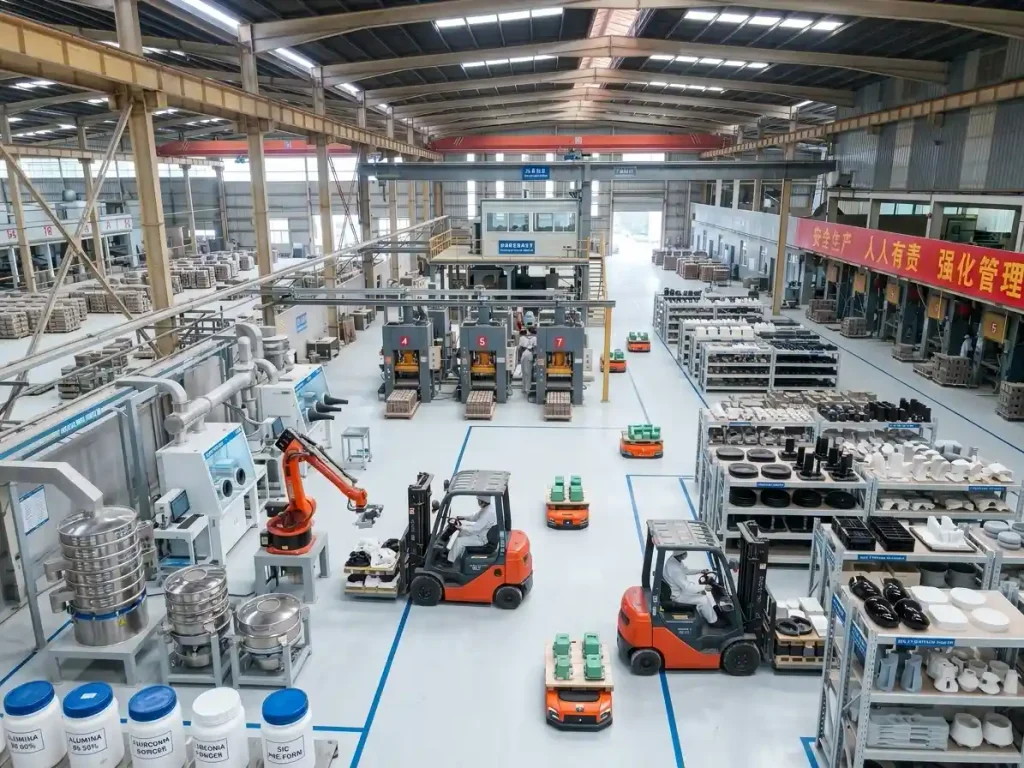
Jenson(Luoyang) Technology Co., Ltd. specializes in advanced ceramic materials and customized ceramic components for demanding industrial, thermal, electrical, and precision engineering applications. Its product range includes alumina, aluminum nitride, boron nitride, silicon carbide, silicon nitride, quartz, and other engineered ceramic products. Components can be developed according to specific application requirements, technical drawings, and operating conditions.
For custom ceramic components, successful material selection and manufacturing depend on more than the basic dimensions of a part. Jenson supports customers in evaluating material properties, component geometry, operating temperature, thermal conductivity, electrical insulation, chemical exposure, and dimensional tolerances. Depending on the material and design, available manufacturing processes may include precision grinding, CNC machining, cutting, and drilling. By considering material grade, machining requirements, and inspection criteria during the design stage, customers can better balance component performance, dimensional accuracy, manufacturing feasibility, and overall cost.
11. Frequently Asked Questions About Custom Ceramic Components
Q1. What information do I need to provide when ordering custom ceramic components?
Buyers should provide a technical drawing or CAD file, required material if known, component quantity, working temperature, operating atmosphere, mechanical loading, and chemical exposure conditions. Dimensional tolerances and surface roughness should also be clearly stated. If the part is used for electrical insulation or thermal management, the required electrical and thermal properties should be included. For example, a heat transfer component may require a specified thermal conductivity, while an insulating part may need a minimum electrical resistivity or dielectric strength. Buyers should also explain whether the component is exposed to repeated heating and cooling, vacuum, pressure, or contact with other materials.
A useful starting point is to prepare a drawing and a short application specification. The supplier can then review the material, geometry, machining requirements, and inspection plan. More complete information helps the manufacturer evaluate feasibility, production cost, and delivery time before issuing a quotation.
Q2. Which ceramic material is best for high-temperature applications?
There is no single ceramic material that is best for every high-temperature application. Silicon carbide is often considered for components that need high hardness, thermal conductivity, and good thermal stability. Silicon nitride may be suitable when strength and thermal shock resistance are important. Alumina is commonly used for high-temperature electrical insulation, while boron nitride is useful in selected high-temperature applications requiring machinability or electrical insulation.
The atmosphere is also important. A material that performs well in an inert or vacuum environment may behave differently in an oxidizing atmosphere. Applied load, exposure time, thermal cycling, and component geometry also influence the practical operating temperature. For example, a furnace support component may need to maintain its shape under a constant load at elevated temperature. A heater support may need electrical insulation and repeated thermal cycling. These are different requirements and may lead to different material choices. Buyers should compare grade-specific technical data rather than relying only on a general maximum temperature figure.
Q3. Can ceramic components be manufactured according to customer drawings?
Yes. Many ceramic manufacturers can produce customized components according to customer drawings, provided that the geometry and technical requirements are suitable for the selected material and manufacturing process. Buyers can normally submit 2D drawings, 3D CAD files, or sample parts for engineering evaluation. The supplier should review dimensions, wall thickness, holes, grooves, tolerances, and machining requirements before confirming production. Some designs may need minor changes to improve manufacturability and reduce cost.
For example, a component with very thin walls or sharp internal corners may be difficult to manufacture without cracking or chipping. A supplier may recommend a larger corner radius, a more suitable wall thickness, or a different forming method. These suggestions should be reviewed together with the equipment designer to ensure that the component still meets its functional requirements. Before mass production, it is good practice to approve a prototype or sample. This helps confirm dimensions, assembly fit, and surface quality.
Q4. What dimensional tolerances can precision ceramic machining achieve?
The achievable tolerance depends on the ceramic material, component size, geometry, machining method, and inspection requirements. For some precision-ground parts, tolerances around ±0.01–0.05 mm may be possible after technical review. However, this range is not suitable for every dimension or component. For example, a small, flat ceramic spacer may be easier to grind accurately than a large component with thin walls and several deep holes. Complex shapes may require additional machining operations and more careful fixturing. Material shrinkage during sintering can also affect the initial dimensions and machining allowance.
Buyers should identify critical dimensions on the drawing and confirm achievable tolerances with the supplier before production. It is also important to specify flatness, parallelism, concentricity, and surface roughness where these features affect assembly or performance. Applying very tight tolerances to every dimension may increase cost without providing a practical benefit.
Q5. What is the difference between standard ceramic parts and custom ceramic components?
Standard ceramic parts are usually manufactured in fixed sizes, shapes, and material grades. They are suitable when the buyer’s equipment can use existing specifications. They may offer shorter lead times and lower unit costs when available from stock. Custom ceramic components, on the other hand, are designed or machined according to specific drawings and operating requirements. They may have special dimensions, holes, grooves, surface finishes, or material properties. Custom manufacturing provides greater design flexibility but may involve tooling costs, longer lead times, and additional engineering communication.
For example, a standard ceramic tube may be suitable for general insulation, but an equipment manufacturer may need a tube with a special inner diameter, end profile, and length. A custom solution can meet these requirements more closely. The decision should depend on the application. If a standard product meets the functional and dimensional requirements, customization may not be necessary. If assembly accuracy or operating conditions require special features, custom manufacturing may be the better choice.
Q6. Can ceramic manufacturers provide OEM and ODM services?
Many ceramic manufacturers offer OEM services based on customer drawings and specifications. Some also provide ODM support, including design suggestions, material recommendations, and manufacturing feasibility reviews. The exact service scope depends on the supplier’s engineering and production capabilities. OEM projects usually begin with a buyer-provided drawing, material specification, and inspection requirements. The manufacturer is responsible for producing the component according to the approved specifications. ODM projects may involve more design communication, especially when the buyer needs help selecting a material or adjusting a component structure.
Buyers should confirm whether the supplier can support material selection, prototype development, precision machining, quality inspection, and batch production. It is also important to clarify who approves drawing revisions, sample specifications, and final inspection criteria. Clear communication at the beginning of a project helps define responsibilities and avoid design misunderstandings.
Q7. What factors affect the cost of custom ceramic components?
The main cost factors include material type, purity, component size, geometry, production quantity, tooling requirements, machining difficulty, dimensional tolerances, and surface finish. High-purity materials and complex shapes may require more expensive production processes. Precision grinding, drilling, and polishing can also increase manufacturing time. For example, a simple alumina plate may require only forming, sintering, and basic grinding. A silicon carbide component with several precision holes and a polished contact surface may require more complex processing. The second component can therefore cost more even if its overall dimensions are similar.
Order quantity also matters. A small sample order may carry a higher unit cost because tooling, setup, and inspection expenses are distributed across fewer pieces. Larger production runs may reduce the unit cost, although the actual price depends on material availability and production capacity. Buyers can often control costs by selecting suitable material grades, simplifying non-critical features, and applying tight tolerances only where necessary. It is useful to request a quotation that clearly identifies tooling, sample, machining, and inspection costs.
Q8. How long does it take to manufacture custom ceramic parts?
Production lead time depends on material preparation, tooling, forming, sintering, machining, inspection, and order quantity. Simple components made from available material grades may have shorter lead times, while complex parts requiring custom molds or extensive precision machining may take longer. Sample development can also require additional time before mass production. For a new component, the supplier may need to review the drawing, confirm material feasibility, prepare tooling, manufacture samples, and complete dimensional inspection. If the sample requires design changes, another production and approval cycle may be necessary.
Buyers should provide complete drawings and technical requirements when requesting a quotation so that the manufacturer can give a realistic production schedule. It is also useful to distinguish between sample lead time and mass production lead time. For recurring orders, buyers can discuss forecast quantities and production planning to improve supply stability.
Q9. How are custom ceramic components inspected before delivery?
Inspection may include visual checks, dimensional measurement, density testing, hardness testing, surface roughness measurement, and selected mechanical, thermal, or electrical tests. The exact inspection plan depends on the material and application. For example, a ceramic bearing may require close dimensional control, surface finish inspection, and checks of its geometry. An insulating component may require electrical property verification, while a thermal management part may need thermal conductivity data. A silicon carbide component used in a wear environment may require relevant material and surface quality checks.
Buyers should agree on inspection standards and acceptance criteria before production. They can request dimensional reports, material data sheets, and batch records where available. It is also important to clarify whether inspection applies to every piece or to a sampling plan. For critical dimensions, full inspection may be appropriate, while other properties may be checked by batch testing. A clear inspection agreement reduces misunderstandings and makes incoming quality control easier.
Q10. Can I request samples before placing a bulk order?
Yes. Sample production is a useful way to verify whether a customized ceramic part meets the required dimensions, assembly conditions, and performance expectations. Buyers can use samples to check fit, surface finish, and compatibility with the equipment. For demanding applications, testing under representative operating conditions may provide additional confidence before mass production. For example, a component exposed to thermal cycling can be evaluated through heating and cooling tests. A wear component may need testing under representative contact pressure, speed, and lubrication conditions. These tests can reveal problems that dimensional inspection alone cannot identify.
Sample costs, tooling charges, and lead times should be confirmed in advance. Buyers should also agree on which sample dimensions and properties will be checked. Once the sample is approved, both parties can use the confirmed drawing, material grade, and inspection criteria as the basis for bulk production.
RELATED POSTS
Is Boron Nitride Machinable to Tight Tolerances for Semiconductor Parts?
Why Is Boron Nitride Used in Semiconductor Manufacturing?
Which Boron Nitride Grade Is Best for MOCVD/CVD Crucibles and Wafer Applications?