Advanced Technical Ceramics, Precision Alumina, Silicon Carbide, Crucible Parts
 Technology Co., Ltd.(Luoyang) Technology Co., Ltd.科技品牌标志.webp)


What Are the Applications of Silicon Nitride Ceramics in EV Drive Systems and High-Temperature Mechanical Systems?
1. Why Are Silicon Nitride Ceramics Important for Modern EV and Industrial Systems?
As electric vehicles become more powerful and industrial equipment operates under increasingly demanding conditions, manufacturers need materials that can deliver high strength, low weight, wear resistance, and stable performance. Traditional metals remain widely used, but they may face limitations in applications involving high rotational speeds, electrical currents, friction, thermal cycling, and elevated temperatures. Silicon nitride is an advanced engineering ceramic that addresses several of these challenges. It combines relatively low density with high hardness, excellent mechanical strength, good fracture toughness for a ceramic, and strong resistance to wear. These properties make silicon nitride material particularly useful in EV drive systems, precision bearings, and High-Temperature Mechanical Systems.
In electric vehicles, silicon nitride is commonly considered for bearing balls in hybrid ceramic bearings. These bearings combine silicon nitride balls with steel inner and outer rings. This design can reduce bearing weight, lower friction under suitable operating conditions, and help reduce the risk of electrical discharge damage associated with motor currents. Beyond the automotive sector, silicon nitride components are used in selected high-temperature mechanical applications, including furnace rollers, support parts, heat exchanger components, and wear-resistant structures. Their performance depends on material grade, component geometry, operating atmosphere, load, and thermal conditions. For equipment manufacturers and procurement teams, the main value of silicon nitride is not simply its high hardness. It is the combination of mechanical, thermal, and electrical properties that allows engineers to solve specific operating problems.
2. Key Material Properties of Silicon Nitride Ceramics
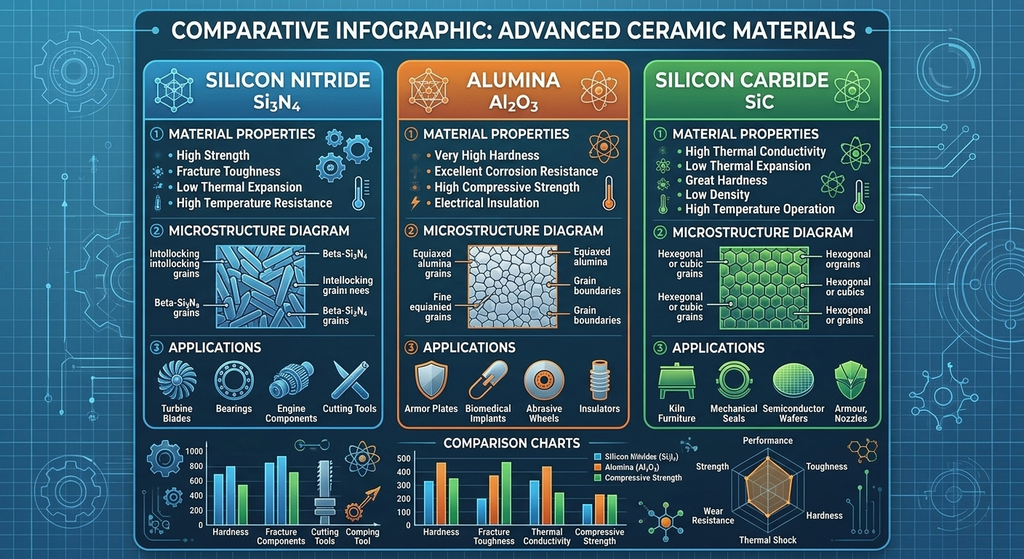
The performance of silicon nitride ceramics comes from their dense microstructure and interlocking grain structure. Compared with many conventional ceramics, silicon nitride can offer a useful balance between hardness and fracture toughness. This makes it suitable for components exposed to repeated contact, vibration, and mechanical stress. Its relatively low coefficient of thermal expansion also helps components maintain dimensional stability when temperatures change. In addition, silicon nitride is electrically insulating under normal material specifications, which is an important consideration in electric motor bearings and selected electrical equipment. The following table provides indicative properties for common engineering materials. Actual values vary with composition, manufacturing process, porosity, grain structure, and test method.
| Property | Silicon Nitride | Alumina | Silicon Carbide | Bearing Steel |
|---|---|---|---|---|
| Density (g/cm³) | 3.10–3.30 | 3.60–3.95 | 3.05–3.21 | 7.70–7.90 |
| Vickers hardness (GPa) | 12–17 | 12–18 | 22–28 | 6–9 |
| Flexural strength (MPa) | 600–1,000 | 250–400 | 300–600 | 1,500–2,500* |
| Fracture toughness (MPa·m¹ᐟ²) | 5–8 | 3–5 | 3–5 | Not directly comparable |
| Young’s modulus (GPa) | 280–320 | 300–380 | 350–450 | 200–215 |
| Thermal conductivity (W/m·K) | 15–90 | 20–35 | 80–200 | 15–45 |
| Coefficient of thermal expansion (10⁻⁶/K) | 2.5–3.5 | 6.5–8.5 | 3.7–4.5 | 11–13 |
| Electrical resistivity (Ω·cm) | Typically >10¹² | Typically >10¹² | Grade-dependent | Conductive |
| Typical density advantage over steel | Approx. 57–61% lighter | Approx. 49–54% lighter | Approx. 58–61% lighter | Reference |
Steel strength values depend strongly on alloy, heat treatment, and test method. Flexural strength for ceramics and tensile strength for steel are not directly equivalent.
One important advantage is the density difference. For a component with the same volume, mass can be estimated from density and volume. For example, a silicon nitride ball with a volume of 1 cm³ and a density of 3.2 g/cm³ weighs approximately 3.2 g. A steel ball with the same volume and a density of 7.8 g/cm³ weighs approximately 7.8 g. The ceramic ball is therefore about 59% lighter.
This reduction in mass can be useful in high-speed rotating systems because it lowers the centrifugal load generated by the rolling elements. However, actual bearing performance also depends on ball diameter, bearing geometry, lubrication, preload, and operating speed.
3. How Silicon Nitride Ceramics Improve EV Drive System Performance
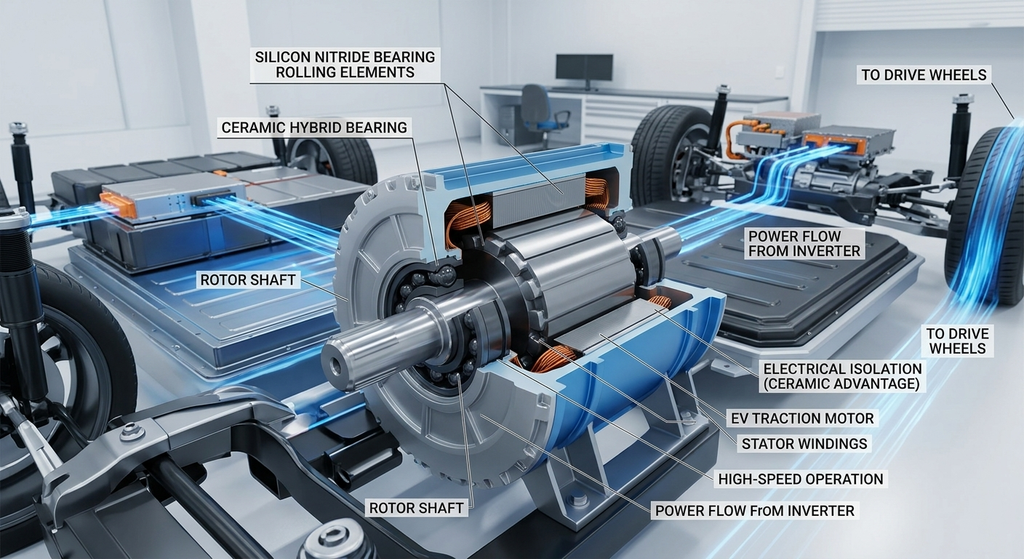
An EV drive system typically includes an electric motor, transmission or reduction gearbox, bearings, shafts, and associated thermal management components. These parts operate under changing speeds, torque loads, temperatures, and electrical conditions. As electric motors become more compact and powerful, the mechanical components inside them must meet increasingly demanding requirements. One major challenge is rotational speed. Many electric vehicle traction motors operate at high speeds, and some designs use compact motor structures to achieve high power density. As rotational speed increases, the rolling elements inside a bearing experience greater centrifugal forces. These forces can increase contact stress between the rolling elements and raceways, especially when the bearing geometry, preload, or lubrication is not properly matched to the operating conditions.
Silicon nitride offers a useful solution because its density is much lower than that of bearing steel. At approximately 3.1–3.3 g/cm³, silicon nitride is less than half as dense as typical bearing steel. For rolling elements of the same size, this difference can reduce mass by around 57–61%. Lower rolling-element mass can reduce centrifugal loading and support high-speed bearing operation when the bearing is correctly designed. A second challenge is electrical bearing damage. In an electric motor, voltage differences can develop between the shaft and the housing. If electrical current passes through the bearing, it may cause localized electrical discharges. Over time, repeated discharges can produce small craters, surface roughening, lubricant degradation, and fluting patterns on the raceway. These effects may increase vibration and noise and can contribute to premature bearing failure.
Silicon nitride is electrically insulating under typical engineering specifications. When used as the rolling elements in a hybrid bearing, it can interrupt one possible electrical conduction path through the balls. This makes silicon nitride Ceramic Bearings attractive for selected Electric Vehicle Motors, particularly where electrical current through the bearing is a design concern. However, ceramic balls alone cannot eliminate every possible current path. Motor grounding, shaft voltage control, insulation arrangements, and system-level electrical design remain important. Thermal stability is another factor. Bearings in EV drive systems may experience temperature changes due to motor losses, lubricant conditions, nearby power electronics, and repeated acceleration or deceleration. Silicon nitride has a relatively low coefficient of thermal expansion, generally around 2.5–3.5 × 10⁻⁶/K. This is lower than the typical value for bearing steel, which is around 11–13 × 10⁻⁶/K. The difference can be useful, but it must be considered during bearing clearance and fit design because the ceramic balls and steel rings do not expand at the same rate.
Wear resistance also contributes to the material’s value. Silicon nitride has high hardness and can maintain a smooth contact surface when manufactured and finished correctly. In a properly lubricated bearing, this can support stable rolling contact. Nevertheless, ceramic materials are brittle compared with steel. They are not immune to damage from impact, poor installation, edge loading, contamination, or excessive contact stress. The benefits extend beyond the traction motor. Selected silicon nitride components may also be considered in reduction gear systems, precision rotating assemblies, and other mechanical parts where low mass, dimensional stability, or electrical insulation is important. The suitability of each component depends on its actual loading and contact conditions. For EV manufacturers, silicon nitride should therefore be evaluated as part of a complete bearing and drive-system solution. Engineers should review rotational speed, radial and axial loads, bearing arrangement, lubrication, shaft voltage, temperature, installation method, and expected operating life together.
4. Silicon Nitride Ceramic Bearings in EV Traction Motors
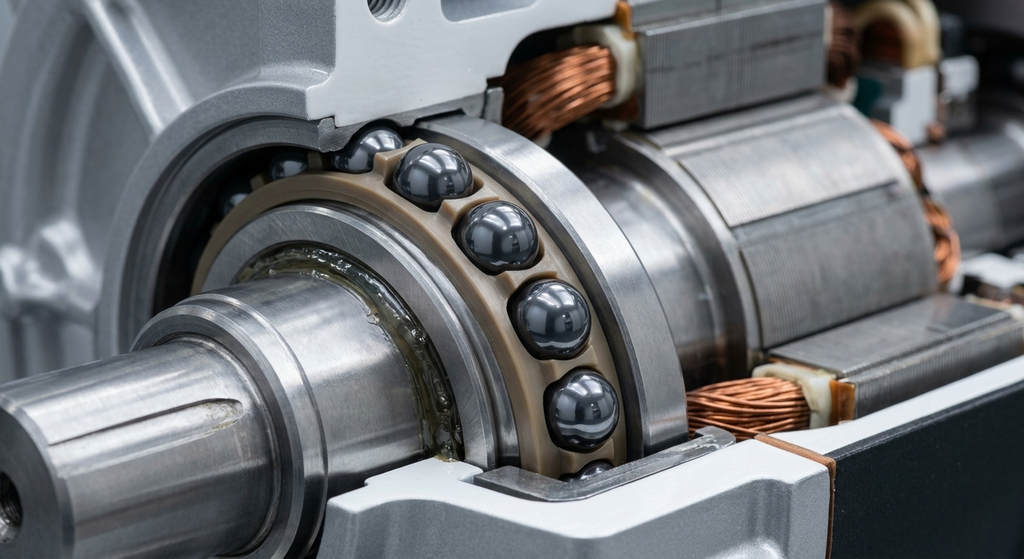
Ceramic Bearings are among the most established applications of silicon nitride in electric vehicle drive systems. In many designs, engineers use hybrid ceramic bearings, which combine silicon nitride Bearing Balls with conventional steel inner and outer rings. This arrangement provides a balance between the mechanical strength and manufacturing familiarity of steel rings and the low density, hardness, and electrical insulation of ceramic rolling elements.
The advantages can be particularly relevant in high-speed traction motors. Lower rolling-element mass can reduce centrifugal loading and support stable operation at elevated speeds. Silicon nitride also has a lower coefficient of thermal expansion than bearing steel, although the different expansion behavior of the balls and rings must be considered during bearing design. The following table compares typical material and design characteristics. Values are indicative and should not be treated as universal bearing specifications.
| Comparison Factor | Hybrid Bearing with Si₃N₄ Balls | Conventional Steel Bearing | Engineering Significance |
|---|---|---|---|
| Rolling element material | Silicon nitride | Bearing steel | Determines density, hardness, and electrical behavior |
| Ball density (g/cm³) | 3.10–3.30 | 7.70–7.90 | Ceramic balls are substantially lighter |
| Relative ball mass at equal volume | Approx. 39–43% | 100% | Lower mass may reduce centrifugal loading |
| Ball hardness (HV) | Approx. 1,200–1,700 | Approx. 700–900 | Higher hardness supports wear resistance |
| Young’s modulus (GPa) | 280–320 | 200–215 | Influences elastic deformation under contact load |
| Fracture toughness (MPa·m¹ᐟ²) | 5–8 | Not directly comparable | Ceramic toughness must be considered in impact and contact design |
| Thermal expansion (10⁻⁶/K) | 2.5–3.5 | 11–13 | Different expansion rates affect bearing clearance |
| Thermal conductivity (W/m·K) | 15–90 | 15–45 | Heat transfer depends on grade and complete bearing design |
| Electrical behavior | Insulating | Conductive | Ceramic balls can interrupt a current path through the rolling elements |
| Corrosion behavior | Generally good in many environments | Depends on steel grade and protection | Actual lubricant and chemical exposure must be checked |
| Friction behavior | Depends on finish, lubricant, and contact pair | Depends on finish, lubricant, and contact pair | No material has one universal friction coefficient |
| Typical configuration | Ceramic balls + steel rings | Steel balls + steel rings | Hybrid design balances ceramic and metal characteristics |
| Main design considerations | Contact stress, impact, clearance, finish | Fatigue, current damage, lubrication, corrosion | Both require correct bearing selection |
Hardness values depend on grade, test load, and measurement method. Ceramic and steel hardness values should be compared only under suitable test conditions. Similarly, the fracture toughness of ceramics and the ductility of steel describe different material behaviors and cannot be compared as if they were the same property. A practical example helps explain the mass difference. Consider an 8 mm diameter bearing ball. Its volume is approximately 0.268 cm³. At a density of 3.2 g/cm³, a silicon nitride ball weighs about 0.86 g. A steel ball of the same volume at 7.8 g/cm³ weighs about 2.09 g. This means each ceramic ball is approximately 1.23 g lighter.
For a bearing containing 12 balls, the total rolling-element mass reduction is approximately 14.8 g. Although this is a relatively small absolute mass, it can matter in high-speed rotating assemblies because centrifugal loading is influenced by rolling-element mass, rotational speed, and bearing geometry. It is also important to distinguish hybrid bearings from full ceramic bearings. Hybrid bearings use ceramic balls with steel rings, while full ceramic bearings use ceramic materials for both rolling elements and rings. The correct configuration depends on load, speed, temperature, lubrication, electrical requirements, and cost. In many EV traction motor designs, hybrid bearings are a practical option because they retain steel rings while using ceramic balls to address selected operating challenges.
5. Applications in EV Power Electronics and Thermal Management
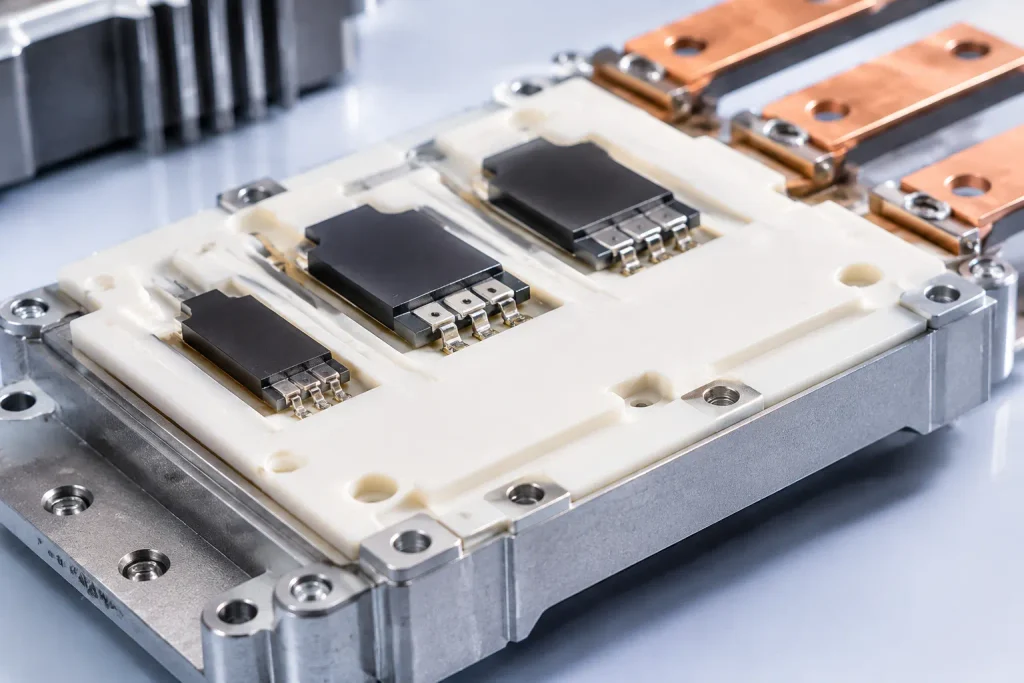
In addition to mechanical applications, silicon nitride material can be used in selected power electronic components and thermal management structures. EV inverters and power modules control the electrical energy supplied to traction motors. These systems experience electrical, mechanical, and thermal stress during operation. Silicon nitride is valued in power electronics for its high mechanical strength, electrical insulation, and relatively low thermal expansion. Silicon nitride ceramic substrates are used in certain direct-bonded or active-metal-brazed substrate structures, where the ceramic layer provides electrical isolation while supporting the power module assembly.
Its fracture toughness and mechanical strength can be useful when the substrate is exposed to thermal cycling and mechanical stress. This is one reason silicon nitride is considered for demanding power module designs. However, silicon nitride does not always provide the highest thermal conductivity. Aluminum nitride and silicon carbide may offer higher thermal conductivity in suitable grades. Material selection must balance thermal transfer, insulation, mechanical strength, thermal expansion, and manufacturing cost. For an EV power module, thermal resistance can be simplified as:
R = t / (k × A)
Where R is thermal resistance (K/W), t is material thickness (m), k is thermal conductivity (W/m·K), and A is the heat transfer area (m²).
For example, a 0.32 mm thick ceramic layer with a thermal conductivity of 80 W/m·K and a heat transfer area of 100 cm² has an idealized material thermal resistance of approximately 0.004 K/W. This calculation excludes interface resistance, metallization, bonding layers, and other package effects. It shows why thickness, conductivity, and area must be considered together.
6. Silicon Nitride Components in High-Temperature Mechanical Systems
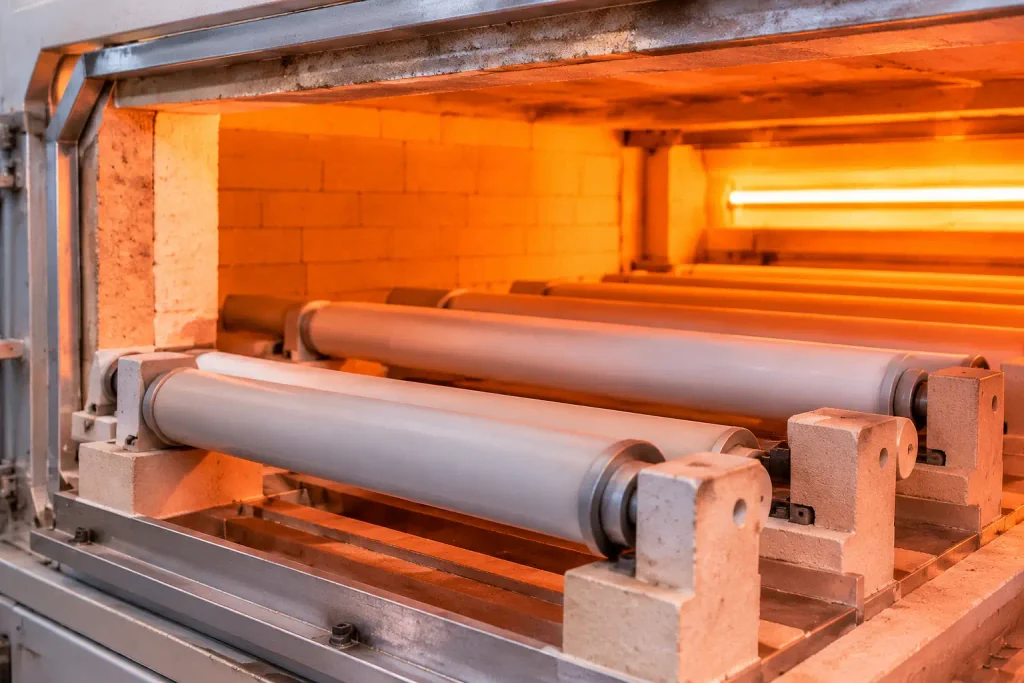
Outside the automotive industry, silicon nitride ceramics are used in selected High-Temperature Mechanical Systems where components must withstand heat, friction, and repeated mechanical loading. One important application is the high temperature furnace. Furnace equipment may contain rollers, support structures, guide components, positioning parts, and other components exposed to elevated temperatures. Depending on the furnace atmosphere and operating conditions, silicon nitride components can provide useful resistance to thermal shock, wear, and deformation.
For example, ceramic rollers in certain thermal processing lines must support products while moving through heated zones. A material with good thermal shock resistance and mechanical strength can help maintain dimensional stability during heating and cooling cycles. Silicon nitride may be considered when the component needs to retain strength while experiencing repeated temperature changes. Silicon nitride can also be considered for selected furnace fixtures, wear-resistant guides, and mechanical supports. In a furnace heat exchanger, material selection is more complex. Components may be exposed to hot gases, temperature gradients, pressure differences, and chemical species in the process atmosphere. Silicon nitride may be suitable for selected structural or heat-transfer components, but the design must consider thermal conductivity, wall thickness, gas-side corrosion, sealing, and mechanical loading. It should not be assumed that every silicon nitride grade is suitable for every heat exchanger design.
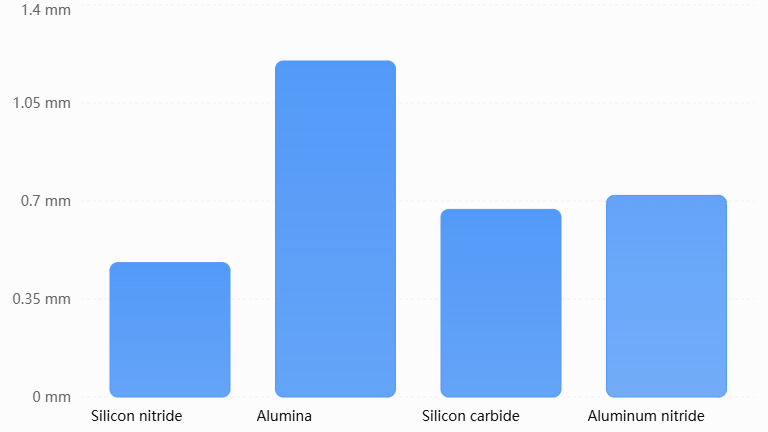
Thermal expansion provides one way to compare how different ceramic components may change size during heating. Consider four ceramic rods, each 200 mm long, exposed to the same temperature increase of 800 K. Using representative coefficients of thermal expansion, the estimated dimensional changes are shown below.
| Material | Representative CTE (10⁻⁶/K) | Initial Length (mm) | Temperature Increase (K) | Estimated Expansion (mm) |
|---|---|---|---|---|
| Silicon nitride | 3.0 | 200 | 800 | 0.48 |
| Alumina | 7.5 | 200 | 800 | 1.20 |
| Silicon carbide | 4.2 | 200 | 800 | 0.67 |
| Aluminum nitride | 4.5 | 200 | 800 | 0.72 |
Illustrative comparison using representative CTE values, not guaranteed product measurements.
The example shows that the silicon nitride rod has the lowest estimated expansion among these four materials under the stated assumptions. Compared with alumina, its estimated expansion is 0.72 mm lower over the same length and temperature change. This difference may be important in assemblies where clearances, alignment, or contact pressure must be controlled.
However, low expansion alone does not determine suitability. A furnace component must also withstand its mechanical load, temperature profile, atmosphere, and thermal cycling. Actual expansion may differ from this simple estimate because material properties can change with temperature and because mounting constraints can affect component behavior.
For furnace designers, the practical lesson is that thermal expansion should be considered together with component length, installation clearance, support design, and temperature distribution. A small difference in expansion can become important in long rollers, closely fitted assemblies, or components constrained at both ends.
7. Wear-Resistant and Friction-Related Applications of Silicon Nitride
Wear resistance is another important reason manufacturers select silicon nitride for industrial equipment. Components such as rollers, shafts, guides, sliding parts, and precision contact elements may experience repeated friction and surface loading. The high hardness of silicon nitride helps resist surface damage under suitable operating conditions. Its relatively low density also makes it useful in rotating or moving components where reducing inertia is important. Potential applications include precision rollers, pump components, mechanical seals, selected valve parts, and wear-resistant Ceramic parts.
However, friction and wear are not determined by material hardness alone. The contact pair, surface roughness, normal load, sliding speed, lubrication, temperature, and contamination all affect performance. A polished silicon nitride surface operating against a compatible counterface under stable lubrication may behave very differently from a rough surface operating under dry sliding or abrasive contamination. Consider a simple comparison of friction force under a fixed normal load of 500 N. The following example uses three assumed friction coefficients to show how changes in surface condition or lubrication can affect the force. These are illustrative calculation inputs, not published or guaranteed friction coefficients for silicon nitride.
| Illustrative Operating Condition | Assumed Friction Coefficient | Normal Load (N) | Estimated Friction Force (N) |
|---|---|---|---|
| Well-lubricated contact | 0.08 | 500 | 40 |
| Moderate lubrication or surface condition | 0.12 | 500 | 60 |
| Higher friction or less favorable contact | 0.16 | 500 | 80 |
In this example, the estimated friction force increases from 40 N to 80 N when the assumed friction coefficient rises from 0.08 to 0.16. This represents a 100% increase in friction force under the same normal load. The result highlights why lubrication and surface condition are important when evaluating ceramic sliding or rolling components.
For buyers, the key is to evaluate the complete friction system instead of selecting a ceramic based on hardness alone. Drawings and specifications should identify the contact surface, surface roughness, lubrication method, expected load, speed, and operating temperature. Where possible, prototype testing under representative conditions can help verify friction and wear behavior before large-scale production.
8. Silicon Nitride vs. Other Advanced Ceramic Materials
Different ceramic materials provide different combinations of thermal, mechanical, and electrical properties. Silicon nitride is often selected when strength, fracture toughness, and thermal shock resistance are important. Other materials may be more suitable when the main requirement is very high thermal conductivity, chemical resistance, or electrical insulation at a lower cost. The expanded comparison below includes mechanical, thermal, electrical, and manufacturing-related properties. The values are broad reference ranges for common engineering grades, not specifications for every available material.
| Selection Factor | Silicon Nitride | Alumina | Aluminum Nitride | Silicon Carbide |
|---|---|---|---|---|
| Chemical formula | Si₃N₄ | Al₂O₃ | AlN | SiC |
| Density (g/cm³) | 3.10–3.30 | 3.60–3.95 | 3.26–3.33 | 3.05–3.21 |
| Thermal conductivity (W/m·K) | 15–90 | 20–35 | 140–230 | 80–200 |
| Flexural strength (MPa) | 600–1,000 | 250–400 | 300–450 | 300–600 |
| Fracture toughness (MPa·m¹ᐟ²) | 5–8 | 3–5 | 2.5–3.5 | 3–5 |
| Vickers hardness (GPa) | 12–17 | 12–18 | 10–12 | 22–28 |
| Young’s modulus (GPa) | 280–320 | 300–380 | 280–330 | 350–450 |
| CTE (10⁻⁶/K) | 2.5–3.5 | 6.5–8.5 | 4.0–5.0 | 3.7–4.5 |
| Electrical resistivity (Ω·cm) | Typically >10¹² | Typically >10¹² | Typically >10¹² | Grade-dependent |
| Dielectric strength (kV/mm) | Grade-dependent | Approx. 8–15 | Approx. 10–20 | Grade-dependent |
| Specific heat capacity (J/kg·K) | Approx. 600–800 | Approx. 750–900 | Approx. 600–800 | Approx. 600–800 |
| Main mechanical advantage | Strength and toughness | General-purpose rigidity | Electrical insulation with high heat transfer | Hardness and wear resistance |
| Typical application focus | Bearings and mechanical parts | Insulators and structural parts | Thermal substrates | Wear and high-temperature parts |
| Relative machining difficulty | High | High | High | Very high |
| Common finishing approach | Diamond grinding | Diamond grinding | Diamond grinding | Diamond grinding |
Electrical resistivity, dielectric strength, specific heat, and machining difficulty vary with grade, porosity, test method, geometry, and surface condition. Dielectric strength values are especially dependent on specimen thickness and test setup.
The table shows that silicon nitride material is not the best choice for every application. Aluminum nitride is often more suitable when high thermal conductivity and electrical insulation are the main requirements. Silicon carbide may be preferred for applications requiring very high hardness and wear resistance. Alumina remains a practical option for many general-purpose insulating and structural components.
Silicon nitride has a particular advantage when mechanical strength and fracture toughness need to be considered together. For example, a component exposed to repeated contact loads or thermal cycling may benefit from its balance of strength and toughness. By contrast, a power electronic substrate that needs to transfer heat efficiently may require a closer comparison between silicon nitride and aluminum nitride. Manufacturing cost and machining requirements should also be considered. Complex shapes, tight tolerances, thin walls, and demanding surface finishes can increase production difficulty. A material with higher laboratory performance may not be the most economical option if the component does not need those properties. The correct material should therefore be selected according to the actual operating conditions, not simply the highest value in one property column.
9. Manufacturing and Quality Control of Silicon Nitride Ceramic Components
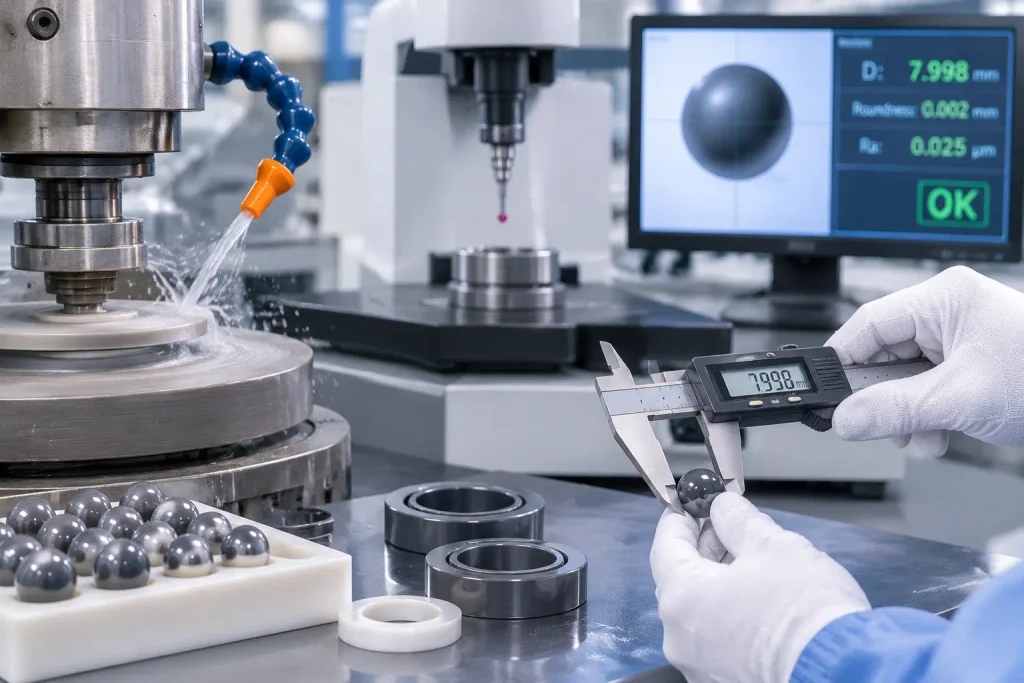
The performance of finished silicon nitride Ceramic parts depends on more than the raw material. Powder quality, forming, sintering, machining, surface finishing, and inspection all affect the final component. Silicon nitride components are commonly produced through powder preparation, forming, densification, and precision machining. Depending on the grade and required geometry, manufacturing may involve pressing, injection molding, or other forming methods. Sintering processes are carefully controlled to achieve the required density and mechanical properties.
After densification, machining may be needed to achieve accurate dimensions, bearing surfaces, holes, slots, and other functional features. Because silicon nitride is extremely hard, diamond grinding is commonly used for precision finishing. Quality inspection should cover the characteristics that affect the intended application. These may include density, hardness, flexural strength, dimensions, roundness, surface roughness, internal defects, and visual condition. For bearing balls, sphericity, diameter variation, surface finish, and batch consistency are particularly important.
For custom industrial components, buyers should provide drawings, operating temperature, load conditions, working atmosphere, surface finish requirements, dimensional tolerances, and expected service conditions. This information helps the manufacturer assess material suitability and machining feasibility before production.
10. How to Select the Right Silicon Nitride Ceramic Components for Your Application
Choosing the correct silicon nitride component requires a clear understanding of the working environment. A bearing ball in an EV traction motor has different requirements from a roller inside a furnace or a wear-resistant guide in industrial equipment. For EV applications, buyers should focus on rotational speed, bearing load, electrical insulation requirements, lubrication, operating temperature, and bearing configuration. For High-Temperature Mechanical Systems, temperature alone is not enough. Atmosphere, thermal cycling, mechanical stress, contact conditions, and chemical exposure must also be evaluated.
Component geometry and machining accuracy are equally important. A material with excellent mechanical properties may still fail if the design creates stress concentrations, sharp corners, uneven contact, or excessive assembly pressure. Before ordering custom Ceramic parts, procurement teams should confirm the following information:
- Operating conditions: temperature, atmosphere, load, speed, vibration, and lubrication.
- Material requirements: grade, density, strength, thermal properties, and electrical resistivity.
- Drawing details: dimensions, tolerances, holes, slots, edge conditions, and surface roughness.
- Inspection criteria: measurement methods, acceptance limits, traceability, and required documentation.
- Commercial requirements: order quantity, prototype needs, production schedule, packaging, and delivery expectations.
A technically suitable material and a well-controlled manufacturing process are both essential for reliable components.
11. Company Profile
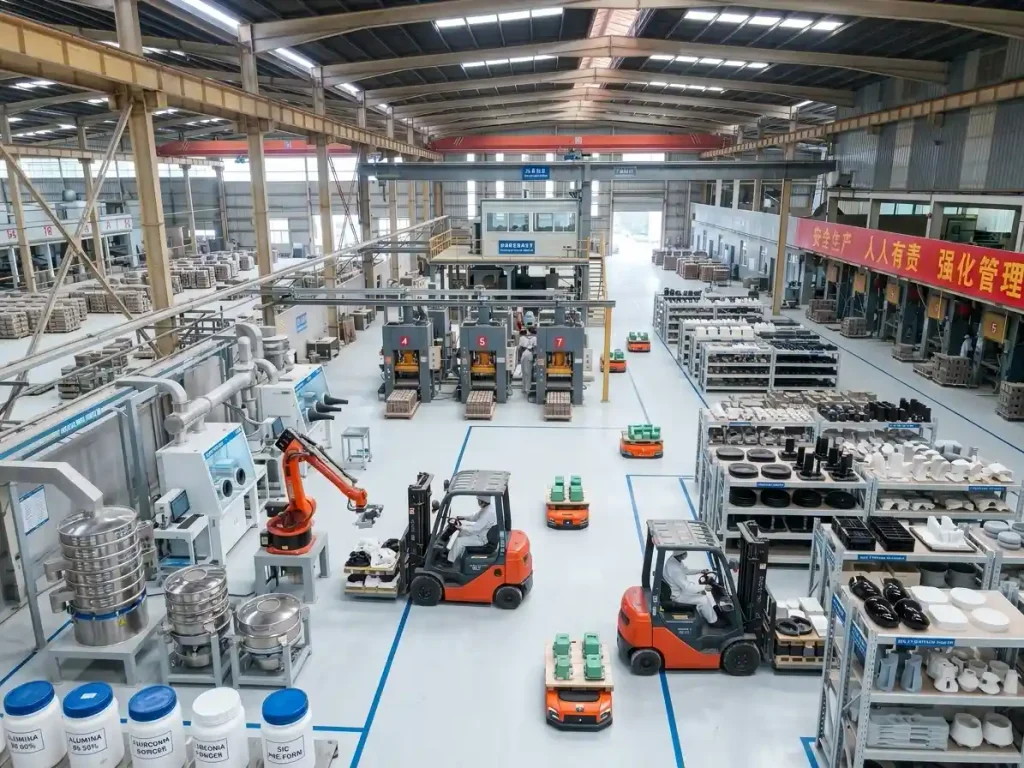
Jenson(Luoyang) Technology Co., Ltd. focuses on advanced ceramic materials and customized ceramic components for industrial, thermal, electrical, and precision engineering applications. Its product range includes silicon nitride, alumina, aluminum nitride, boron nitride, silicon carbide, quartz, and other engineered ceramic products. For customers requiring custom Ceramic parts, material selection should begin with the actual working environment and component function. Important considerations include mechanical strength, density, thermal conductivity, electrical insulation, operating temperature, chemical exposure, dimensional accuracy, and surface finish.
Custom component development can start with customer drawings and operating requirements. Depending on the selected material and component geometry, manufacturing services may include precision grinding, CNC machining, cutting, and drilling. Inspection requirements and dimensional tolerances should be reviewed before production to confirm technical feasibility. For EV drive systems, industrial bearings, furnace equipment, and other High-Temperature Mechanical Systems, selecting the right ceramic material is an important step toward reliable equipment design. A clear understanding of operating conditions, material properties, and manufacturing requirements helps buyers identify practical solutions for demanding applications.
12. FAQs About Silicon Nitride Ceramics
Q1. What makes silicon nitride ceramics suitable for EV drive systems?
Silicon nitride ceramics combine low density, high hardness, good fracture toughness, wear resistance, and electrical insulation. These properties make them useful for hybrid bearing balls in electric vehicle motors. Their lower mass can reduce centrifugal loading at high rotational speeds, while their electrical insulation can help interrupt certain bearing-current paths. Compared with steel rolling elements of the same size, silicon nitride balls are typically around 57–61% lighter. This can help reduce the forces acting on rolling elements in high-speed applications. Their hardness and wear resistance can also support stable contact when the bearing is properly designed and lubricated.
However, material selection alone does not determine bearing life. Engineers must also consider bearing geometry, contact stress, lubrication, preload, installation accuracy, shaft voltage, and operating temperature. Silicon nitride is therefore best viewed as one part of an integrated EV drive-system design.
Q2. Why are silicon nitride ceramic balls used in electric vehicle motor bearings?
Silicon nitride Bearing Balls are significantly lighter than steel balls of the same size. This can reduce rolling-element inertia and centrifugal forces in high-speed bearings. They also offer high hardness, wear resistance, and electrical insulation. In hybrid bearings, ceramic balls are combined with steel rings to balance performance and manufacturing requirements. This configuration is widely considered for electric motor applications where high rotational speed or electrical bearing damage is a concern. The lighter rolling elements may also help reduce certain dynamic loads, although the final result depends on bearing design and operating conditions. The design must still account for contact stress, impact, lubrication, preload, and operating temperature. Buyers should confirm ball grade, diameter, roundness, surface finish, and dimensional consistency rather than relying only on the general material name.
Q3. Can silicon nitride bearings prevent electrical discharge damage?
Silicon nitride balls are electrically insulating under normal specifications and can help reduce electrical conduction through the rolling elements. This can lower the risk of certain forms of electrical discharge damage in electric motor bearings. Electrical discharge damage may occur when shaft voltage becomes high enough to cause current to pass through the bearing. Repeated discharges can create small surface craters, increase roughness, damage lubricant, and produce fluting patterns on raceways. Using ceramic balls can interrupt one possible current path through the rolling elements.
However, they cannot guarantee complete protection against bearing currents. Electrical current may follow alternative paths through the shaft, housing, lubricant, or other components. Grounding, shaft voltage control, insulation arrangements, motor design, and system-level protection remain important. The actual electrical behavior should be verified for the bearing configuration and operating environment.
Q4. Are silicon nitride ceramics suitable for high-temperature mechanical applications?
Yes. Silicon nitride is used in selected high-temperature rollers, supports, guides, and wear-resistant mechanical components. Its low thermal expansion and good thermal shock resistance can help maintain dimensional stability during temperature changes. In a high temperature furnace, for example, ceramic rollers and supports may experience repeated heating and cooling, mechanical contact, and continuous loading. Silicon nitride can be considered where strength retention and resistance to thermal shock are important. Selected components in furnace handling systems and furnace heat exchanger designs may also be evaluated for this material.
Suitability depends on the specific grade, atmosphere, mechanical load, temperature profile, and exposure time. Engineers should also consider oxidation, chemical compatibility, thermal gradients, component dimensions, and installation constraints. A material’s stated maximum temperature should not automatically be treated as its continuous operating temperature under load.
Q5. What is the maximum operating temperature of silicon nitride ceramics?
There is no single maximum operating temperature for all silicon nitride products. Different grades and compositions have different high-temperature strength, oxidation resistance, creep behavior, and thermal stability. The practical operating limit also depends on atmosphere, load, exposure time, component geometry, and thermal cycling.
A silicon nitride component used briefly at an elevated temperature may behave differently from one exposed continuously to the same temperature under mechanical stress. Oxidizing, reducing, and other process atmospheres can also affect performance. In some applications, long-term creep or changes in mechanical strength may be more important than short-term temperature resistance. Buyers should request grade-specific technical data and confirm whether the stated temperature refers to short-term exposure or continuous operation. For furnace applications, it is useful to provide the actual temperature profile, atmosphere composition, load, and expected service duration when asking a supplier to assess suitability.
Q6. How does silicon nitride compare with steel in bearing applications?
Silicon nitride has a density of approximately 3.1–3.3 g/cm³, compared with around 7.7–7.9 g/cm³ for bearing steel. It is also harder and electrically insulating. These properties can make silicon nitride balls attractive for high-speed hybrid bearings and selected electrically challenging environments. Steel, however, has higher ductility and is generally easier to manufacture and machine. It can also tolerate certain impact and overload conditions differently from a brittle ceramic. This distinction is important because ceramic balls are not immune to fracture or chipping if they experience severe impact, edge loading, poor installation, or excessive contact stress.
Hybrid bearings combine ceramic balls with steel rings to use the advantages of both materials. The best choice depends on speed, load, lubrication, electrical conditions, temperature, installation, and cost. For demanding EV applications, the bearing should be evaluated as a complete assembly rather than by comparing ball materials alone.
Q7. What is the difference between silicon nitride and silicon carbide ceramics?
Silicon nitride generally offers a strong balance of fracture toughness, flexural strength, and thermal shock resistance. Silicon carbide has higher hardness and often higher thermal conductivity, making it useful for wear-resistant and heat-transfer applications. For example, typical silicon nitride flexural strength may fall around 600–1,000 MPa, while common silicon carbide grades may fall around 300–600 MPa. Silicon carbide generally has higher Vickers hardness, often around 22–28 GPa, compared with approximately 12–17 GPa for silicon nitride. These are broad reference ranges and vary by grade and manufacturing route.
Silicon nitride is commonly considered for bearing balls and mechanically loaded components, while silicon carbide is widely used in wear parts, furnace components, and selected semiconductor equipment parts. The final choice should consider operating temperature, chemical exposure, mechanical stress, thermal conductivity, component geometry, and manufacturing cost.
Q8. Are silicon nitride ceramics electrically insulating?
Most engineering silicon nitride grades are electrically insulating, with typical volume resistivity often above 10¹² Ω·cm under specified test conditions. This property makes them useful in selected electrical and electronic applications, including ceramic rolling elements that need to interrupt certain electrical conduction paths. Electrical insulation is not determined by the material name alone. Composition, impurities, porosity, moisture, surface contamination, temperature, and test conditions can affect the measured result. The dielectric strength of a component also depends on thickness, geometry, surface condition, and the test method.
For applications involving high voltage or demanding electrical conditions, buyers should request the actual grade’s volume resistivity and dielectric strength data. These values should be checked at conditions that are relevant to the final operating environment rather than assumed from a general material reference.
Q9. Can silicon nitride ceramic components be custom machined?
Yes. Dense silicon nitride components can be precision machined using suitable diamond grinding and other specialized ceramic machining processes. Custom features may include holes, slots, grooves, flat surfaces, and precision cylindrical geometries. Machining difficulty depends on material density, shape, wall thickness, tolerance, surface finish, and the location of detailed features. Tight tolerances, small holes, thin sections, and complex geometries may require additional process planning and inspection. Some shapes may also need to be modified to reduce stress concentrations or avoid fragile edges.
Buyers should provide detailed drawings so the manufacturer can evaluate feasibility and cost. Drawings should identify critical dimensions, tolerances, surface roughness, edge conditions, and any areas that require special inspection. It is also helpful to state whether the component will be used in a bearing, furnace, sliding assembly, or another mechanical application.
Q10. What factors affect the service life of silicon nitride ceramic bearings?
Bearing life depends on contact stress, rotational speed, lubrication, alignment, preload, contamination, surface finish, and operating temperature. Ceramic balls have high hardness and wear resistance, but they remain brittle compared with steel. Excessive impact, edge loading, poor installation, and insufficient lubrication can cause damage. Lubrication is especially important. Even a hard and wear-resistant rolling element can suffer surface damage if the lubricant film is inadequate for the applied load and speed. Contamination can also create local stress concentrations and damage the raceway or rolling-element surface.
A suitable bearing design and controlled operating conditions are essential for achieving reliable service life. Buyers should consider the complete bearing assembly, including ring material, ball grade, cage design, lubricant, fit, preload, and sealing. Testing under representative speed, load, temperature, and electrical conditions can provide more useful information than relying on a general material comparison.
Q11. How do you choose the right silicon nitride grade for industrial applications?
Start with the component’s working conditions. For high-speed bearings, consider density, hardness, fracture toughness, ball quality, dimensional accuracy, and surface finish. For furnace components, evaluate temperature, atmosphere, thermal cycling, mechanical load, and chemical exposure. For precision industrial parts, dimensional stability and machining quality may be equally important.
Different silicon nitride grades can have different density, grain structure, strength, thermal conductivity, and machining behavior. A grade optimized for bearing balls may not automatically be the best option for a large furnace support or a custom mechanical component. Compare grade-specific technical data rather than relying on general material ranges. It is also useful to discuss the component drawing and operating conditions with the manufacturer before confirming a material grade. Where the application is demanding, prototype testing can help verify performance and reduce design risk.
Q12. What information should buyers provide when ordering custom silicon nitride components?
Buyers should provide a technical drawing, required dimensions and tolerances, operating temperature, working atmosphere, load, speed, contact conditions, and expected service environment. They should also specify surface roughness, edge requirements, inspection standards, quantity, and delivery expectations.
For bearing applications, ball diameter, grade, sphericity, surface finish, dimensional variation, and bearing configuration are particularly important. For furnace rollers or supports, component length, support locations, temperature profile, load distribution, thermal cycling, and process atmosphere should be included. For furnace heat exchanger components, gas composition, flow conditions, pressure, wall thickness, and thermal requirements may also be relevant. Complete information helps the manufacturer recommend a suitable material and production process. It also makes it easier to assess machining feasibility, inspection methods, production cost, and delivery time before an order is placed.
RELATED POSTS
How to Custom Manufacture Boron Nitride Insulator Rings, Gas Nozzles, and Wafer Chuck Parts?
How Silicon Carbide Kiln Furniture Improves Energy Efficiency and Reduces Firing Costs
How to Choose Between Aluminum Nitride and Alumina Ceramics for High-Performance Thermal Applications
How Do You Select the Right Silicon Carbide Nozzle for Abrasive and Corrosive Environments?

Why Silicon Carbide Ceramics Are Essential for Semiconductor Wafer Processing Equipment